
Introduction
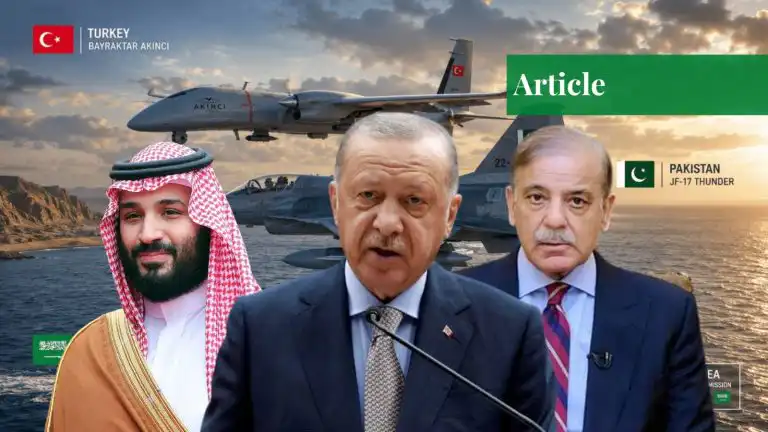
Türkiye is one of the more powerful military forces in the region and solely in Asia Minor and has relatively high strategic autonomy in defence. It has also become much less dependent on other states for its essential defence needs in the recent ten years, and North Atlantic Treaty Organization (NATO) membership provides it with access to one of the world’s most powerful collective defence arrangements. Türkiye is also the second biggest military power in NATO, after the United States of America (USA). Therefore, it is pertinent to ask why Türkiye had to join the Makkah Joint Defence Agreement made on 7 August. Is Ankara seeing a direct military threat from another country, or is it based on the other countries’ broader strategic calculations?
This article seeks to analyse how Türkiye participated in the agreement, the strategic advantages Ankara may have at its disposal and why it may have felt compelled to enter into such an agreement when it was already a key NATO member. First and foremost, the deal must be viewed in the shifting Middle East security landscape, including the current state of the security guarantees that the United States offers and the evolving dynamics between the United States, Israel, Iran, Türkiye and Arab states.
The Erosion of Confidence in US Security Guarantees
Not to say that some countries in the Gulf have grown more hesitant to trust America as their sole security provider. Recent developments have led to doubts as to whether Washington is ready to guarantee direct military support to its regional partners if they are attacked. One such example was the 2019 attack on the Saudi oil facilities, which was blamed on Iran in September. The United States was not involved in the attack directly and did not make a major military response.
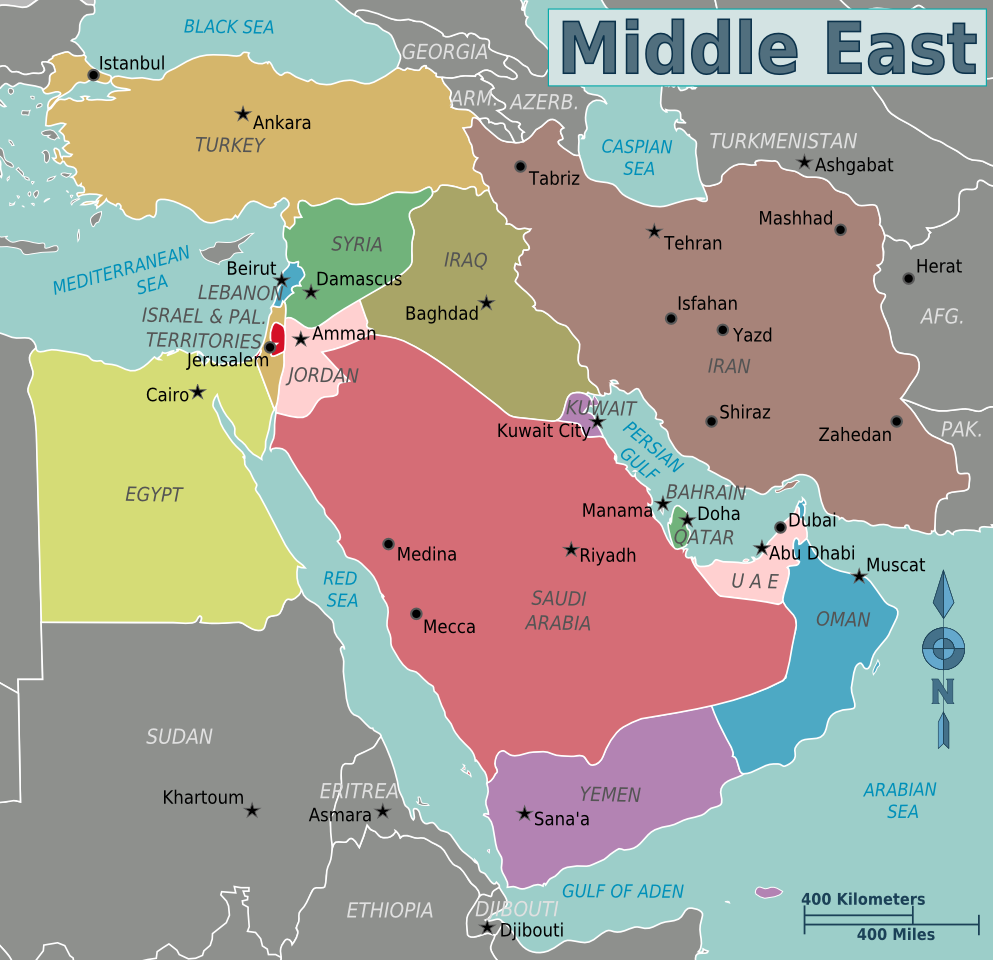
A similar worry arose after the Israeli attack on Qatar in 2025. Again, America was powerless to stop the assault, and it did not militarily intervene on behalf of Israel. Such events might have created a sense among states in the region that the United States does not offer security guarantees on a level playing field but rather offers them to its allies unselectively.
But if it was not an Israeli attack, Washington at least would have tried to deter or retaliate against it from the point of view of some Gulf states. In either instance, however, the degree of American protection which might have been anticipated was unknown.
This is especially significant from a strategic point of view for Türkiye. Ankara is now posing a basic question: If a NATO ally or close U.S. ally were attacked by a stronger regional power, would the United States and other NATO allies “actually” step in?
Israel’s, Iran’s and Türkiye’s Strategic Calculations
Türkiye’s strategic concerns have also been shaped by the changing relationship between Israel and Iran. In February 2026, former Israeli Prime Minister Naftali Bennett reportedly described Türkiye as the “new Iran.” Regardless of the precise political context of that statement, such rhetoric is significant from Ankara’s perspective because it contributes to a perception that Türkiye could increasingly become a strategic rival of Israel.
If Israel were eventually able to neutralise or significantly weaken Iran as a strategic challenge, Türkiye could potentially emerge as one of the most important regional powers capable of constraining Israeli influence. This possibility could explain why Ankara has become increasingly attentive to developments in the Iran-Israel confrontation.
Türkiye may also have come to the conclusion that when it comes to a direct confrontation with Israel, NATO won’t “necessarily” be united in defending Türkiye. Ankara may also be concerned about any possible preference Washington might have for its ties with Israel rather than its responsibilities under the alliance with Türkiye.
The perception has strengthened in recent years, as the United States has demonstrated a strong and sustained commitment to Israel’s security. This has been particularly evident during the ongoing conflict in the region, with reports indicating the establishment of an aerial bridge between the United States and Israel. According to Flightradar24, several U.S. Air Force Boeing KC-135 Stratotanker aerial refuelling aircraft have reportedly crossed the Israel–Jordan border and proceeded toward Iraqi airspace, while additional U.S. aircraft have been observed approaching Israel on a regular basis.
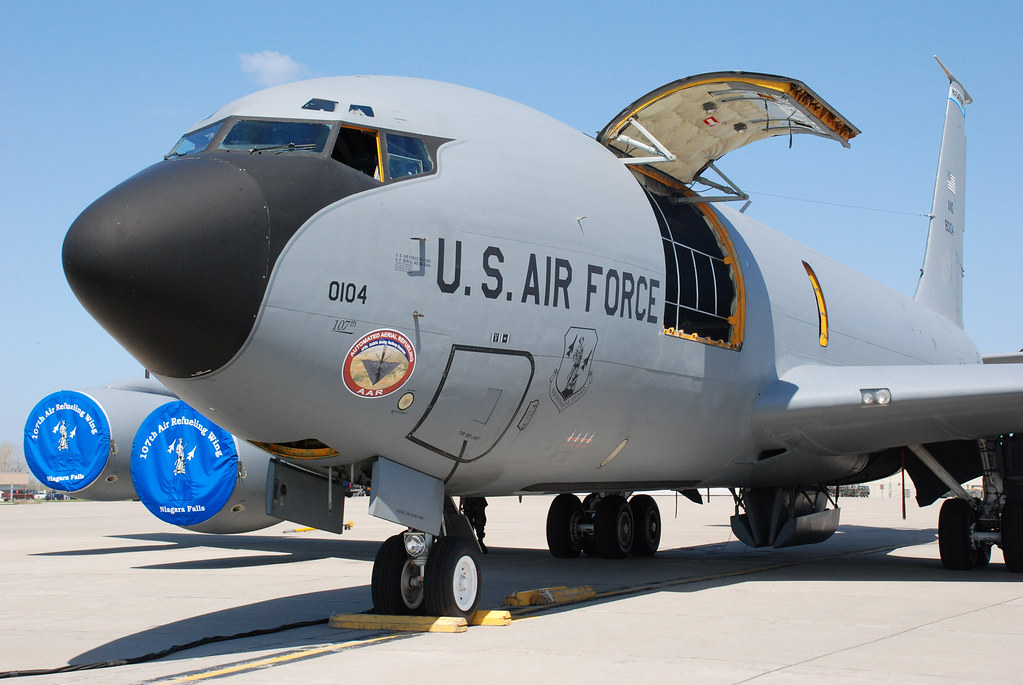
For Türkiye, the broader takeaway may be that Washington is prepared to deploy significant diplomatic, military, and political resources to safeguard Israel but may not demonstrate the same level of commitment when Arab states come under attack. This perception could be an important factor shaping Türkiye’s evolving approach to regional security and its efforts to diversify its strategic partnerships.
The Iran-Israel War and Türkiye’s Strategic Concerns
The larger context of the MJDA is thus the shift in the regional balance which the Iran-Israel war has occasioned. The war has shown just how far the United States will go in providing Israel with military and strategic assistance.
Some in Washington and elsewhere said that the United States and Israel could “control” Iran in a few weeks before the dispute escalated into a protracted stalemate. If Iran had been quickly defeated, the situation in the region might have changed drastically. In such a situation, Türkiye could be under more stress as one of the last big players in the region able to challenge Israeli dominance in the area.
But Iran’s ability to hold Israel and the United States back made the calculations more difficult and helped prolong the conflict. The fact that Iran has kept resisting might thus have indirectly provided Türkiye with a strategic buffer.
In this sense, Iran’s ability to withstand sustained military pressure could be beneficial to Türkiye because it prevents the rapid emergence of a regional environment in which Israel faces no comparable strategic counterweight.
Why Türkiye Needs an Alternative Security Arrangement
Türkiye already possesses one of the largest and most capable militaries in the region, supported by a rapidly advancing domestic defence industry. Its defence capabilities span unmanned aerial systems, naval platforms, missile technologies, electronic warfare, and other advanced military systems. According to the Global Firepower 2026 Military Strength Ranking, Türkiye ranks as the ninth-most powerful military in the world. Therefore, Türkiye’s participation in the Makkah Joint Defence Agreement (MJDA) should not be understood as a response to a lack of military strength or defence capabilities.
The rationale is more strategic than material.
Ankara might be looking to diversify its security alliances and develop more security platforms for regional deterrence. Türkiye ought not to be solely dependent on NATO; it should work on establishing alternate security mechanisms with nations that share its apprehensions about the insecurity in the region.
The deal also gives Türkiye the chance to increase its influence in the Gulf and boost its role in the shaping of the regional security architecture. This is not merely a defence measure for Ankara, but it can also be considered as a strategic positioning tool.
Some US strategic analysts believe, too, that Washington is losing ground bit by bit in the Middle East. But regional powers may more and more look for security deals that lessen their reliance on Washington if the Trump administration is incapable or unwilling to acknowledge the magnitude of this change.
Is the Makkah Joint Defence Agreement really a “Muslim NATO”?
However, the resemblance between the MJDA and NATO should be read with a large pinch of salt. The deal could be compared to NATO; both are trying to promote more collective security, but there are major differences in the political and strategic landscape that created NATO and the Muslim world. The political and strategic split in the Muslim world and especially in the Arab world persists.
The differences between the states and their relations with Iran, Israel, the United States and Türkiye are fundamental. Therefore, it would be very difficult to build a fully integrated collective-defence system, similar to NATO.
The same can be observed in the Multinational Maritime Defence Alliance (MMDA) that Saudi Arabia reportedly formed in July 2026, comprising 14 countries, including Bahrain, Bangladesh, the Union of the Comoros, Djibouti, Egypt, Jordan, Kuwait, Pakistan, Qatar, Somalia, Sudan, Türkiye and Yemen. The composition itself is an illustration of the intricacies of regional alignments.
The absence of the United Arab Emirates (UAE) and Oman is particularly significant. The UAE has been deepening its relations with Israel and India, while Oman has traditionally maintained comparatively close and pragmatic relations with Iran. These divergent foreign-policy orientations make it difficult to establish a unified military bloc comparable to NATO.
There is another important complication. Several Arab states already maintain formal or informal security and diplomatic arrangements with Israel. Egypt, the UAE and other countries have developed varying degrees of strategic engagement with Israel. If these states were to become part of a broader collective Muslim defence arrangement, questions would immediately arise about how their existing commitments and relationships would interact with the new security framework.
For this reason, calling the Makkah agreement a “Muslim NATO” may be politically attractive, but strategically it would be an oversimplification.
Conclusion
Thus, Türkiye’s signing the Makkah Joint Defence Agreement (MJDA) 2026 should not be seen as a sign of lack of confidence in the country’s army. To the contrary, Türkiye is a military giant of the region with one of the biggest militaries in NATO and a growing and major exporter of defence equipment in the region.
The more significant problem is the uncertainty of strategy. Türkiye seems to be preparing for a regional environment where the traditional security guarantees may not be enough. Saudi Arabia’s and Qatar’s experiences, the evolving nature of the U.S. Middle East pledges, the escalating conflict between Israel and Türkiye, and the prospect of greater Israeli pressure on Türkiye have all weighed in on Ankara’s calculations.
This means that the MJDA provides an opportunity for Türkiye to diversify its strategic partnerships, increase its influence in the Gulf, bolster regional deterrence, and decrease its reliance on any external security provider.
At the same time, the agreement should not yet be considered a NATO-style collective-defence alliance. Such a comparison is premature given the political differences between the Muslim world, the diverging strategic orientations of the participating states, and divergent relations with Israel and Iran and the United States.
In conclusion, Türkiye’s involvement showcases a developing Turkish security strategy that is more independent. Ankara is not leaving NATO; it is just that it does not seem to want to be solely dependent on NATO. The MJDA is thus less a reflection of the need for immediate military action and more one of preparing for a Middle Eastern security order where regional powers may be asked to do more for their own security.
If you want to submit your articles and/or research papers, please visit the Submissions page.
To stay updated with the latest jobs, CSS news, internships, scholarships, and current affairs articles, join our Community Forum!
The views and opinions expressed in this article/paper are the author’s own and do not necessarily reflect the editorial position of Paradigm Shift.