Switching alliances, shifting blocs, and retooling policy are integral to the conduct of international relations. For decades, Pakistan has followed a predictable trajectory in the execution of its foreign policy. At the outset of the Cold War, it allied with the Western bloc to secure its survival. The 70s saw Pakistan navigating Cold War pressures and leaning toward both the Soviet Union and China. In the ensuing period, it aligned once more with Western powers to check Soviet influence in Afghanistan. After Russian withdrawal from Afghanistan, U.S. sanctions in the unipolar world left Pakistan steering through headwinds against the backdrop of a power vacuum. In the aftermath of 9/11, Pakistan returned to a partnership with the United States under the banner of the Global War on Terror. In the wake of the Abbottabad operation and against escalating U.S.-China tensions, Pakistan decisively pivoted toward China. Throughout the journey in the labyrinth of global politics, the trajectory of external affairs was predominantly shaped by binary choices. That long pattern of binary choices is now breaking down. Today’s global landscape is no longer split into fixed camps, but has shifted toward what scholar Amitav Acharya calls a multiplex order. The word “multiplex” is taken from the movie theatre, where several screens simultaneously display various films without controlling the tastes of the viewers. Similarly, the multiplex world order rejects hegemony and offers states multiple avenues for engagement. Unlike the bipolar or the unipolar world system, this order is decentralized, multidimensional, and unpredictable. No single state holds global dominance; instead, power is shared among regional players, middle powers, non-state entities, and transnational actors.
In such an order, global leadership is not just about who is biggest or strongest: it varies across domains and is exercised according to specific agendas, with different states leading on different issues at the same time. Given these evolving patterns of global arrangements, Pakistan’s foreign relations reflect multiplex diplomacy — a strategy defined by diplomatic maneuvering with multiple powers, including rivals, through agenda-specific settings. Rather than establishing permanent alliances, Islamabad now prefers omni-alignment, which serves its interests in multiple arenas at once. Instead of ideological commitment, it manifests a pragmatic approach.
To appreciate what is distinctive about this approach, multiplexity needs to be distinguished more clearly from the concepts that usually dominate discussion. Classic multipolarity, rooted in realist thought, emphasizes the distribution of material power among several great-power poles and the balance-of-power contests that follow. Recent discussion of “multipolarization,” reflected for instance in the Munich Security Report 2025, captures the diffusion of influence to a larger number of players together with growing polarisation between and within states. Multiplexity goes further. Drawing on Amitav Acharya’s framework, this perspective shifts focus away from simply counting poles toward a decentralized system of overlapping orders. In this scenario, outcomes are shaped by middle powers, smaller states, non-state groups, and transnational networks, and leadership becomes issue-specific and concurrent. Interaction capacity matters as much as raw material power. The result is less a chessboard of competing superpowers than a system of multiple stages operating at the same time.
Pakistan’s practice of omni-alignment also sits apart from related foreign-policy concepts. Classic non-alignment was largely an ideological and moral refusal to join Cold War military blocs. Multi-alignment, a term that has gained currency especially in contemporary Indian discourse, points to pragmatic engagement with several partners on different issues without formal bloc membership. Strategic hedging, widely discussed in the context of secondary states navigating U.S.–China rivalry, typically involves mixed signals and risk-management tactics aimed at avoiding a clear choice while extracting benefits from both sides. Omni-alignment, as pursued by Islamabad, is broader and more affirmative. It treats simultaneous, agenda-specific engagement—even with rivals—as a positive strategy of flexibility suited to a multiplex environment, rather than a defensive hedge against uncertainty. Where multipolarity counts poles and hedging manages risks, multiplex diplomacy and omni-alignment seek to exploit the multiplicity of stages that a decentralized order makes available.
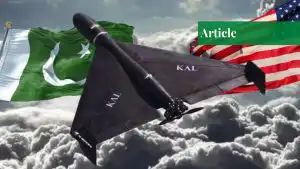
On the global stage, Pakistan has intensified its parallel engagement with the United States, China and Russia at the same time. The clearest shift has occurred in relations with Washington. Field Marshal Asim Munir’s meeting with President Trump at the White House in June 2025 started the reset. Momentum built when Islamabad extradited an ISIS-K commander linked to the 2021 Abbey Gate attack and the United States approved two F-16 maintenance packages worth $1.17 billion. Security cooperation was only the starting point. By early 2026, a bipartisan symposium on Capitol Hill and a memorandum looking at a dollar-pegged stablecoin for Pakistan’s financial system hinted at engagement moving into geoeconomic territory. The difference with New Delhi stood out: India’s ties with Washington cooled through 2025 and 2026 under steep tariffs and diplomatic friction, while Pakistan, at least for a stretch, found itself in better standing. The Washington shift has not come at the cost of the core alliance with Beijing. In May 2026, marking 75 years of friendship, Prime Minister Shehbaz Sharif travelled to Beijing and put “CPEC 2.0” back on a fast track through 2029. The two sides agreed to harmonise the Chinese 15th Five-Year Plan with the Uraan Pakistan roadmap. At the same time, Islamabad has kept strengthening connections with Moscow through joint defence exercises, energy deals and a long-term economic framework till 2030, so the American opening does not compromise the other key actors.
The multiplex course of action is not confined to great powers, and recent developments have made this most evident. In September 2025, Pakistan and Saudi Arabia signed a Strategic Mutual Defense Agreement that treats an attack on one as an attack on both. Its ambiguous nuclear dimension has already shaped how Gulf states think about security guarantees outside the Washington umbrella.
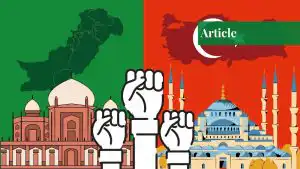
On 7 August 2026, the framework widened when Saudi Arabia, Türkiye and Pakistan formalised the Makkah Joint Defence Agreement in Mecca. The deal states that an armed attack on any one of the three is an attack on all of them. It adds a new layer of collective deterrence among three major Muslim states while remaining formally defensive in character. These thicker links with Riyadh and Ankara ran alongside a careful balancing act next door. When the United States and Israel assaulted Iran in February 2026, Pakistan condemned the strikes, reassured Saudi Arabia, and kept channels to Tehran open. Over the following months, Islamabad, working with Qatar, emerged as the lead mediator. In June 2026, it hosted high-level U.S.–Iran talks in the capital, bringing Vice President J.D. Vance and Iranian negotiators together. Those talks produced the Islamabad Memorandum of Understanding, which prolonged the ceasefire, resumed the Strait of Hormuz to commercial shipping, and set a sixty-day window for further diplomacy. On paper, it is the clearest indication of Pakistan’s multiplex diplomacy translating into tangible agenda-setting. The achievement, however, proved fragile: by July the memorandum had effectively collapsed amid renewed tensions.
At the regional level, Pakistan’s multiplex approach has delivered mixed results, with limited progress on Kashmir, a thaw with Bangladesh, and a full-blown crisis with Afghanistan. On Kashmir, no breakthrough is imminent. The ceasefire that ended the four-day India-Pakistan conflict of May 2025 has held into 2026, but it is still fragile and has not been converted into real political dialogue. During the crisis, India suspended the Indus Waters Treaty, introducing another point of contention, with New Delhi continuing to reject third-party mediation. An unexpected handshake between the two countries’ leaders on the sidelines of a Dhaka summit in January 2026 sparked speculation of a thaw, but formal negotiations have not followed. Bangladesh, by contrast, has moved further in Pakistan’s direction. Relations that started improving after Sheikh Hasina’s removal in 2024 kept warming under the interim government of Muhammad Yunus and grew stronger after the Bangladesh Nationalist Party won the early-2026 election under Tarique Rahman. Direct cargo shipping between Karachi and Chittagong has been restored for the first time since 1971.
In Afghanistan, the understanding Pakistan had built with the Taliban after 2021 collapsed into open war in February 2026. Following a wave of Tehreek-e-Taliban Pakistan and Islamic State-Khorasan attacks unleashed on Pakistani cities, the Pakistan Air Force hit militant camps in eastern Afghanistan. Taliban forces retaliated along the border; Defence Minister Khawaja Asif spoke of an “open war,” and Pakistan launched Operation Ghazab Lil Haq, a longer campaign that, for the first time since 2021, struck targets inside Kabul and Kandahar. Border crossings at Torkham and Chaman were shut, and Chinese-mediated talks in Urumqi have yielded temporary pauses. The Afghan episode reflects that omni-alignment has limits. An approach built for managing several counterparts can still be overrun when one of them turns into a direct security crisis. It has also pushed Islamabad to change its Central Asia ambitions. With the Afghan route closed, Pakistan has been rerouting regional connectivity through the Sost dry port, Gilgit-Baltistan, and through Iran. New transit deals with Uzbekistan, Kyrgyzstan and Tajikistan are designed to bypass Afghanistan, while rapprochement with Azerbaijan and the CASA-1000 project continues.
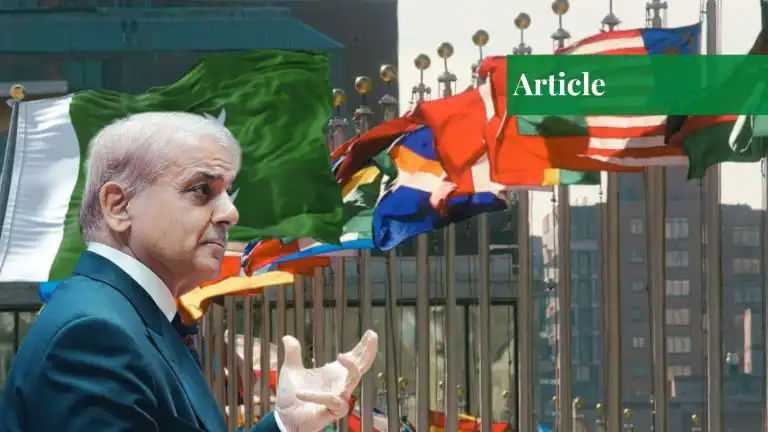
In the Global South, Pakistan has put real weight behind moral and diplomatic leadership, but the gap between the activism and actual gains is still wide. Climate diplomacy has been the clearest example. At COP30 in Belém in November 2025, Pakistan’s finance minister pushed for reform of the Loss and Damage Fund that Islamabad had helped establish at COP27. Three years later, the fund had paid out almost nothing; its first funding call, only $250 million, was restored during COP30 itself. This proves how little climate advocacy has so far delivered in tangible relief for vulnerable countries. On Palestine, Pakistan has maintained steady rhetorical support at the United Nations, presenting the issue as both an Islamic and a Global South cause. That upholds the image of a vocal advocate in place, yet the practical returns are thin. Structural geopolitical and economic constraints have kept moral standing from translating into meaningful material gains.
On the ground, domestic conditions still restrict how far Pakistan’s multiplex foreign policy can go, even though some macroeconomic indicators have improved. Growth recovered to around 3.6–3.7 percent in FY2026, the fastest pace in four years. Completed reviews of the IMF’s Extended Fund Facility and Resilience and Sustainability Facility rebuilt reserves and brought the public debt-to-GDP ratio down, which led Fitch, S&P and Moody’s to raise the rating through 2025. Poverty has kept climbing, inflation has not eased, and the IMF has already flagged the Middle East war as a risk to the near-term outlook. Political volatility and the institutionalisation of military influence in both governance and diplomacy still undermine long-term policy consistency. A country that still leans heavily on IMF support while also carrying the costs of fighting on its western border simply has less bargaining room than its recent diplomatic moves might imply. Those domestic limits hit multiplex diplomacy directly. Although the strategy offers diverse avenues of engagement, it only works if policy stays consistent enough to coordinate them. Without internal stability, Pakistan risks staying a useful short-term partner rather than a lasting one.
Multiplex diplomacy is an adaptive, not rigid, strategy. After all, from Cold War-era alliances with the U.S. to post-1990s sanction overtures to China, Pakistan’s diplomatic path has been shaped by strategic necessity. What distinguishes the contemporary multiplex order from the bipolar or unipolar eras is its fragmented global power structure. Earlier systems left middle states with almost no room to manoeuvre. The contemporary international system creates strategic space for parallel engagements across multiple geopolitical theatres. The past year revealed both the opportunity and the cost without ambiguity: the same stretch of time that resulted in a mediated memorandum between Washington and Tehran also opened war with the Taliban government next door. For smaller and middle states, this flexibility is a survival tool, but survival alone only preserves the status quo. Real progress necessitates structural positioning. Without proportionate internal reforms, Pakistan’s multiplex diplomacy stays compensatory rather than transformational. The breathing room created by diversified partnerships—China for infrastructure and industrial depth, the United States for technology and crisis mediation, the Gulf for capital and security guarantees, Russia and Central Asia for energy and connectivity—must be used to build internal resilience. Only then does navigation of the multiplex order become the capacity to shape it in areas of actual strength, such as regional connectivity, climate diplomacy, and peace facilitation.
This multiplex approach also carries clear strategic implications for the United States, China, and the Gulf states. For the United States, a Pakistan able to engage with China without becoming an exclusive client, and capable of mediating between Washington and Tehran without becoming a party to the conflict, is useful in certain regional calculations. For China, a Pakistan that maintains links to Western financial institutions helps keep CPEC projects insulated from geopolitical backlash. For Gulf states, Pakistan is a security partner and manpower source — now formalised through a mutual defence pact — that also leaves lines open to non-Arab Muslim states, including Iran. Each engagement is partial, overlapping, and transactional, which is the defining feature of multiplex diplomacy.
The danger lies in overextension. Trying to be present on too many screens can dilute focus and overstretch limited diplomatic resources. Moreover, rival powers may interpret omni-alignment as a lack of commitment and trust. Turkey, a NATO member that purchased Russian S-400 weapons, is a prime example of the dangers of half-baked overtures, where missteps could lead to political marginalisation. Balancing the Saudi defence pact against continued outreach to Iran, while simultaneously mediating between Washington and Tehran, demanded constant recalibration even before the memorandum began to fray. The Afghanistan conflict then depicted how years of engagement can collapse once security imperatives override diplomatic patience. To navigate this, Pakistan must sequence priorities, define clear red lines, and ensure that short-term deals serve its long-term strategic goals.
In this sphere, Islamabad practices multiplex diplomacy that is neither purely idealistic nor purely opportunistic. It is, above all, a survival strategy in a world where flexibility is a form of power. But flexibility without stability is fragile, as the unravelling of Pakistan’s signature diplomatic achievement of the past year has shown. On the world stage, many screens exist, but Pakistan must ensure that it is not just an extra in other people’s films. It must work toward scripting its own narrative, one that resonates at home as much as abroad.
If you want to submit your articles and/or research papers, please visit the Submissions page.
To stay updated with the latest jobs, CSS news, internships, scholarships, and current affairs articles, join our Community Forum!
The views and opinions expressed in this article/paper are the author’s own and do not necessarily reflect the editorial position of Paradigm Shift.

Basit Pervez is an independent researcher and writer on International Relations, focusing on South Asian regionalism, and Global IR perspectives. An MPhil scholar in American Studies at Quaid-i-Azam University Islamabad, he has contributed to publications including Global Insight and Matrix on topics ranging from the Ukraine crisis to AI and international security.