I still recall going to Mavra Publishers on Mall Road and purchasing an Ibn-e-Safi book. My mother used to say, “If you want to truly enjoy Urdu and fire up your imagination, read Ibn-e-Safi.” I followed her advice that day without realizing I was entering a world of cunning spies, strange villains, and a hero with a sharp mind and a peculiar sense of humor—all vividly rendered in Urdu. My adventure into the exciting world of Ibn-e-Safi’s spy fiction began that day on Mall Road.
A Writer for the Masses, a Legacy Beyond the Page
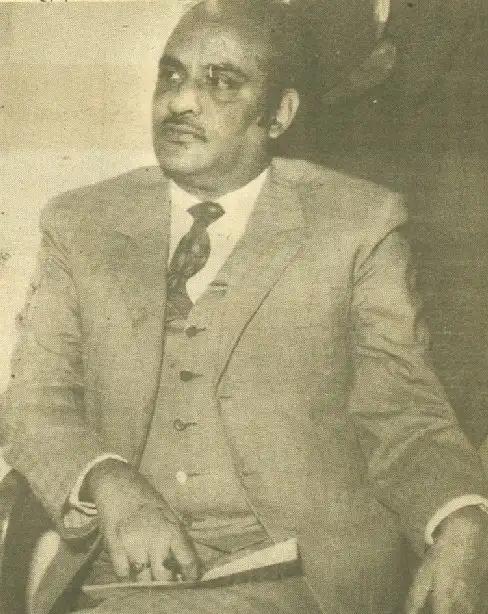
July 26, 2025, marks the 45th death anniversary of Ibn-e-Safi, a writer who started his journey as Asrar Narvi, a poet from British India, and went on to become the subcontinent’s most beloved spy fiction author. What started as poetry under his real name evolved into captivating spy novels under his pen name Ibn-e-Safi, forever changing the landscape of Urdu popular literature. Even Agatha Christie once described him as “the only original writer in the subcontinent,” which says a lot about his distinctive and expansive storytelling. In addition to becoming bestsellers, his works contributed to the cultural transformation of Urdu fiction. He began publishing from Karachi in 1952 under his own Asrar Publications, aiming to bring thrilling fiction to the everyman.

He emphasized his dedication to accessibility by keeping his novels purposefully affordable and by writing a thorough foreword explaining any price increases, even if they were only by a chawanni (small coin). As Ibn-e-Safi once quipped, his books were found under pillows, not on bookshelves, a playful jab at critics who dismissed his work as “lesser literature.”
His popularity remained unshakable. According to Subrung Digest editor Shakeel Aadilzada, 14,000 copies of a new release sold out in a single day at Karachi’s Regal bus stop, then a bustling hub of wholesale book trading.
The Lost Years and the Comeback
At the height of his creative powers, Ibn-e-Safi often wrote one or two books a month, most of which became bestsellers, a pace few writers match today. His writing combined sharp imagination with clarity and discipline. But in the late 1950s, he began experiencing serious health challenges. His pen fell silent after a diagnosis of schizophrenia, leaving a void felt across the subcontinent. His fame was so great that a number of imposters tried to profit from his reputation by publishing under the name “Ibn-e-Safi.” But no one could match his style, craft, or wit. The real Ibn-e-Safi fought a silent battle behind closed doors while readers waited.
In November 1963, a literary miracle unfolded. Libraries in Karachi raised banners to welcome their returning hero. After three years of absence, Ibn-e-Safi made his renowned comeback with the release of Dairh Matwaalay, an Imran Series novel that immediately became a bestseller. His return was not just celebrated in Pakistan. It resonated across the border too. In India, the book’s release was honored by the presence of Lal Bahadur Shastri, then India’s former interior minister and later its prime minister.
The subcontinent’s favorite spy novelist had returned, and he had lost none of his brilliance.
Across Borders: A Subcontinental Legacy
Ibn-e-Safi’s appeal was never limited to a particular country or language. His characters, humor, and suspense appealed to readers from Bangladesh to India and beyond, even though he wrote in Urdu. His novels were translated into Hindi, Gujarati, and other South Asian languages, allowing non-Urdu readers to enter the thrilling worlds of the Imran Series and Jasoosi Duniya. More recently, selected works have also been published in English, opening the door for international audiences to experience his unique brand of spy fiction.
One story demonstrates his profound cultural influence: a 90-year-old Bengali woman in a hospital in Dhaka asked to have Ibn-e-Safi novels read to her. The reader was journalist Badar Munir, and the patient, the mother of Sheikh Mujibur Rahman, Bangladesh’s founding father.
His imagination’s cultural reach matched this intense emotional resonance. Bollywood’s most memorable villains were shaped by his flamboyant antagonists, which served as inspiration for Javed Akhtar’s famous works such as Gabbar Singh and Mogambo.
Imran vs. Faridi: A Literary Rivalry
The age-old question of whether Ali Imran or Colonel Faridi was a greater hero is a necessary part of any discussion about Ibn-e-Safi. Fans across generations have drawn battle lines between the playful, unpredictable genius of Imran and the stern, stoic brilliance of Faridi.
Both characters appealed to different readers and defined two separate fictional worlds: Jasoosi Duniya and the Imran Series. Imran won over hearts in Pakistan with his clownish charm and hidden genius. In India, Faridi, the quiet thinker dedicated to justice, was more well-liked.
Ibn-e-Safi wrote 124 Jasoosi Duniya and 121 Imran Series novels, a rare achievement for any author. Fascinatingly, Ibn-e-Safi once remarked that Colonel Faridi was his ideal, which reflects the writer’s respect for order, reason, and unwavering values. Both characters, notably lifelong bachelors, were written as morally upright men, untouched by romantic distractions and driven solely by duty, wit, and justice.
Perhaps that’s the enduring genius of Ibn-e-Safi: he offered readers two versions of heroism, one playful and the other principled, and both became unforgettable.
Inspiring Young Minds and Strengthening Urdu
Ibn-e-Safi’s books did more than just entertain; they encouraged Urdu literacy, especially among youth. When he began publishing in 1952, Pakistan’s literacy rate was below 20 percent. Outside of the classroom, many beginning readers found reading enjoyable thanks to his readable, captivating stories.
Many Pakistani children were first exposed to Urdu literature outside of the classroom through the Imran Series and Jasoosi Duniya. A pre-digital generation developed a love for Urdu thanks to its engaging language, which made reading seem like an adventure.
Maulvi Abdul Haq, fondly remembered as Baba-e-Urdu, openly recognized Ibn-e-Safi’s impact on Urdu literature. As noted, “Urdu literature owes a lot to Ibn-e-Safi for his great contribution to Urdu.” His admiration presents Ibn-e-Safi as a pivotal figure influencing the language’s contemporary development rather than merely confirming his popularity as a writer.
Among his admirers was Dr. A.Q. Khan, founder of Pakistan’s nuclear program, who once called him the all-time greatest Urdu detective writer.
Preserving the Legacy
From 1952 to 1980, Ibn-e-Safi’s spy fiction shaped Urdu literature, a legacy that still thrives. Ibn-e-Safi passed away on 26 July 1980, a loss that saddened millions of his fans at the time. Nevertheless, his creations persisted and continue to motivate present and future generations. The government of Pakistan, in 2019, awarded Ibn-e-Safi with the Sitara-i-Imtiaz, an award in recognition of his literary legacy, 39 years after his passing. This recognition reaffirms Ibn Safi’s place in Urdu literature. His son, Ahmad Safi, had taken thoughtful steps to revive his father’s legacy.
New editions of both the Imran Series and Jasoosi Duniya are being published by Asrar Publications. Each volume contains three to four novels and retains the original covers, evoking suspense with stylized figures and subtle hints of crime. Many of these have also been translated into English and Hindi. His stories were made accessible to younger generations worldwide in 2010 with the release of the first English editions. As a nod to the digital era, Ibn-e-Safi’s novels are now available in audiobook format on websites like Audible, making his gripping tales accessible to an entirely new generation of readers.
A hidden gem in Ibn-e-Safi’s legacy is the 1974 film Dhamaka, adapted from his novel Bebakon Ki Talash. His sole film endeavor, though a failure at the time of its release, has since gained a cult following. According to his son, Ahmad Safi, the film’s only known copy is missing, and despite many efforts, it has not been found yet. Still, fans and archivists continue to hope that this rare piece of Urdu spy fiction will one day be recovered and restored.
In an interview, when asked why the family never pursued legal action against plagiarists, Ahmad Safi replied, “When my father himself didn’t take action, why should I? He understood the distinction between his writing and theirs, and trusted that the readers did too.”
His confidence reflects the enduring power of Ibn-e-Safi’s voice, one that lives not just in books but in the imagination of generations. My mother was right. Ibn-e-Safi’s spies taught generations to relish Urdu, proving that spies could be scholars, villains could be poets, and language could be thrilling.
If you want to submit your articles and/or research papers, please visit the Submissions page.
To stay updated with the latest jobs, CSS news, internships, scholarships, and current affairs articles, join our Community Forum!
The views and opinions expressed in this article/paper are the author’s own and do not necessarily reflect the editorial position of Paradigm Shift.

Mazz Bin Akmal is a law student at the Lahore School of Law with a keen interest in Middle Eastern politics, public opinion, and the role of youth in shaping national and global narratives.