
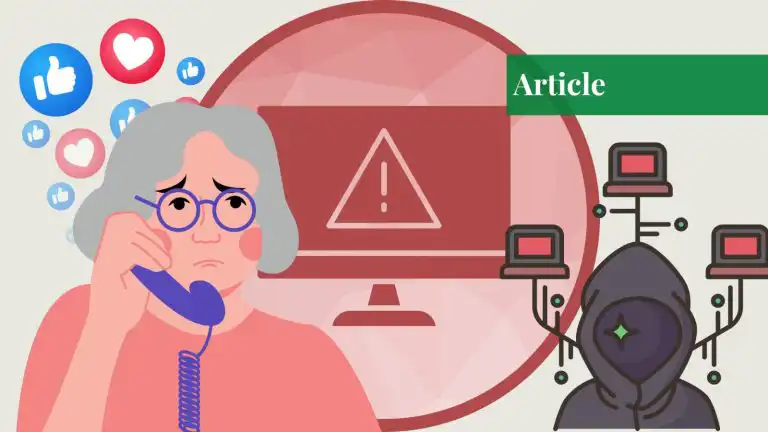
Social media has transformed the ways in which individuals connect, share information, and make choices. For younger users, this transition often feels seamless. Conversely, for older generations, the change has been significant. In Pakistan, an increasing number of individuals over 50 are using Facebook, WhatsApp, and YouTube for news and guidance. While these platforms foster connections, they also come with negative implications, including false health advice, scams, and misleading headlines. Consequently, decision-making—especially during emergencies like the COVID-19 pandemic—can be influenced by misinformation.
Reasons Why Older Generations Utilize Social Media
For numerous elderly individuals in Pakistan, social media emerged as a crucial support system during the COVID-19 lockdowns. With mosques, parks, and community centers shut down, older adults turned to WhatsApp groups and Facebook pages for updates and social interaction. A study in Islamabad featured in the Pakistan Journal of Social Research indicated that seniors in Islamabad primarily used smartphones for WhatsApp and YouTube, yet often faced challenges in recognizing misleading messages or using apps safely.
In contrast to younger users, older individuals frequently do not verify the information they encounter online. Instead, they tend to trust messages shared by friends or relatives. This tendency makes them more susceptible to believing health-related rumors, financial frauds, or political propaganda.
The Covid-19 Case: Trusting Every “Treatment”
The COVID-19 pandemic highlighted the vulnerability of older individuals to medical misinformation. Claims suggesting that drinking herbal teas or inhaling steam could treat the virus gained popularity throughout Pakistan. The analysis of fake COVID news indicated that older users and those with limited digital skills in Pakistan were more inclined to believe misleading information circulated on Facebook or WhatsApp during the pandemic.
Other studies regarding fake news about COVID-19 revealed that being exposed to false information elevated stress and anxiety among social media users, particularly older adults who did not have access to dependable sources of information. In reality, numerous older individuals in Pakistan opted for these misleading treatments—preferring herbal remedies instead of vaccinations, postponing necessary medical attention, or sharing unconfirmed advice with family members. These decisions had a direct impact on health choices during a crucial period.
Susceptibility to Clickbait and Frauds
Health misinformation is just one problem. Older adults are also targeted by clickbait and scams. Headlines such as “Doctors Don’t Want You to Know This!” or fake miracle cure ads are designed to get attention and can lead to people losing money.
In one high-profile case, a 78-year-old woman in Lahore lost millions of rupees to an online investment scam. Fraudsters used professional-looking websites and phone calls to gain her trust, convincing her to hand over her life savings.
Studies have found that older adults can be more at risk for scams, partly because they tend to trust information on familiar websites. Many people feel embarrassed or worry about being judged, so they do not report these incidents. This allows scammers to keep targeting others.
Scams in Pakistan Aimed at Senior Citizens
Scams Involving Investments
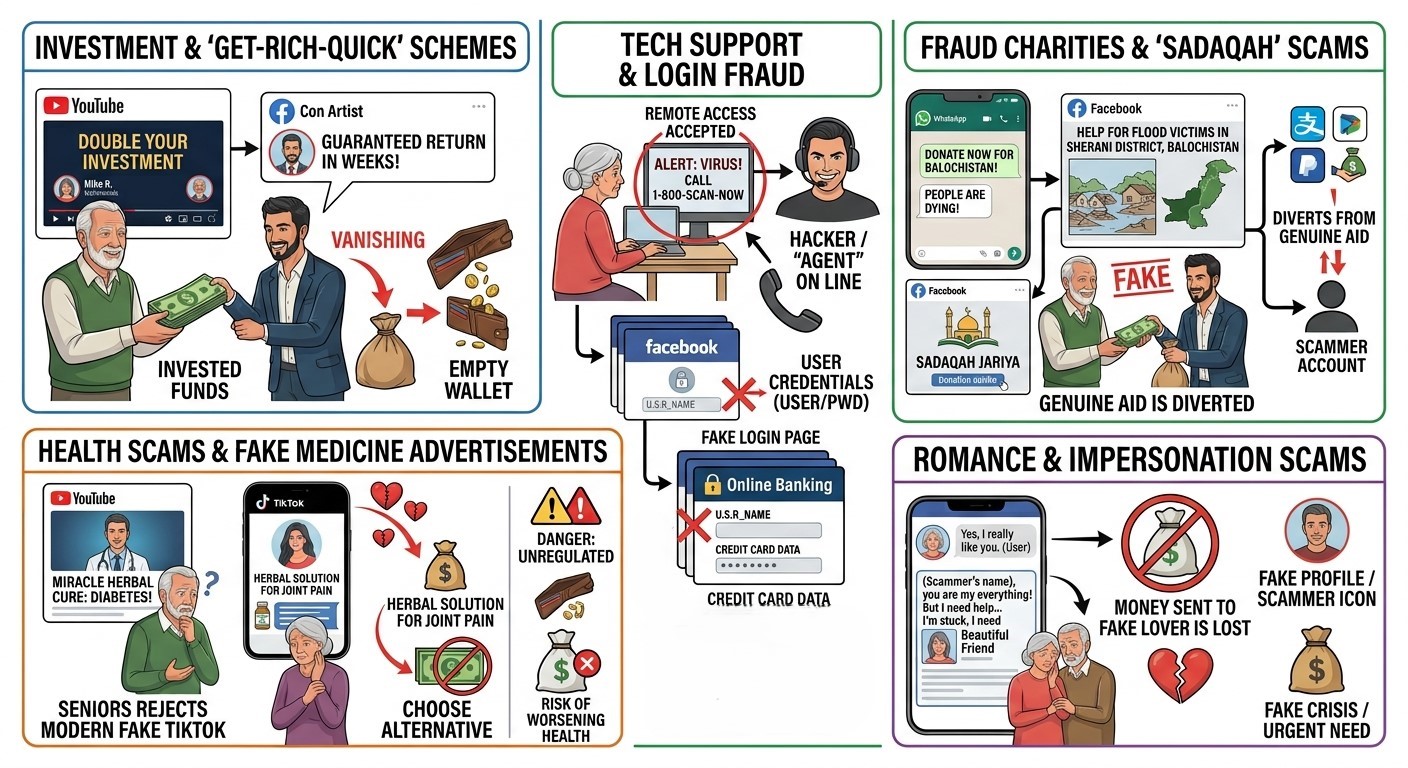
Older adults are often targeted by “get-rich-quick” schemes on platforms like YouTube and Facebook that claim to double investments in just a few weeks. The videos and ads appear highly professional, featuring polished logos and fake testimonials to create a sense of legitimacy for the scam. Some elderly individuals may invest their retirement savings into these schemes, not realizing how easily such information can be fabricated online. Because of shame, very few victims report the scam when the con artists vanish overnight, leaving them empty-handed.
Fraud Charities
Charity is a fundamental aspect of Pakistani culture, especially during Ramadan and in response to national crises such as earthquakes or floods. Scammers take advantage of this generosity by setting up fraudulent charity pages on platforms like Facebook or within WhatsApp groups. They utilize mobile wallets to share heartfelt requests that feature images of areas affected by disasters and pleas for donations. Seniors, eager to contribute, often send money without verifying the authenticity or registration of the charitable organization. This not only leads to financial loss for them but also means that the true beneficiaries—those who are genuinely in need—receive nothing.
Health Scams
Fraudsters understand that one of the primary concerns for older adults is their health. On platforms like YouTube and TikTok, fake ads for herbal solutions or miracle drugs aimed at treating conditions such as diabetes, high blood pressure, joint pain, and even COVID-19 are prevalent.
Many of these ads feature celebrities or actors dressed in medical attire endorsing the product. Seniors are more inclined to consider these alternatives as they may be skeptical of expensive hospitals or modern treatments. These situations can lead to disastrous consequences, including financial loss, worsening health, and in some cases, life-threatening medical emergencies.
Effects on Decision-Making
These patterns influence real-life choices:
- Health choices: Opting for unverified treatments instead of proper medical care, postponing vaccinations, or having distrust towards healthcare professionals.
- Financial choices: Being deceived by scams, falling for investment fraud, or engaging with misleading ads that deplete finances.
What Makes Seniors More Vulnerable?
Several factors contribute to this trend:
- Limited Digital Literacy – Many older individuals did not have access to smartphones or computers during their formative years, which makes it difficult for them to evaluate what is trustworthy.
- Reliance on Personal Networks – Cultural values foster confidence in family members and community leaders. When a WhatsApp message is shared by a relative, it seems more credible.
- Social Isolation – Particularly during the COVID-19 pandemic, older adults found themselves distanced from conventional community gathering places, leading them to depend more on online communication.
- Unawareness of Scams – Unlike younger generations, who frequently receive alerts about phishing and fraud, older adults are less familiar with campaigns focused on digital safety.
- Social and Political Choices: Accepting propaganda as truth, sharing false news, and forming voting decisions based on inaccurate information.
A recent study published in the Quarterly Journal of Dialogue indicates that older Facebook users in Pakistan exhibit lower digital literacy levels and are more susceptible to misinformation, particularly regarding politics and health.
Efforts to Address the Issue
The issue has been acknowledged by both academics and policymakers. Several significant initiatives include:
- Educational Initiatives: Research indicates that even basic video tutorials on recognizing false information can enhance older individuals’ ability to detect misinformation. A LUMS project conducted by researchers at LUMS evaluated brief educational videos and found significant advancements in digital literacy among seniors.
- Collaborations Between Government and Platforms: During the pandemic, according to Geo News, the Government of Pakistan collaborated with Facebook to provide accurate information about vaccines, which reached over 32 million people.
- Community Engagement Campaigns: Non-governmental organizations and media organizations are increasingly highlighting scams and advising the public—particularly older adults—about the tactics utilized by con artists.
What Else Should Be Accomplished
Although progress has been made, obstacles persist:
- Digital literacy initiatives seldom extend to rural areas where a significant number of older Pakistanis reside.
- Social media sites continue to permit the rapid dissemination of fraudulent advertisements and misleading information.
- Families frequently undervalue the necessity of assisting seniors in using the internet safely.
- Future efforts should aim to enhance media literacy education, streamline technology safety tools, and engage families directly in supporting older individuals with information verification.
If you want to submit your articles and/or research papers, please visit the Submissions page.
To stay updated with the latest jobs, CSS news, internships, scholarships, and current affairs articles, join our Community Forum!
The views and opinions expressed in this article/paper are the author’s own and do not necessarily reflect the editorial position of Paradigm Shift.

Imtiaz Munir is currently pursuing a BS in English with a focus on linguistics and literature at Bahria University, Islamabad. He is an active reader with a strong grasp of political theories, having explored concepts like justice and forms of government. He enjoys analyzing political themes with a philosophical approach. At present, he is working on his research thesis to meet academic requirements and further his interest in critical analysis.