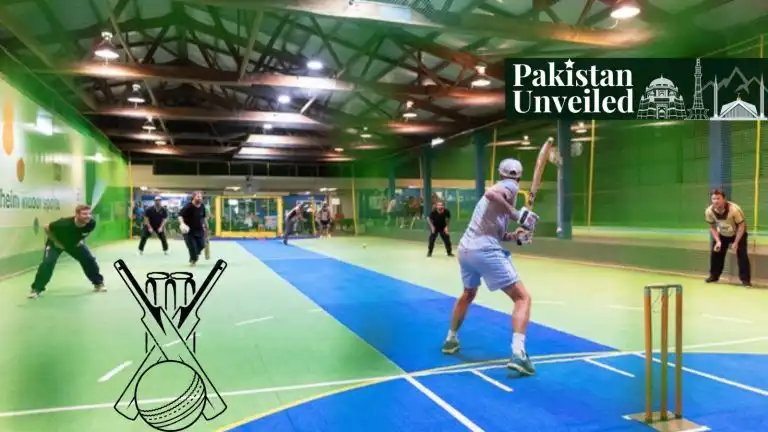
Cricket has always been a sport that requires space. A full-sized pitch, an outfield, boundary ropes, and preferably, a clear blue sky overhead. For most of cricket’s history, if you lacked any of these qualities, you simply did not play. Indoor cricket changed all of that.
What began as a method for players to keep sharp in the winter has evolved into a legitimately popular sport in its own right. Indoor cricket is now played competitively in dozens of countries and recreationally by millions of casual players who enjoy the sport but do not always have access to a full outdoor ground. It is played in a purpose-built net arena with modified rules, a different scoring system, and a much faster pace than the outdoor game.
This guide includes everything. What indoor cricket is, how the rules operate, how scoring is determined, what equipment is required, and how it varies from the classic outdoor version you are familiar with.
What Is Indoor Cricket?
Indoor cricket is a modified form of conventional cricket played in a completely enclosed net area. The playing pitch is generally 30 meters long and 12 meters broad, much smaller than an outdoor cricket ground. The whole arena is encircled in nets on both sides and above, ensuring that the ball is always in play and never goes out of bounds in the traditional sense.
The game is intended for eight players per side, rather than eleven in outdoor cricket. Matches are shorter, quicker, and higher-scoring than outdoor variants. Each player bats and bowls, and the game goes at a rate that outdoor cricket seldom approaches, also in the smallest Twenty20 format.
Indoor cricket is truly accessible. You do not need a grass pitch, a groundskeeper, or optimal weather conditions. You will need a venue, a net structure, and some eager competitors. This accessibility is one of the main reasons why the game has developed so steadily since its inception in Australia in the 1970s.
Indoor Cricket Rules: How the Game Works.
Understanding indoor cricket regulations necessitates discarding some assumptions from the outdoor game. The fundamental notions of batting, bowling, and fielding remain, but practically everything else works differently.
Teams and Overs
Each squad comprises 8 players. A conventional indoor cricket match lasts 16 overs per innings, or 8 overs per side in other forms; however, these figures differ by competition level and age group. Each member on each team bats in pairs, with each pair facing two overs before the next pair is introduced.
This rotation ensures that all eight players bat, regardless of how many wickets fall. Losing a wicket does not end a partnership; it just costs runs. This is one of the most notable structural changes from outdoor cricket.
How Wickets Work
In indoor cricket, losing a wicket does not result in a batsman being dismissed and removed from the game. Instead, each wicket charges the batting side five runs from their total. The batter who was dismissed continues to bat. This strategy keeps all players involved in the innings while also making wicket-taking a primary goal for the fielding unit. Even if a bowler cannot break a batting partnership outright, taking wickets immediately reduces the opposition’s total.
Scoring Zones
Indoor cricket uses net walls and ceilings to implement a zone-based scoring system that is not used in outdoor cricket.
When the ball strikes particular portions of the net, different run values are assigned. A ball that goes into the back net behind the bowler without bouncing usually scores six runs. Balls that strike the side nets in defined locations score between one and four runs, depending on which zone they enter. A ball that hits the ceiling may be declared dead according to the competition’s regulations.
This zone-scoring system adds a tactical layer to indoor cricket, making it distinct from outdoor batting. Instead of attempting to knock the ball over a boundary rope, batters study the angles of the net and strategically target certain scoring zones.
Indoor versus Outdoor Cricket: The Key Differences
| Feature | Indoor Cricket | Outdoor Cricket |
|---|---|---|
| Players per side | 8 | 11 |
| Playing surface | Net enclosed arena | Open grassy ground |
| Wicket system | Costs run, batter continues | Batter dismissed and leaves |
| Boundaries | Net zones with run values | Rope boundary for 4 or 6 |
| Ball | Softer indoor ball | Hard cricket ball |
| Match length | Typically 30–60 minutes | Hours to multiple days |
| Weather dependency | None | Significant |
| Fielding positions | Fixed net constraint | Open field placement |
The most major practical difference for players transitioning from outdoor cricket is the tempo of the game. Indoor cricket moves really quickly. Overs are bowled swiftly. Partnerships alternate every two overs. Because of the compact arena, each delivery is met with rapid response. There is little of the thoughtful tempo that distinguishes Test cricket and other limited-overs outdoor forms.
Equipment for Indoor Cricket
The Ball
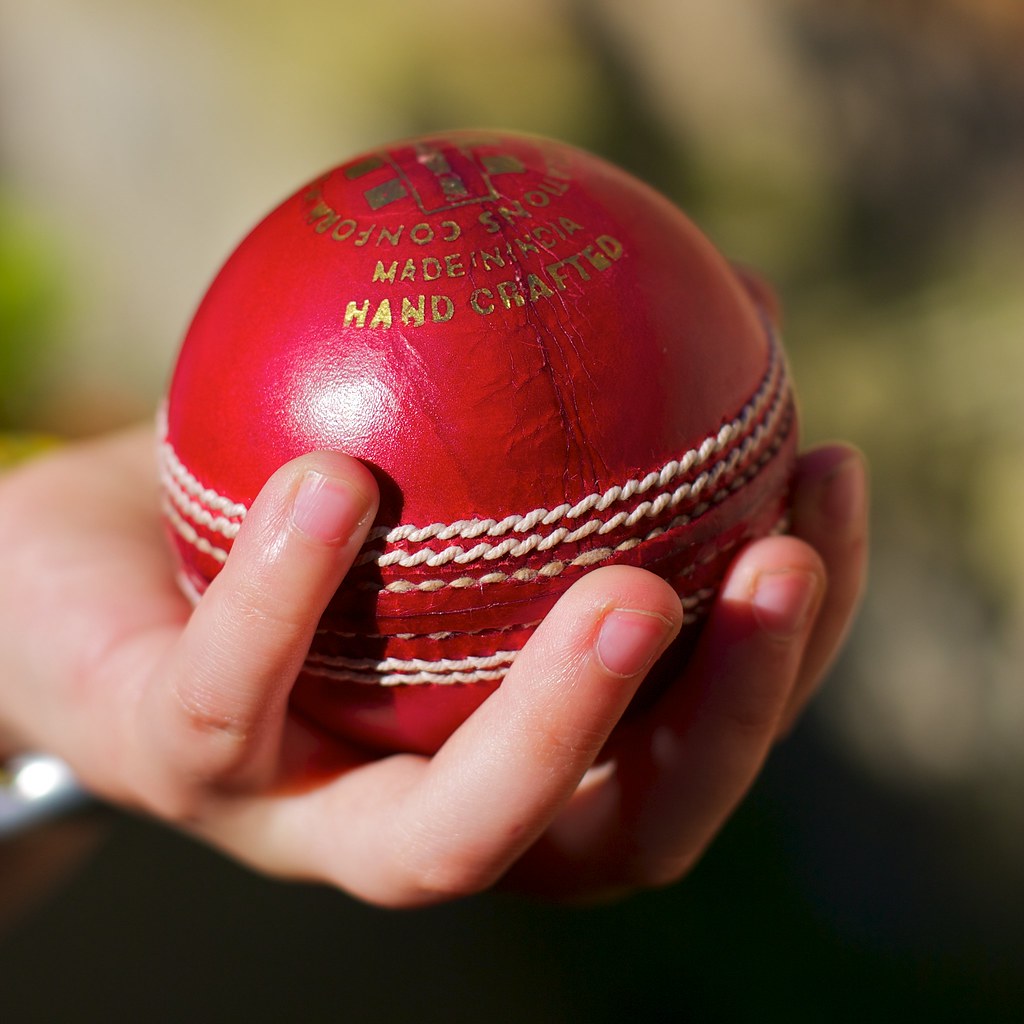
Indoor cricket employs softer balls than outdoor cricket. This is partially a safety factor in an enclosed arena, and partly a practical one—a hard ball bouncing off net walls at high speeds presents safety hazards that a softer ball reduces. The indoor ball still behaves reliably enough to need correct hitting technique, but it will not hurt a player who receives a direct hit from a wall rebound.
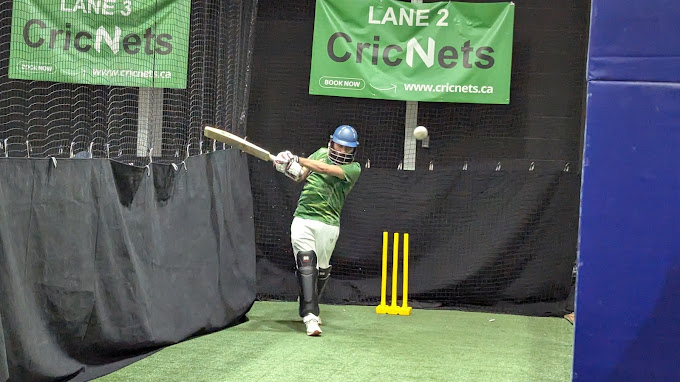
Standard cricket bats are used for indoor cricket. Many indoor players select significantly lighter bats than they would use outside since the rapid tempo of the game favors quick bat speed through the hitting zone over sheer power that heavy bats deliver.
Footwear
Indoor cricket is played on a synthetic or hardwood surface instead of grass; therefore, the footwear requirements are different from those for outdoor cricket. Non-marking rubber-soled shoes with enough lateral cushioning are recommended. Traditional cricket spikes are unsuitable for indoor surfaces and are typically disallowed by venue operators.
Protective Equipment
Batsmen use gloves and pads while playing indoor cricket. Helmets are highly recommended and needed in most competitive settings. The confined design of the arena means that a ball can come off the net at unexpected angles, making good protection more crucial than it may appear to rookie players.
Tips to Play Indoor Cricket Well
Read the Angles Early
The major adjustment that outdoor cricketers undertake when switching to indoor cricket is learning to discern the net angles. A ball hits the side net at a specific angle and returns on a predetermined trajectory. Players who understand these angles may field more effectively and bat more thoughtfully, focusing on certain zones rather than striking the ball as hard as possible.
Rotate Strike Consistently
Because batting pairings swap every two overs, it is less valuable for one player to dominate scoring at the expense of the other. A partnership that rotates strike and keeps both batters busy tends to accrue more runs over time than one in which a single strong batsman attempts to do everything on his own.
Bowl Tight Lines
In outdoor cricket, a wide ball occasionally causes little harm. In indoor cricket, where scoring zones are clearly marked, bowling loose lines makes it too easy for batsmen to target high-value net zones. The most efficient bowling method in the indoor format is tight, precise delivery, which drives the batsman to manufacture angles rather than discover them naturally.
Vary Your Pace Intelligently
Because the arena is enclosed and the ball bounces off the net surfaces, speed variation has a different effect in indoor cricket than it does outside. A slower ball that the batter gets beneath may result in ceiling contact or an uncomfortable net bounce. Bowlers who employ speed variation deliberately—alternating between pace and line rather than merely bowling quickly—are often more difficult to score against in indoor cricket.
Communicate Constantly as a Pair
Indoor cricket’s partnership batting strategy requires the two batsmen in the center to communicate frequently regarding running, shot selection, and zone aiming. Pairings that acquire a shared sense of when to push for runs and when to consolidate score perform better over their two-over allotment than pairings that bat individually.
Why Is Indoor Cricket Worth Playing?
Indoor cricket offers something significant to cricket fans who do not have regular access to outdoor facilities. You can play competitive cricket in just an hour. You play regardless of the weather. Every player on your squad bats and bowls. And the game’s tempo keeps everyone interested throughout the contest, unlike outdoor cricket, which may result in spells of inactivity for fielders in less prominent positions.
For casual gamers, it is accessible without requiring advanced skill levels to enjoy. For serious players, it’s an effective training tool that improves reflexes, sprinting between wickets, and shot selection under duress faster than most practice forms.
Indoor cricket values athleticism, quick thinking, and teamwork. It’s a full game that can be enjoyed on its own rather than as a replacement for the outdoor version.
FAQs
How many players are needed for indoor cricket?
Each squad consists of eight players. The concept is particularly developed for eight-aside competition, with all players batting in pairs and sharing bowling duties.
Can kids play indoor cricket?
Yes, indoor cricket is perfectly suited for youngsters, and junior-specific championships are available in most countries where the sport is organized. The softer ball and enclosed setting make it safer for younger players than traditional outside cricket with a hard ball.
How long does an indoor cricket match last?
A normal recreational indoor cricket match lasts 45 minutes to an hour from first ball to last. Competitive matches with longer over allocations can last up to 90 minutes. The format is specifically designed to be time-efficient.
Do you need additional training to play indoor cricket if you already play outside?
The essential abilities are transferred directly; however, the net zone scoring system and wicket-costs-runs formula need to be adjusted. Most experienced outdoor cricketers adjust to the indoor game after a session or two. The speed of the game is the most significant change, instead of any technical skill needed.
If you want to submit your articles and/or research papers, please visit the Submissions page.
To stay updated with the latest jobs, CSS news, internships, scholarships, and current affairs articles, join our Community Forum!
The views and opinions expressed in this article/paper are the author’s own and do not necessarily reflect the editorial position of Paradigm Shift.

Paradigm Shift is an official staff account.