
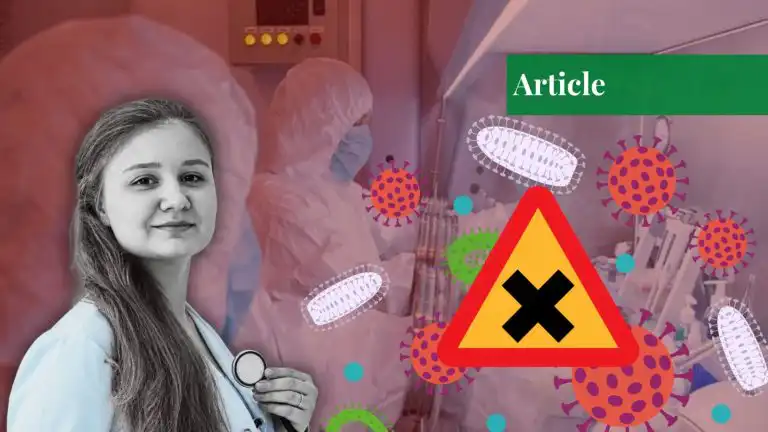
Darya Shipilova, a 28-year-old laboratory worker at Russia’s anti-plague research laboratory, died on 2nd October after developing severe pneumonia. The incident could be seen as a medical tragedy until it was revealed that nearly 200 laboratory workers were quarantined. Her death gave birth to more questions, and answers are nowhere to be found. Although Russia has consistently denied allegations regarding a laboratory security breach, this incident raised a more troubling question: How much can the world know or do when a death occurs inside a highly specialized pathogen research institute?
This incident also sparked a reaction from its geopolitical rival, the United States of America. Professor Ashish Jha, who served as the US White House COVID-19 response coordinator, raised concerns about Russia’s secrecy about biological weapons. He expressed his views on social media: “US intelligence assesses that Russia’s scientists continue developing biological weapons capabilities. Those programs operate in secret. Nobody outside inspects them, and nobody inside has much incentive to admit when something goes wrong.” These statements by important political figures politicize sensitive issues by framing them as not merely an international security concern but as a subject of competition and rivalry.
The Burden of History
Washington’s concern regarding Russia’s biological weapons does not emerge in a vacuum. The concern emerged because the former Soviet Union had a legacy of state secrecy and limited public accountability regarding its military and biological activities and weapons. Historical incidents exhibit how a lack of transparency and restricted information can spread the effects of laboratory incidents to a wider community.
In 1979, during the Soviet era, dozens of people were killed due to an outbreak of anthrax in Sverdlovsk, now Yekaterinburg. Soviet authorities linked the cause of the disease and deaths to contaminated meat from infected livestock, but later, that assumption was challenged by evidence that suggested the reason for the outbreak was an accidental release of anthrax spores at a nearby military biological facility. The Soviet Union’s secret biological program created a lasting concern for Russia’s biological activities, making a fair and transparent investigation into the laboratory worker’s death at Russia’s Irkutsk Anti-Plague Research Institute more significant.
When authorities initially linked deaths to contaminated meat, the explanation limited understanding of the possible role of a military facility. However, the Sverdlovsk outbreak and the Irkutsk incident are different cases, and the available information about Darya’s death does not establish the fact that a biological agent was deliberately or accidentally released by the authorities.
Moreover, when states are engaged in a rivalry, no laboratory incident can be considered purely a scientific accident. In such times, even a scientific incident can become a reason to question each other’s intentions. Russia has strained relations with Western governments since 2022, over the war with Ukraine. Reuters reported that US Secretary of State Marco Rubio called on Russia to share information about the workers’ deaths and that Washington is monitoring the issue very closely. This incident could be used to reinforce Western concerns about Russian biological activities even before the cause of death is investigated. Public calls for transparency have increased pressure on Moscow but cannot limit or stop its biological activities or research.
World’s Reaction
The incident brought the world’s focus to this incident as it raised questions about public health and lab security. While some states have demanded clarifications, others sought to become part of media reports. China emphasized its cooperation with Russia. South China Morning Post reports that Chinese foreign ministry spokesman Guo Jiakun said, “China and Russia maintain close exchanges and cooperation on the prevention and control of infectious diseases, including plague.”
The European response was no different. They have approached this incident through risk assessment. On October 6th, 2026, the European Centre for Disease Prevention and Control (ECDC) reported that they were closely observing the situation in collaboration with the World Health Organization’s European office. India and Pakistan also represent significant regional perspectives, as these states are home to about 1.736 billion individuals. For such states, it is important to have effective disease prevention and preparedness mechanisms. Both have opted for precautionary measures and surveillance.
According to Geo News, a Pakistani health ministry official states that the risk of plague spreading in Pakistan is very low. Through the COVID-19 experience, the international community knows the significance of cooperation in fighting global health crises. Today, the same cooperation is needed to investigate incidents and design a framework for disease prevention.
International Framework
This raises important questions about enforcement powers and implementation mechanisms. The Biological Weapons Convention (BWC), an international treaty, came into force in 1975. It explicitly states that the countries party to the convention are restricted from developing, producing, stockpiling, or acquiring biological agents. The treaty imposed a ban on the development and proliferation of biological weapons but failed to create a permanent inspection body to monitor compliance by all relevant authorities. The weakness became visible when efforts to strengthen the mechanisms collapsed. The major setback came in 2001 when the United States of America rejected the discussed draft. As a result, the Biological Weapons Convention still lacks an inspection system to investigate cases such as the Irkutsk incident.
Hence, the gap between the framework and its practice creates the major problem. The Biological Weapons Convention (BWC) remains a strong framework, but its effectiveness depends on states’ willingness to cooperate and provide neutral evidence. However, establishing an international framework could raise concerns and resistance among states regarding violations of their sovereignty and political intervention in domestic affairs. A future framework would need to strike a balance between transparency and the security concerns of the states involved.
International Health Regulations in 2005 provided a framework for states to cooperate with the World Health Organization (WHO) in response to health-related threats that may cross borders. It does not address whether a state is involved in the development of prohibited biological weapons.
So, its role must not be confused with the treaty verification authority. The World Health Organization, on October 10th, reported that Russia claims that it has not found any high-threat pathogens among contacts, and the cause of Darya’s death remains unconfirmed. Hence, the World Health Organization can only request information from states or assess the potential impact but cannot independently examine the relevant evidence. This demonstrates that public health investigations and arms control verifications must complement one another.
Another Pandemic?
Shipilova’s death has raised a question that extends beyond the traditional security and rivalry perspective. It has sparked a debate about whether this incident involves the release of a pathogen and, if it does, could it lead us to a new medical emergency? Russia has denied allegations regarding a laboratory security breach or release of a pathogen that could lead to the development of a new disease. Moreover, the death of a scientist does not prove an impending pandemic.
But the world cannot rule out that possibility and fret because the plague is caused by the bacterium Yersinia pestis. The bacterium makes the plague highly contagious, and if it isn’t detected or treated early, it could kill a person. However, the cause of Shipilova’s death remains uncertain, and there has been no report of possible transmission, so it would be too early to say that this marks the beginning of a new pandemic.
Thus, the Irkutsk case highlights a major weakness of independent investigation in the state-controlled system. Russia claimed that it had not identified any laboratory safety or security breach. According to the World Health Organization, the cause of the worker’s death remains unclear. This uncertainty creates concerns about transparency and institutional capacity to verify claims.
A credible investigation is required that includes medical records, epidemiological evidence, laboratory methods, and testing methods. This mechanism may assist in addressing this uncertainty. This could be further strengthened if states report serious accidents and mishaps and focus on designing stronger mechanisms for investigating compliance under the relevant convention. Ultimately, the aim is to build an international system where state sovereignty is valued without being an obstacle to accountability.
If you want to submit your articles and/or research papers, please visit the Submissions page.
To stay updated with the latest jobs, CSS news, internships, scholarships, and current affairs articles, join our Community Forum!
Find our FREE quizzes and MCQs here!
The views and opinions expressed in this article/paper are the author’s own and do not necessarily reflect the editorial position of Paradigm Shift.