
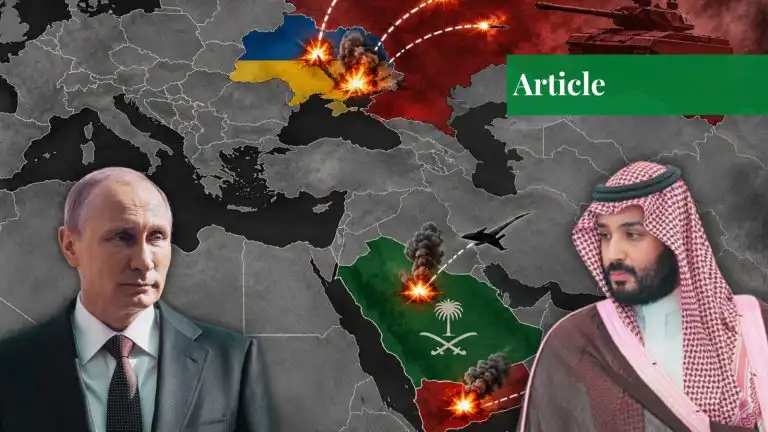
Recently, the world has seen a shift in methods of warfare. States and non-state actors have adopted a strategy of attacking the energy infrastructure of their rivals. The world has witnessed a sharp surge in attacks on energy facilities in wars and conflicts. Through this strategy, they seek to increase international and domestic pressure on their rivals, as disruption in energy markets fuels global inflation. Thus, this strategy carries economic and geopolitical ramifications extending far beyond the states directly involved in the war, exposing the susceptibility of global energy markets to geopolitical rivalries.
Both Russia and Saudi Arabia are among the most crucial players in the international energy and oil industry. Any disruption to their energy infrastructure affects the exports, production, and stability of global energy. Damage to oil refineries, export terminals, and pipelines disrupts global oil and energy supply chains, creates global economic uncertainty, and causes price fluctuations. Oil-importing countries like Pakistan are among the most affected. Their industry depends heavily on imported oil and energy; they face a significant increase in inflation, pressure on foreign-exchange reserves, and higher fuel costs.
According to a Bloomberg report, Pakistan’s Consumer Price Index (CPI) rose 10.26 per cent year-on-year in September 2026, driven by global energy price shocks linked to the Middle East conflict and disruptions in Gulf supplies. Therefore, protecting energy infrastructure has become a fundamental component of global economic security. However, some irresponsible actors continue to attack energy infrastructure to accentuate the economic and geopolitical consequences of war.
Attacks on Russian Oil Infrastructure
Ukraine, being a weaker military power against Russia, continuously attacks Russian energy infrastructure to maximise the economic pressure on Moscow. However, these attacks have significant detrimental implications for international oil markets. According to the International Energy Agency (IEA), Ukraine has attacked 27 out of 32 Russian oil facilities since February 2022, triggering regional energy shortages by forcing refineries to operate below normal capacity. This also disrupts the transportation and delivery of petroleum products and crude oil to global markets.
Military attacks that disrupt oil and energy supplies also erode export revenues and increase logistical costs, particularly when alternative routes are scarce and infrastructure repairs take considerable time. Reports suggest that persistent Ukrainian attacks on Russian oil refineries pushed their oil processing to 30 per cent below pre-war levels. If these attacks on Russian energy infrastructure continue, the global energy markets could face intensified uncertainty, putting additional economic pressure on oil-importing countries.
Attacks on Saudi Oil Infrastructure by Houthis
The Kingdom of Saudi Arabia, through Saudi Aramco – a state-owned oil company – occupies a pivotal position in global oil markets because of its substantial production capacity and position as a major crude oil exporter, with a maximum crude oil production capacity of approximately 12 million barrels per day (bpd). supported by a spare production capacity of about 3 million bpd. This demonstrates that attacks on Saudi oil and energy infrastructure could affect the global economy.
The Houthi missile attacks on the Khurais oil field and Abqaiq processing facility showed this susceptibility by temporarily disrupting around 5.7 million bpd of Saudi Aramco crude oil production. This incident heightened uncertainty in international oil markets and highlighted the consequences of concentration of critical processing capacity in a limited number of facilities. In the recent conflict between the Yemeni Houthis, allegedly supported by Iran, and Saudi Arabia, the Houthi army has launched missile and drone attacks on Saudi airports and oil facilities, raising concerns about the continuity of energy supplies, increasing the geopolitical risk premium in global oil prices, and exposing the vulnerability of importing countries to potential economic crises.
Global Economic and Geopolitical Consequences of Ukrainian and Houthi Attacks on Energy Infrastructure
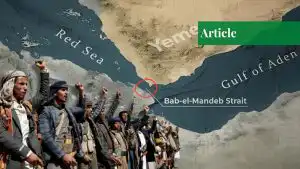
Persistent attacks on Saudi and Russian oil facilities by Ukraine and Iran-backed Houthis have global economic repercussions. The renewed threat to maritime routes such as the Bab el-Mandeb Strait in the Red Sea from Yemen fuels concerns about further oil supply disruptions and increasing insurance and shipping costs. Oil-importing countries remain among the most affected by these disruptions and energy-market uncertainties, as they contribute to inflation and increasing external-sector imbalances. Prolonged supply disruptions would exacerbate the economic and geopolitical consequences.
The blockade of maritime trade routes such as the Bab el-Mandeb and the Strait of Hormuz, and attacks on Russian and Saudi energy facilities, especially Aramco Headquarters, have turned energy trade and export routes into instruments of strategic pressure. When such disruptions occur, importing countries seek alternative suppliers, strengthen energy-security alliances, and diversify transport routes to minimise their future vulnerability to such disruptions.
In May 2026, the International Energy Agency found conflict-linked energy disruptions were compelling states and companies to diversify supply routes and reconsider investment priorities. Such developments can deepen defence cooperation, heighten tensions among rival states, and reshape diplomatic alignments, as attacks on energy facilities can extend geopolitical rivalries beyond the battlefield, reshaping regional and international partnerships and long-term energy strategies.
Strengthening Global Energy Security Through Collective Action
Recent events demonstrate that a coordinated approach among major global powers is mandatory to strengthen global energy security. They need to combine diplomatic engagement, infrastructure protection, and supply-route diversification. Riyadh and Moscow need to invest in the security of pipelines, refineries, export terminals, and storage facilities against ballistic missile and drone attacks and other threats.
Oil-importing countries like Pakistan also need to maintain sufficient strategic oil reserves to manage temporary supply disruptions due to geopolitical tensions and conflicts. Countries like Saudi Arabia and Russia, and companies such as the oil giant Aramco, need to acknowledge the significance of diversified supplies, emergency preparedness, and coordinated responses to energy disruptions. In addition, international institutions like the United Nations and other regional and international organisations need to increase their diplomatic efforts to protect energy facilities and trade routes to ensure global economic stability. An international framework to safeguard maritime trade routes must be adopted unanimously to safeguard global energy markets.
If you want to submit your articles and/or research papers, please visit the Submissions page.
To stay updated with the latest jobs, CSS news, internships, scholarships, and current affairs articles, join our Community Forum!
Find our FREE quizzes and MCQs here!
The views and opinions expressed in this article/paper are the author’s own and do not necessarily reflect the editorial position of Paradigm Shift.

Muhammad Hamza Tanveer is a political analyst specialising in South Asian and Middle Eastern affairs. His work focuses on religious nationalism, regional security, and minority rights. He has been featured in Stratheia, Pakistan Today, Pakistan Observer, and the Asian Mirror. He is also working as a research analyst and political commentator for Paradigm Shift and contributes to the monthly magazine of Nearpeer.