
There once was a country named Pakistan. Well, there still is, but there used to be one with two parts known as East and West Pakistan. The Eastern half emerged from a bloody civil war as Bangladesh but not many in today’s Pakistan are familiar with that tragic story. Probably less than half of Pakistan’s population knows that there used to be an East Pakistan. Less than 10% would know that in East Pakistan, thousands gave their all to keep East Pakistan alive as an integral part of an Islamic Republic and keep it from becoming the secular People’s Republic of Bangladesh.
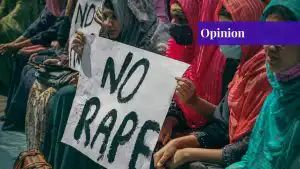
What became of those Bengalis who fought and bled for East Pakistan? Less than 1% of today’s Pakistanis would know that they were killed, maimed, and raped in their thousands (if not lakhs) by the victors. But some did survive. They tried to keep the torch of Islam aloft in a Bangladesh surrounded by and dependent on India. For this, and for their loyalty to the ideology of Pakistan, they would pay dearly again.
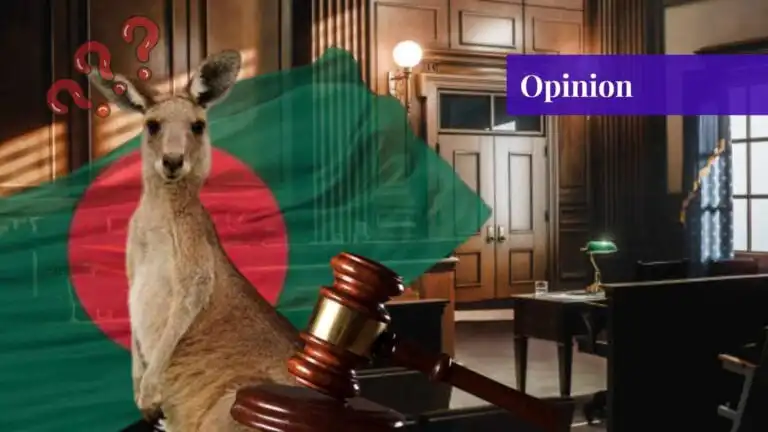
40 years after the gory civil war of 1971, Sheikh Hasina’s fascist government in Bangladesh unleashed a new witch hunt to bolster its political posture by establishing kangaroo courts known as the “International Crimes Tribunal” (ICT). The ICT and the Bangladeshi Supreme Court proceeded to murder justice and legal norms with impunity.
From 2013 onwards, the ICT and the Bangladeshi Supreme Court sentenced well-known loyalists of Pakistan like Professor Ghulam Azam, Abdul Qadir Molla, Mati-ur-Rahman Nizami, Mir Qasim Ali, Salahuddin Qadir Chaudhry, K. M. Yusuf, Molana Abdus Subhan, and many others to death or life imprisonment. They were accused of all sorts of “war crimes” and “participation in genocide” in addition to many other charges. The accused weren’t given any legal rights.
There were credible reports of “witness abduction, intimidation of defence counsel, media censorship, pressure to convict from the government, lack of independence of judicial officers, amounting to gross violations of international fair trial standards” according to the Commission for the Control of Interpol’s Files and many other international entities. Nevertheless, the sentences were duly carried out. Justice was murdered in Bangladesh and innocent blood was shed to provide lifeblood to Sheikh Hasina’s despotic regime.
Fast forward to 20th June 2024, some vindication for these innocents was derived from the UK Supreme Court. In the case titled, Mueen-Uddin v The Secretary of State for the Home Department, a line was drawn and a rebuke was delivered to the kangaroo courts of Bangladesh. Chowdhury Mueen-Uddin was an East Pakistani journalist and Pakistan loyalist who was sentenced to death in absentia by the Bangladeshi kangaroo courts. His “trial” is a prime example of dark comedy. The accused wasn’t contacted by the Bangladesh authorities during the investigation against him. He was not served with any arrest warrant or notified of his indictment. Even his extradition to Bangladesh from the UK (where he has been living since 1973) wasn’t requested.
On 4th June 2013, a court-appointed lawyer was appointed for his “defense” but bizarrely that lawyer never thought it worth his while to contact the man he was charged to defend! Apparently, the defense lawyers were not permitted by the kangaroo courts to take instructions from defendants who were being tried in absentia. A trial of Mueen-Uddin in the kangaroo courts of Bangladesh began on 15th July 2013, and predictably he was awarded the death sentence.
In December 2017, Interpol issued a “red notice” against Chowdhury Mueen-Uddin at the request of the government of Bangladesh, but the notice was withdrawn a few months later after Mueen-Uddin defended himself before the Commission for the Control of Interpol’s Files. In a sharp rebuke to Sheikh Hasina’s fascist government, the Commission concluded on the basis of the information provided by the Bangladesh authorities themselves, that the ICT proceedings against Chowdhury Mueen-Uddin were not compliant with Interpol’s constitution or with the Universal Declaration of Human Rights.
In 2019, despite the Interpol’s ruling, the UK Home Office parroted Sheikh Hasina’s kangaroo court’s lies in a report prepared by the Commission for Countering Extremism, a non-statutory committee of the Home Office, titled “Challenging Hateful Extremism”. A distinguished UK citizen since 1984 and a former director of the UK’s National Health Service, Chowdhury Mueen-Uddin attempted to sue the Home Office for defamation.
He had to go to the judiciary to be permitted to exercise this right and finally, on 20th June 2024, he was granted the right to drag the Home Office to trial for defamation, a trial that he will win in all probability given the verdict produced by the UK Supreme Court in this case: “In the present case, the claimant’s case, as set out in his pleadings and witness statements, is that the ICT conviction is not accepted by people generally as giving the best guide to his reputation and standing. Far from being virtually indisputable, the fairness of the conviction appears not to have been accepted by Interpol, and reputable organizations in this country have also been highly critical of the fairness of the ICT’s procedures (paras 17 and 21–22). Those averments are plainly material. If the conviction was the result of an unfair process, then no weight can be attached to it.”
The UK Supreme Court has plainly labeled the judicial process of the ICT and the Bangladeshi Supreme Court as an “unfair process” to which “no weight can be attached”! Mueen-Uddin v The Secretary of State for the Home Department has become a landmark case in the history of Pakistan and Bangladesh. The “International Crime Tribunal”, the Bangladeshi Supreme Court, and Sheikh Hasina’s government, consequently, have been declared guilty of executing people after an unfair judicial process.
The place of Bangladesh’s war crimes trials has been cemented alongside Stalin’s notorious Moscow trials of the 1930s, and the trial of Joan of Arc by the British occupiers in France in 1430 as the worst examples of grave injustice masquerading as “justice”. Predictably, the UK Supreme Court’s ruling has caused a lot of hue and cry to be raised by Sheikh Hasina’s government and the state-controlled media.
So far, as any astute observer might have discerned, the state of Pakistan seems curiously absent from this business. Those who were hanged in Bangladesh had been Pakistani citizens and their only “real crime” had been to fight for Pakistan. They were abandoned unceremoniously by their country in 1971, and they were abandoned again in 2013. No Pakistani government or Supreme Court Chief Justice had the courage or diligence to come to the defense of these wronged righteous Pakistanis.
Even though our Supreme Court is notorious for its unbridled judicial activism, it didn’t occur to any honorable Supreme Court justice to take up the case against the kangaroo courts of Bangladesh and declare their proceedings against Mr Mueen-Uddin as blatantly unfair to which no weight can be attached. Their voices could and should have been heard in Pakistan’s Supreme Court but sadly, they were stifled. For those familiar with the history of the East Pakistan tragedy, there is nothing surprising here though.
(West) Pakistan was guilty of treating East Pakistan with condescension and neglect, and such is the case even today. When the patriots are shunned, the traitors have an open field. This is what happened in 1971, and this is what is happening today. In the end, while sadly knowing that my appeal will fall on deaf ears, I request the Chief Justice of Pakistan and the Pakistani media to bring the Mueen-Uddin v The Secretary of State for the Home Department case into the limelight so that its implications can be highlighted here.
Surely, our Chief Justice, who had found time to write to the High Commissioner of UK and send a copy of that letter to the President of the UK Supreme Court Lord Reed to defend his conduct in court, can again find some time to write again to the very same Lord Reed and congratulate him on dispensing justice to Mr. Mueen-Uddin and exposing the kangaroo courts of Bangladesh before the whole world. After all, those who suffered and died for Pakistan deserve this much at least.
If you want to submit your articles and/or research papers, please check the Submissions page.
The views and opinions expressed in this article/paper are the author’s own and do not necessarily reflect the editorial position of Paradigm Shift.

Dr Hassaan Bokhari is a graduate of Rawalpindi Medical College, Rawalpindi. In 2018-19, he cleared the CSS exam and was 34th in Pakistan. However, he declined to join the civil service in order to pursue his passion for the study and analysis of history more freely. Presently, he is running a YouTube channel "Tareekh aur Tajziya (History and Analysis)" which focuses on the objective analysis of history and current affairs. Dr. Hassaan Bokhari has authored a book titled "Forks in the Road" about the 1971 fratricide and has also headed the India Desk at South Asia Times Islamabad. He aims to play a part in the process of enabling the nation to understand its history in a perspective marked by objectivity, honesty, and confidence.