A Policy Shift
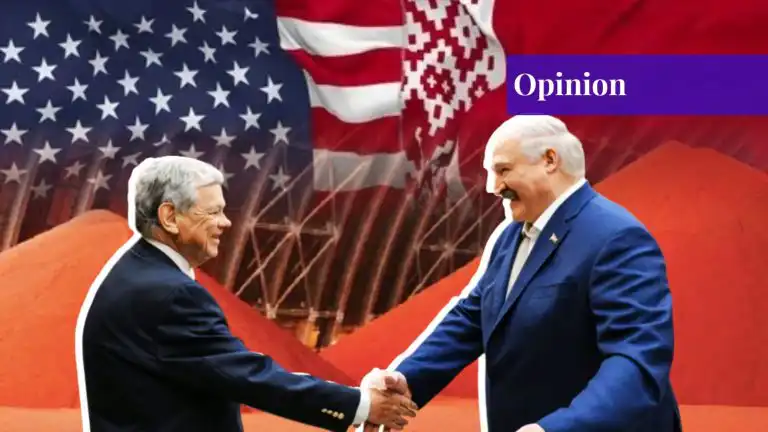
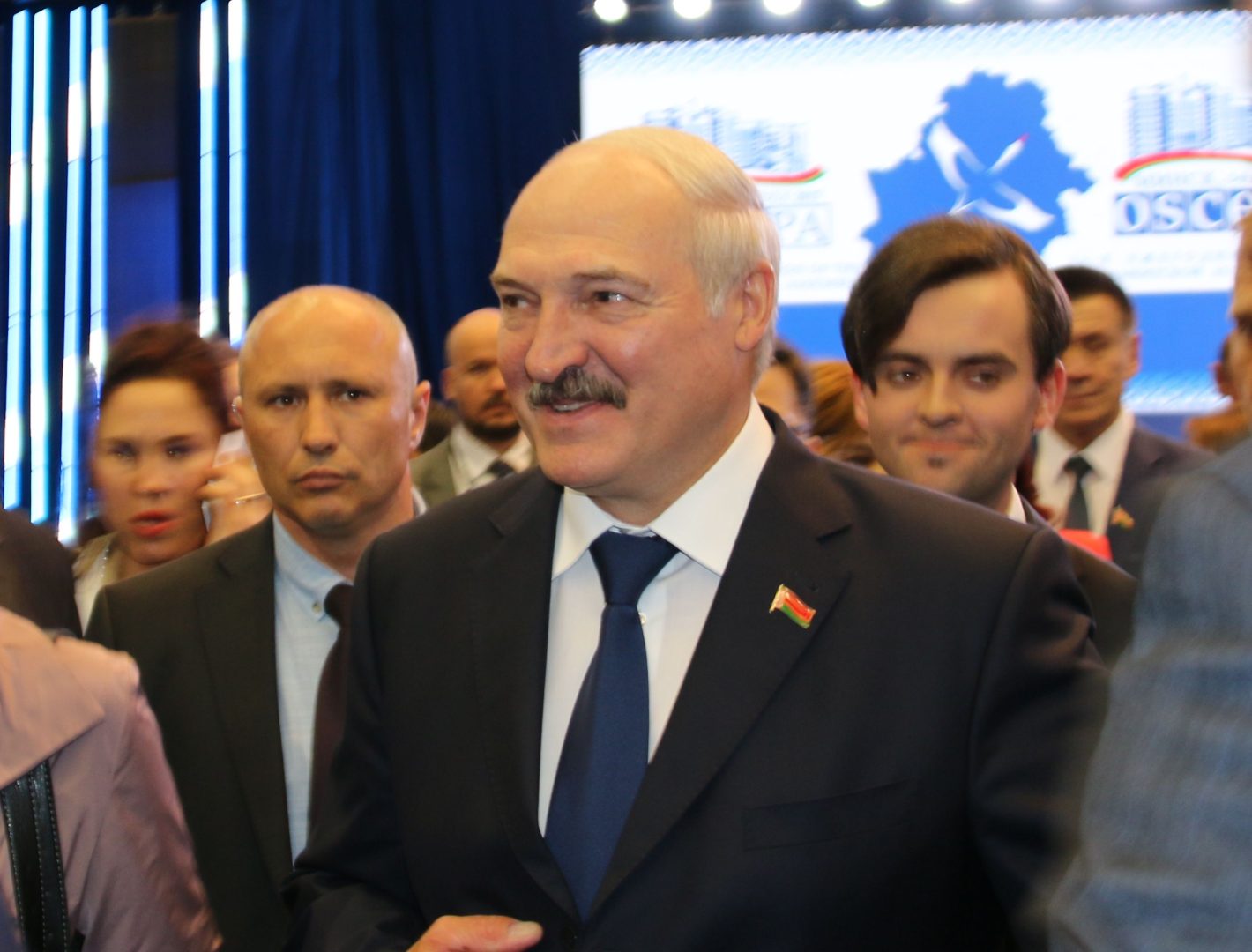
Minsk, Belarus—During an interview with Cuban-American journalist of RT America (Russian Today/Россия Сегодня), Rick Sanchez, the Bismarckian Belarusian President Alexander Lukashenko (Аляксандр Лукашэнка) has declared that Belarus is ready for a “grand deal” with the United States, but it must be prepared in such a way as to reflect the interests of both countries.
“We are ready for this meeting. We are ready for an agreement, but it must be prepared in such a way as to reflect the interests of the United States of America and Belarus.”
President Lukashenko
These words of the Belarusian president have been particularly highlighted by the Belarusian Telegraph Agency BelTA (Беларускае тэлеграфнае агенцтва БЕЛТА) and its experts, perhaps as a signal of the state’s official course towards the Americans.
Meanwhile, this softened rhetoric and conciliatory tone from the Belarusian leader (known for his political character à la soviétique) is perhaps the most significant result of President Trump’s Ostpolitik. This strategy is very similar to that of the West German Chancellor Willy Brandt during the Cold War (1947-1991). It aims, instead of continuing Washington’s confrontational policy with Minsk, to apply a more flexible strategy that seeks to normalize relations between Belarus and the West through “Wandel durch Annäherung” on economic means. Thus, abandoning the doctrine of “harsh punitive sanctions,” historically unsuccessfully adopted by the Brussels elites of the European Union towards Minsk.
Hence, we can assume that the “grand deal” in itself represents an economic-diplomatic icebreaker of the Americans, as it could offer Belarusians a better deal than the Europeans and the Russians, one that could reshape the complex geopolitical realities in Central and Eastern Europe. But what exactly will this “grand deal” bring for Belarus and the United States?
Bridging Ties
Firstly, before trying to answer this question, let us begin with what has been achieved so far in the dialogue between President Trump’s administration and President Lukashenko’s government.
As has been widely reported by American and Belarusian media, since entering the White House in 2025, President Trump has shown a particular interest in stabilizing relations with Belarus, a state with a key geographical position between Russia, Ukraine, NATO, and the European Union, as well as one of the world’s three largest producers and exporters of potash (калій or fertilizers).
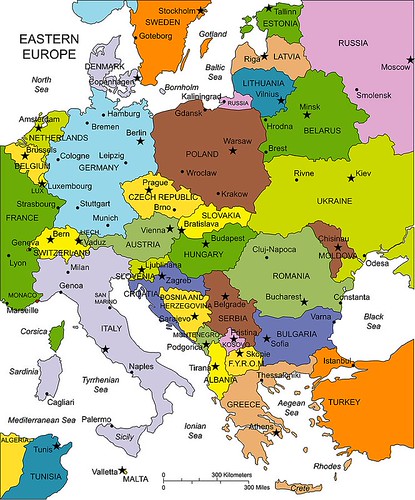
It seems that this very last curiosity fact, which can also be called the Belarusian economic backbone, appears for the Americans to be Archimedes’ lever to diplomatically shift the situation out of political deadlock and to normalize relations with Belarus.
The American initiative began as a diplomatic experiment, opening a consultative dialogue with Minsk during the US-Russia talks in Anchorage, Alaska. This dialogue aimed to resolve the protracted Russo-Ukrainian armed conflict and resulted in very positive, promising outcomes. Following this first success, it was clear that the ice had finally been broken and that the next steps could now be taken, albeit very cautiously, as the mutual trust had to be built.
The first step was taken with the American administration lifting sanctions on Belavia Belarussian Airlines (‘’Белавія’—беларуская авіякампанія), as well as those on President Lukashenko’s presidential aircraft. After the Belarusian airlines, the American administration continued forward and lifted sanctions on the potash industry, one of Belarus’s main economic sectors, targeting key state and private giants of Belarusian potash producers and exporters, such as Belaruskali (Беларуськалій), Slavkali (Славкалій), Agrarazkvit (Аграразквіт), and the Belarusian Potash Company (Беларуская калійная кампанія).
Lastly, after the airlines and Belarusian potash industry, it was the finance sector’s turn when President Trump’s administration decided to lift the sanctions on the Ministry of Finance of Belarus (Міністэрства фінансаў Беларусі) and the Belarusian Bank for Development and Reconstruction ‘Belinvestbank’ (Беларускі банк развіцця і рэканструкцыі ‘Белінвестбанк’).
Although it is still too early to draw clear conclusions about the impact on the Belarusian economy from these developments, the Eurasian Development Bank has projected that during 2026, Belarus’s GDP growth will accelerate, driven by the resumption of exports and sustained consumer demand.
The “Grand Deal”
And here we come to the aforementioned question of what exactly the agreement on this “grand deal” between Belarus and the United States would bring:
If we were to analyze in detail these decisions by President Trump’s administration to lift sanctions in several key sectors of the Belarusian economy, we would also see how the brilliant American scheme has been prepared to stimulate the current situation on the eve of the “grand deal.” The lifting of sanctions on Belarusian airlines has been intended to signal the reactivation of trade routes.
On the other hand, the lifting of sanctions on the Belarusian potash production industry and the financial sector seems aimed at enabling American investors and companies to access the Belarusian market. The market is most likely to be dominated by American consumer demand (amid global supply volatility on fertilizers), with payments or bank transactions now made more easily than before.
Here we can also observe the American side’s interests in the “grand deal” with Belarus. The recent implementation of a policy of diversification of economic partners, as a result of the tense intergovernmental and bilateral relations between the United States and Canada (another key potash-producing country), is being used by Washington as a tool to somewhat distance Minsk from Moscow and Beijing. They are doing this less to create a schism but more to persuasively keep Belarus in its historic status as a “buffer zone.”
This is directly and indirectly welcomed by the Belarusian government, which, since 2025, has initiated a multi-vector diplomatic and economic policy (also referred to by Belarusian diplomacy as the ‘far arc foreign policy’), taking every possible measure to prevent the total political and, above all, economic domination of Russia and the People’s Republic of China in the country. Therefore, if an agreement is reached with the Americans, it will certainly include the possibility for Belarus to access the critical Lithuanian port of Klaipėda, which, together with the Russian port of Saint Petersburg, is one of the key logistical conduits for transporting Belarusian fertilizer products to American, European, and global markets.
At the same time, this will end the dominance of the Russian market in the Belarusian economy and stabilize the Belarusian exports at the pre-2020/2021 levels. Based on this pragmatist approach, we can assume that for Minsk, the real aim is not so much maximizing benefits from the agreement but the agreement itself, which could also symbolically have an impact on the political situation of President Lukashenko’s government. The Belarusian government can now claim to have succeeded in breaking the West’s politico-economic isolation, as well as use the agreement as a means to have a more equal dialogue with the Kremlin.
Conclusion
Overall, we can conclude that although talks between the Belarusian and American sides are still ongoing, it is now clear from the rhetoric of the Belarusian leadership that the “potash diplomacy” of Washington has succeeded in establishing a practical and reciprocal dialogue with Minsk, where economic pressure and political isolation by the Europeans had failed to achieve this.
At the same time, this could give the Americans an upper hand to use this advantage as a tool of political pressure on the Europeans. Just as in the case of the dialogue with Russia, which now takes place solely between Moscow and Washington, the dialogue with Minsk may appear to be conducted without the presence of Europeans. This signals a divergence and parting of paths between the European Union and the United States.
If you want to submit your articles and/or research papers, please visit the Submissions page.
To stay updated with the latest jobs, CSS news, internships, scholarships, and current affairs articles, join our Community Forum!
The views and opinions expressed in this article/paper are the author’s own and do not necessarily reflect the editorial position of Paradigm Shift!

Eljanos Kasaj is a student from Albania currently enrolled at the Institute of Political Science and World Politics. He is specializing in Global Security at the University of Wrocław (Poland).