On the night of September 20 1996, shots were heard at 70 Clifton, Karachi. There was tension in the air. Soon, news broke of the death of the late Zulfikar Ali Bhutto’s son, Murtaza Bhutto. It was yet another tragedy in the Bhutto family, and like other cases, this case remains shrouded in mystery.
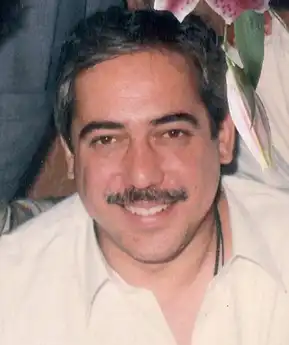
Much has been written about Murtaza Bhutto—his life, political activity, and assassination—and many opinions have emerged. The following article is another attempt to understand his legacy. In contrast, I try to situate it within the larger context of Pakistani political and social structures.
Murtaza Bhutto was born on September 18, 1954. He got his early education in Rawalpindi before moving to Karachi for O-Levels. Later, Murtaza went to Harvard to study government and strategic studies. In 1978, while studying for a Master’s degree in the UK, he received the news of the death penalty awarded to his father, Zulfikar Ali Bhutto. The news shook him. He wanted to abandon his studies and go home. But his father asked him to stay out of the country. The news of his father’s death penalty was, perhaps, the initial trigger in his political and ideological development.
During that period, Murtaza and his brother, Shah Nawaz Bhutto, began a campaign for their father. They wanted to gain international support for him – so that he might be released. Although they did not succeed in saving their father, the campaign was not a total failure. Many international leaders and organizations, including the Palestinian Liberation Front, supported Bhutto. The Libyan leader Muammar Gaddafi even offered political exile to Bhutto and attempted to convince General Zia to let Bhutto go. However, these attempts failed to bear any fruit. No significant progress was made, and Bhutto was executed on April 4, 1979 – aged 51.
The campaign to save Bhutto was mostly peaceful and diplomatic. Although some controversial options were on the table – Bhutto reportedly denied such attempts to escape. It was in this bitter climate of betrayal and failure of peaceful protest that Al-Zulfikar was born – Murtaza Bhutto’s militant organization. After their father’s death, the two brothers – Murtaza and Shahnawaz – went into exile in Afghanistan. At that time, Afghanistan was a proxy of the Soviet Union. Babrak Karmal led the government. There, the Al-Zulfikar Organization (AZO) was formed in 1979 – the year of Bhutto’s execution.
The AZO has been seen as a controversial organization since its inception. It is logical to conclude in days of the Cold War, an organization formed by a few Pakistan men in Afghanistan would be looked at as unfavorable. Here, perhaps, the AZO can be put in an international context. Pakistan had joined the American bloc during the Cold War and helped America fight the Soviet-backed Afghan government – a choice which remains impactful to this day. From this context, the government could have seen the AZO as a threat to its partnership with the US. Thus, AZO was perhaps, in part, looked at as anti-Pakistan due to their socialist politics – at least in optics. However, the greater controversy was yet to come.
In March 1981, the AZO hijacked a PIA plane. The flight was scheduled from Karachi to Peshawar, though the hijackers eventually had it landed in Damascus. Much of the hijacking is said to have been planned by Salamullah Tipu – a controversial figure. However, most accounts said Murtaza was on the phone with Tipu. Thus, he perhaps cannot be absolved of blame.
In the following years, the AZO slowly lost its footing. Tensions grew between Murtaza and other members. Many of the members were arrested. Communication channels were disrupted. Finally, in 1990, Murtaza officially dissolved the organization.
From such accounts, it is easy to think of Murtaza as just a “terrorist” – a lot is yet to be said about Murtaza. His death is still an enigma. Although seen as an encounter, senior members of the police force deny these accusations to this date. One of the people who were accused of Murtaza’s killing was Asif Ali Zardari – who would later be suspected of assassinating Prime Minister Benazir Bhutto. Though, like all others accused, he too was acquitted. The courts haven’t given much clarity to the case, even though the trial lasted 13 years.
Murtaza Bhutto’s legacy is controversial. Many have called him a terrorist, irrational, feudal and much more, though others celebrate him. Though perhaps he should not be reduced to a one-dimensional caricature. However, it might seem like he was just a mad person, enraged and furious – hungry for revenge. Yet he did have an ideology. He wanted concrete reforms in the Pakistani system to revive PPP’s slogan of roti, kapda aur makan.
The legacy of PPP and Zulfiqar Ali Bhutto itself is not free of blood. Nonetheless, the point is to contextualize history and not caricature it. Perhaps Murtaza Bhutto represents something fundamental about Pakistan.
The execution of Zulfikar Ali Bhutto’s execution represented in the minds of the Pakistani masses – not merely the death of a person but the crisis or lack of democracy. Murtaza Bhutto was a response to that lack. It is not a question of whether he was honest about it or not. Maybe he was. Maybe he was not. It is a question of what made Murtaza Bhutto possible. And here, perhaps it can be said that there is a contradiction at the heart of the Pakistani socio-political system. It is supposed to be a democratic country. Yet a simple analysis of the class structure of the ruling elite shows why this reality is impossible. Thus, Murtaza Bhutto’s legacy is perhaps both – a tragedy and a farce. A tragedy because it reveals something tragic about our society. But also because of the countless lives killed by the AZO. It is a farce because today, we stand at the brink of another era of militancy and military operations. Once again, the critical faculties of proper analysis are dismissed for the sake of simplistic answers – operations, executions, abductions. Perhaps history is repeating itself.
If you want to submit your articles and/or research papers, please visit the Submissions page.
To stay updated with the latest jobs, CSS news, internships, scholarships, and current affairs articles, join our Community Forum!
The views and opinions expressed in this article/paper are the author’s own and do not necessarily reflect the editorial position of Paradigm Shift.

Shahalam Tariq is based in Rawalpindi, Pakistan. His writings on history, theory and literature have appeared in The Friday Times and Bazm e Dana. His poems have appeared in The Writers Sanctuary, Borderless Journal and Gentle Visitations.