The Navruz or Nowruz, “New Day,” is celebrated in many countries on the arrival of the spring season when winter is over, and a new hope emerges for spending the year ahead with prosperity. It is not only in Central Asia, Afghanistan, and Iran that this celebration is a common practice, but also in South Asia, where it is called Basant, “Spring.” Wherever it is celebrated and whatever it is called, holidays, family gatherings, and feasts become common norms.

Celebration of Navruz over the years has encountered various political obstacles and social problems, but despite any sort of circumstances, it has been the means of gathering people of various classes and social strata for the festivities aimed at bringing peace and nurturing the environment of forgiveness among all. The spirit of Navruz is therefore to get together in the hope of a better future and pulling along with each other. It denies the culture of isolation and decries the approach of selective collaboration. The festival is equally significant in the lives of people of Tajikistan who celebrate it every year with great cultural fervor. It is believed that Navruz brings the best ideals of life, such as good thoughts, good words, and good deeds; respect for nature and humans; freedom and peace; appreciating the efforts of others; constructive thoughts, and so forth.
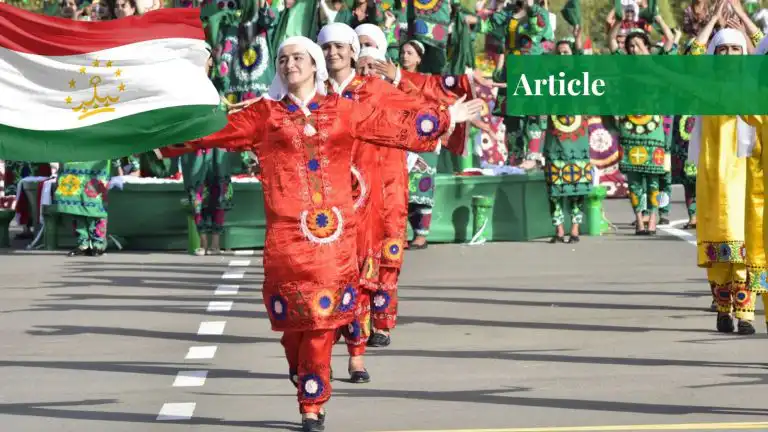
In Tajikistan, the most common events include displays of traditional costumes and national cuisine, as well as dancing and singing, as well as Miss Navruz competitions, which are organized throughout the country during Navruz celebrations. Tajik folklore has many quatrains and folk songs dedicated to Navruz, which are usually performed during the Navruz festival days. The festivity of Navruz is sacrosanct in nature, which has its roots in the daily lives of Tajik nationals. It is, in fact, observed as a comprehensive concept embodying its spark in the culture, mood, and strategic thought of the whole of Tajikistan, reflective of the country’s diplomatic relations, especially with its neighbors. This is evident from their approach towards Afghanistan, which, unfortunately, is on its way to becoming a hotbed for terrorism; endorsed by the Russian Foreign Ministry’s report dated February 23, 2026, indicating that at least 23000 active terrorists are operating inside Afghanistan.
Tajikistan enjoys a 1374km border with Afghanistan, which has seen turbulence off and on. There was a string of cross-border attacks from Afghanistan, which left a total of five Chinese citizens dead in November 2025. Shoot-outs with smugglers resulted in seven Afghans and two Tajik border guards killed in late December 2025 and mid-January 2026. Although Taliban officials blamed the November 2025 incidents on militant groups operating beyond Kabul’s control, these and subsequent happenings have helped spur shifts in Tajik foreign policy. Tajikistan has executed a two-prong approach towards Afghanistan in which the Tajik parliament in March 2026 approved a deal under which China will finance and build nine new border posts along the frontier.
Concurrently, there is a stepped-up engagement with the Taliban regime in Afghanistan. For instance, in December 2025, the Taliban’s foreign minister held telephone calls with his Tajik counterpart, while in February 2026, he met with the Tajik ambassador in Kabul, marking the highest-level contacts between the two countries since the Taliban regained power in August 2021. When the Taliban Regime returned to power in Afghanistan, President Emomali Rahmon positioned Tajikistan as a staunch opponent. Since the reopening of border markets in 2023, Tajikistan has quietly shifted its position without going as far as other Central Asian states in building trade ties with Afghanistan. This is akin to Oshtikunoni (reconciliation), another custom performed during the Navruz, which implies that people should forgive each other, or in other words, nobody should be injured or offended in the welcome days of next year. Usually, elderly people play a great role in carrying out this custom by mediating between the younger generation to forgive each other if they had some offence from anybody or friends. Surely, a custom with a mature theme and a positive outlook, which has paved the way for improving relations with Afghanistan’s Taliban Regime.
The overtures that the Afghan Taliban Regime has exhibited towards Tajikistan have unfortunately failed to do so towards Pakistan, despite repeated goodwill gestures from the latter. On failing to engage the Afghan Taliban Regime bilaterally and multilaterally, Pakistan finally had to go inside Afghanistan and bomb hideouts and support centers for TTP. If there is even a semblance of understanding by the Afghan Taliban Regime about the gravity of the situation between the two countries, they need to pay heed to the spirit of Navruz that has been capitalized on by Tajikistan to improve its relations with its neighbors. It is hoped that with the intensity of Navruz getting stronger day by day, the spinoff will be in the form of influence by the spirit of mutual coexistence it brings forth.
If you want to submit your articles and/or research papers, please visit the Submissions page.
To stay updated with the latest jobs, CSS news, internships, scholarships, and current affairs articles, join our Community Forum!
The views and opinions expressed in this article/paper are the author’s own and do not necessarily reflect the editorial position of Paradigm Shift.

Rear Admiral (retd) Faisal Shah is an honorary research fellow at the Institute of Maritime Affairs, Islamabad, and can be reached via faisel68.fs@gmail.com.