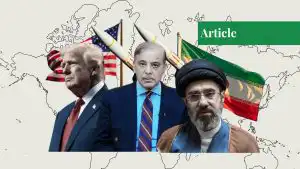
The US-Israeli joint operation on 28th February aimed at achieving four main goals in Iran, notably preventing Iran from acquiring a nuclear weapon, destroying its missile capability, degrading its naval capability, and prompting a national uprising for regime change. Even a single aforementioned objective is yet to be achieved, in light of Iran’s retaliation in the form of targeting US bases in the Gulf regions, Israel’s missile defense systems, and the blocking of the Strait of Hormuz. This inability of the US to achieve its objectives is actually due to the inadequacy of the US strategy it has used against its adversaries over the last two decades. The US has typically engaged with its adversaries using the “Shock and Awe” strategy, with the objective centered on prompting a quick regime change.
The Shock and Awe strategy, also known as rapid dominance, is meant to be a precise and sudden attack that disturbs the cognitive ability of the adversary to mount an appropriate response. In simple terms, shock and awe is an act of psychological warfare that destroys the will of the adversary to retaliate. This tactic has been employed extensively by the US in its recent conflicts against Iraq in 2003, the invasion of Afghanistan in 2001, and the abduction of the Venezuelan President Nicolás Maduro in 2026. The continuous carpet bombing of Baghdad from 21st March till 9th April was a shock and awe tactic that led to the fall of Saddam Hussein’s regime by 14th April. Similarly, on October 7th, 2001, the US military initiated a bombing campaign against Taliban and Al-Qaida forces, and by December 5th, a new interim government replacing the Taliban was formed. The same pattern is observed in the most recent operation against Venezuela in 2026, where a sitting President was abducted, and his predecessor replaced him, with no action taken against the US regime. While some academicians dispute the use of the shock and awe strategy in Venezuela, the basic postulates of the concept can be observed during the incident.
A pattern is formed in all the aforementioned case studies, where the use of “shock”, specifically carpet bombing and thereafter, air support to the on-ground special operations force, leads to an “awe”, classified as the inability of the adversary to mount a retaliatory offensive, prompting a regime change, backed by the invading force. However, a similar pattern emerges, observed when there is a rise in insurgencies and terrorist groups, in a reaction to the invading force and the creation of a power vacuum. Therefore, while the shock and awe strategy has worked in toppling regimes, it becomes counterproductive in the long-term scenario. However, in the recent war with Iran, the short-term gain of the shock and awe strategy itself failed to accomplish even the basic objective of regime change as outlined by the Trump administration, while the declining capacity of Iran’s nuclear capability due to US-Israel strikes remains debatable. Along with this, Iran’s consistent use of missiles and drones, albeit reduced in number due to US-Israeli strikes, showcases that at least half of its missile inventory, along with thousands of one-way attack drones, are in Iran’s arsenal. While the US claims that it has completely obliterated Iranian naval capability, reports show that Iran’s coastal cruise missile capabilities remain intact, along with half of its naval force under the Islamic Revolutionary Guard Corps (IRGC), which has survived US strikes. Also, the reason the US has not been able to open the Strait of Hormuz during the conflict could point towards a capable Iranian naval presence.
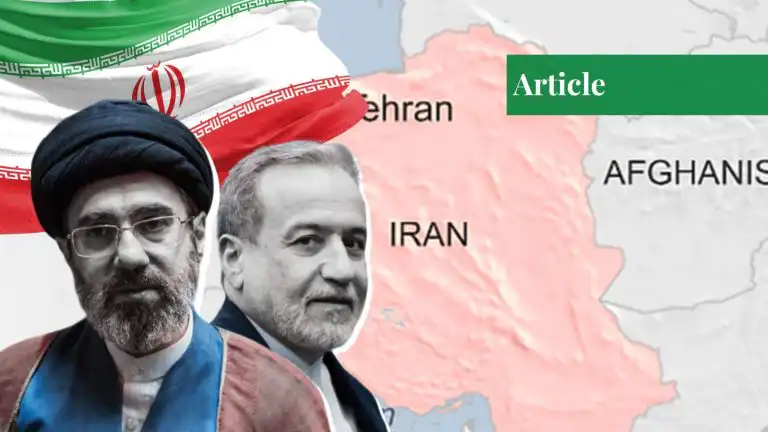
Following the above-mentioned logic, the US has inadequately exercised the Shock and Awe strategy, where the goals outlined by the Trump administration failed to meet their desired results. However, an impending analysis remains as to how the results of previous US endeavors in terms of Afghanistan, Iraq, and Venezuela were so different when engaging with Iran. One of the fundamental primary reasons includes the complex socio-politico-theological structure backed by a military layer of operations. This simply means that, unlike the autocratic Arab regimes in its neighbors, Iran’s regime does not depend on the survival of one person, but undergoes a “survival protocol” to allow the system to function properly even in war, as observed after the assassination of Ayatullah Khamenei. Secondly, in terms of regime change, there is no coherent and organized political movement that can outpower or outmaneuver the existing political order. There is still a large number of Iranians who support the current regime, and the opposition is either too disorganized in its objectives to lead a revolution or is outside Iran in the form of pressure groups lobbying for the creation of a Persian secular Iran instead of an Islamist Iran. Thirdly, while Iran lacks competitive capabilities in the air warfare domain, its development of ballistic and cruise missile technologies and its ability to regulate these capabilities in a conflict make it a formidable opponent. Iran’s missile arsenal encompasses a wide array of missiles, including Short Range Ballistic Missile (SRBM), Medium Range Ballistic Missile (MRBM), Space Launch Vehicles (SLV), Antiship Cruise Missile, and Land-Attack Cruise Missile, with ranges reaching up to 2500km.
A major factor, which reinforced the above-mentioned Iranian advantages, was the miscalculation of the Iranian capabilities on the US part. The sudden attack on 28th February, while nuclear talks were occurring in Geneva, developed into the Iranian resistance to multiple ceasefire offers that were presented through Pakistan during the last days of March. The two-week ceasefire between the US-Israel bloc and Iran had been achieved and was brokered by Pakistan, with talks held in Islamabad on the 10th of April. The 10 points presented by Iran and the contrasting counterpoints given by the US during the Islamabad Talks did not achieve what can be called a successful diplomatic conference. However, statements from the US leadership showcase that negotiations have not broken down, and the US would be willing to negotiate further into the matter. While the “Islamabad Talks” may not have achieved the desired result, the fact that the US, being the more powerful state, agreed to sit at the table with, according to Trump, the losing side, leads to the conclusion that the above-mentioned argument of shock and awe failure and miscalculation of Iranian capability on the US part proved true.
If you want to submit your articles and/or research papers, please visit the Submissions page.
To stay updated with the latest jobs, CSS news, internships, scholarships, and current affairs articles, join our Community Forum!
The views and opinions expressed in this article/paper are the author’s own and do not necessarily reflect the editorial position of Paradigm Shift.