US Public Diplomacy
In 1946, Senator J. William Fulbright had a simple idea: send Americans abroad, bring the world to America, and you will never need to explain yourself with a gun. Years later, the country that built this idea is burning it down.

Public diplomacy is often confused with propaganda. However, it is the government’s organized efforts aimed at communicating directly with the foreign public outside the conventional state-to-state diplomacy. Its institutions include educational exchange programs, cultural engagement initiatives, and international broadcasting. To put it simply, it is to inform and influence the opinions of a foreign audience in order to shape the international environment that is conducive to the country’s foreign policy interests.
The United States understood this aspect of diplomacy earlier and more systematically than any other country at the time. During the Cold War, Washington recognized that its contest with the Soviet Union was fundamentally ideological. It was the struggle over the legitimacy of two competing ideological systems rather than a conventional rivalry between two military blocs. So, programs such as Fulbright exchanges, Voice of America, Radio Free Europe, and the United States Information Agency were developed to inform the foreign public about American life and culture and how it is better than any other system out there in the world.
The acts were not simply a display of cultural philanthropy, but they were the strategic instruments designed to give the foreign public an exposure to American values, lifestyle, and institutions. The effectiveness of these investments is well documented in the historical record and academia. A substantial proportion of political leaders who guided the democratic shift in Eastern Europe after the Cold War had studied in American universities or participated in the US-sponsored exchange programs. US domination of international affairs was not merely a result of its hard power: rather, it was driven by its investments in soft power to influence the world.
Why American Public Diplomacy Is Suffering
Over the past several years, the United States has made a series of decisions that have collectively eroded the public diplomacy infrastructure that it spent decades constructing. The FY2026 budget proposes a 93 percent reduction in funding for the international education and cultural exchange programs, which is approximately a $691 million cut from an institute that was already modestly funded compared to the influence it generated. The Bureau of Educational and Cultural Affairs, which administers these programs within the State Department, faces a reduction of the workforce by half.
The Fulbright program, which has operated for over seven decades and maintained bipartisan support across successive administrations, faces effective elimination alongside the Gilman Scholarship, the Congress-Bundestag Youth Exchange fellowship, and at least twenty other exchange programs whose funding was rescinded even after Congress had already approved it.
Beyond this, the State Department has eliminated over 1,300 positions, including offices responsible for human rights advocacy, conflict stabilization, and counter-disinformation. The US has withdrawn from the World Health Organization, the Paris Agreement, and several other multilateral forums that had served previously as platforms for American diplomatic communication. USAID, the agency through which the United States projects its development assistance and humanitarian presence across the developing world, has been dismantled.
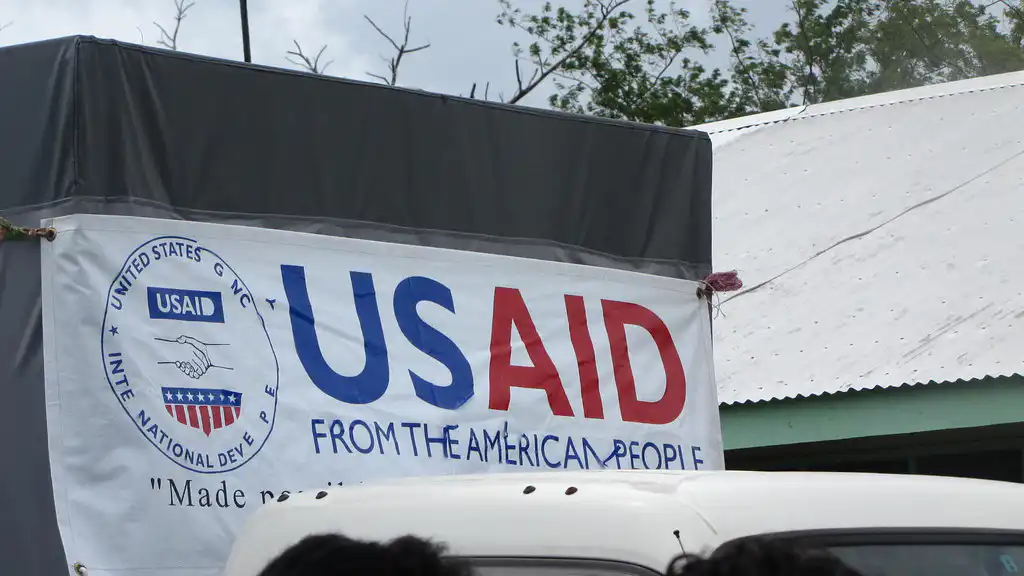
This poses a serious question on the credibility of the US as a global leader. The image that America spent decades on making is systematically dismantled, brick by brick. It is the deterioration of the architecture that took generations to build. The thing that is being lost is not just money or staff; it is the trust, credibility, and goodwill that were produced by the decades of public diplomacy.
A foundational principle in the academic study of public diplomacy is “good public diplomacy cannot rescue a bad foreign policy.” A government whose conduct contradicts its stated values can find no messaging campaign that can bridge the credibility gap. What the United States faces today is a more fundamental problem: it has subsequently allowed its foreign policy coherence to deteriorate and dismantled the institutions that served as the foundation of its soft power.
Taking the American military engagement with Iran as an example. Whatever the strategic reasoning behind the conflict, the US has not been able to present a consistent and credible account of its objectives to the international audience. Justifications and rationales have shifted from week to week. Initially announcing Operation Epic Fury, President Trump said, “Our objective is to defend the American people by eliminating imminent threats from the Iranian regime.” This was followed by the assassination of the Supreme Leader Ayatollah Khamenei and the top military leadership.
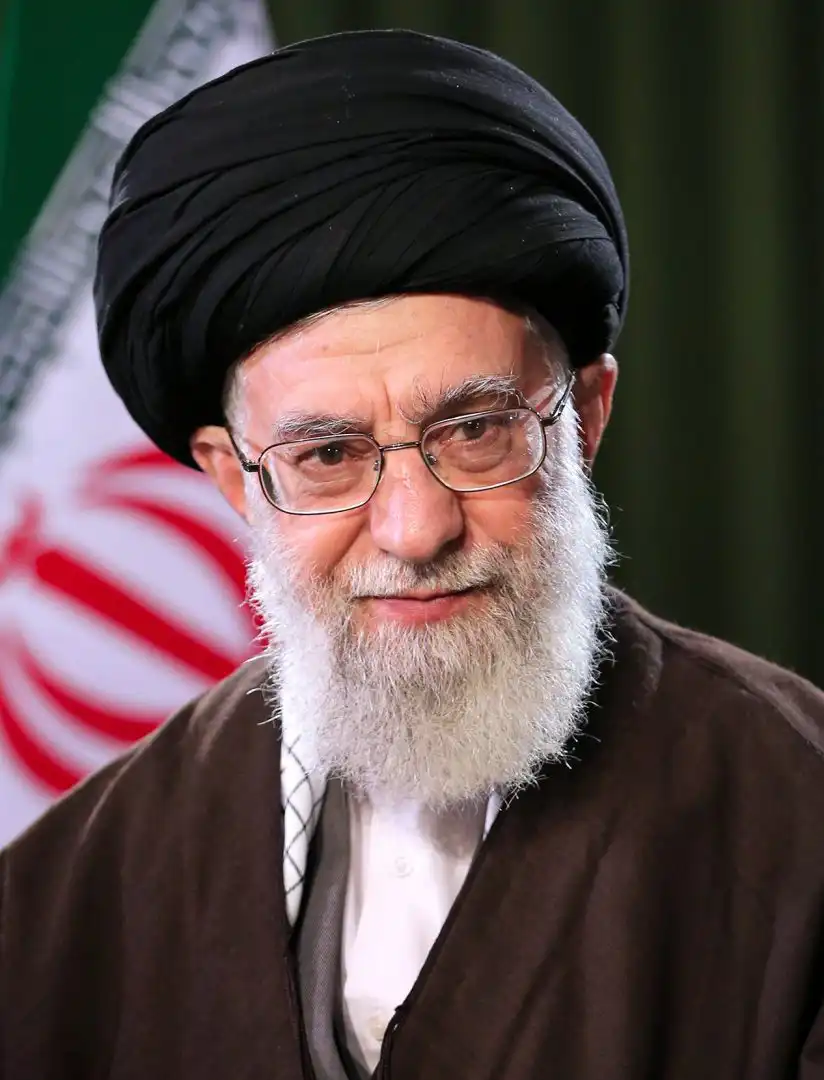
The mission regime change, however, didn’t succeed. So, justifications sifted towards the claim that Iran is on the verge of developing nuclear weapons without any credible evidence. There has been no sustained and coherent narrative capable of shaping international opinion in any direction. The hawkish language, wiping out an entire civilization, further adds to the deterioration of the credibility of the so-called responsible state of the international system. The Iranian case is significant, as it exposes the compounding nature of the problem, that is, each failed international communication weakens American credibility.
The Way Forward
The damage done by the US policymakers to its public diplomacy is not irreversible, provided that it is willing to treat its recovery as a strategic priority. Several concrete directions are worth serious consideration. The most immediate need is the restoration of exchange program funding. The Fulbright Program and its associated initiatives should be treated as non-negotiable components of American diplomacy.
Beyond that, following liberal institutionalism, the US should re-engage with the multilateral institutions and forums from which it has withdrawn. Most importantly, policymakers need to understand that foreign policy and public diplomacy are not separate enterprises. They are deeply integrated dimensions of the same strategic project. A country that treats its foreign policy as an afterthought will find its foreign policy extremely hard to execute. What took eighty years to build has taken considerably less time to unravel. Now, the more urgent question is whether the political will to reverse the damage exists before the window to do so closes entirely.
If you want to submit your articles and/or research papers, please visit the Submissions page.
To stay updated with the latest jobs, CSS news, internships, scholarships, and current affairs articles, join our Community Forum!
The views and opinions expressed in this article/paper are the author’s own and do not necessarily reflect the editorial position of Paradigm Shift.

Mna Rehman is a student of international relations at Fatima Jinnah Women's University. Her academic interests include diplomacy, foreign policy, and international security.