
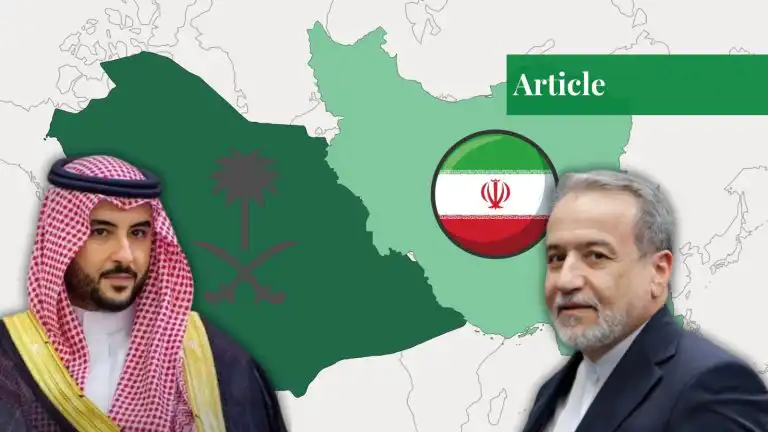
The members of the Makkah Alliance went calling on Tehran on 26 October. Turkey, Pakistan and Saudi Arabia—all countries recognised as steadfast friends of the United States—now find themselves across the table from Iran, discussing matters of considerable regional consequence. But what, precisely, are they discussing?
Marco Rubio has publicly acknowledged that Pakistan has been considerably more forthcoming in recent times than it has been in the past. Turkey, meanwhile, has just been promised a weapons and arms consignment, much to Israel’s annoyance. Saudi Arabia, of course, has maintained a close relationship with the United States ever since the Petro-Dollar arrangement of June 1974.
At this moment, very little is public, and even less has been stated. As usual, therefore, our analysis, if we are to dignify it with that description, must be built on speculation, perceptions, precedent and established patterns of behaviour. We are not privy to the discussions taking place behind closed doors, but we can attempt to interpret the circumstances in which they are occurring and draw our own conclusions.
It would be pertinent to begin with one fundamental assumption: none of these three countries would be in Tehran at this particular moment without the United States being, at the very least, aware of the initiative. My further assumption is that they are collectively carrying messages from Washington to Tehran, intended to explore a way out of the present crisis.
Why Tehran, And Why Now?
The venue and timing of this conference are particularly interesting. Tehran has been publicly threatened with an impending US-Israeli offensive of unimaginable magnitude, supposedly imminent. Military movements have been sufficiently visible to lend credibility to those threats. Why, then, would a delegation comprising representatives of three countries with close American connections choose this precise moment to travel to Tehran?
My inference is that some assurance must exist that an attack will not take place while the conference is under way. Such an assurance, if it exists, is unlikely to have originated from Iran alone. It would be reasonable to infer that the United States, directly or indirectly, has communicated some form of restraint. Whether this amounts to a formal guarantee, tacit consent, or merely an understanding is unknown.
If this inference is correct, the delegation may be carrying proposals which, if accepted, could appease Washington sufficiently to contain Israel and prevent a further escalation.
What, Then, Might Those Proposals Entail?
What could possibly appease Washington and restrain Israel? The possible terms are not difficult to identify:
- The opening of the Strait of Hormuz to unrestricted and secure commercial navigation.
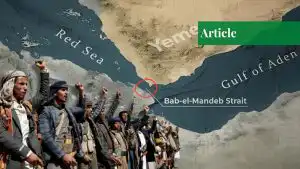
- The restoration of normal maritime traffic through Bab el-Mandeb.
- The transfer of Iran’s nuclear material to a third country.
- Access to the IAEA to Iran’s nuclear facilities for inspection and verification.
- The lifting of sanctions, subject to an acceptable agreement.
- The release of Iran’s frozen assets, potentially in instalments.
These are the possible ingredients of an American proposal. Whether they have actually been conveyed is another matter.
What, On The Other Hand, Does Iran Want?
Iran’s position, as I interpret it, is fundamentally different. Tehran is unlikely to concede control over the Strait of Hormuz as a condition for peace. The other issues, including those that were to be negotiated under the Islamabad Accord before, in Iran’s perception, Trump reneged on the arrangement, would now have to be resolved within a framework that brings hostilities to an immediate end.
Iran would demand an end to the naval blockade, the immediate lifting of sanctions, the immediate release of its withheld assets and reparations, with the amount and mechanism of payment specified. It would resist surrendering its nuclear material or accepting restrictions on its nuclear facilities that it considered incompatible with its sovereign rights. It would also want the conflicts on the periphery— in Lebanon, Iraq and Syria—to cease forthwith.
Above all, Iran would want a permanent settlement rather than another temporary respite, after which the United States and Israel could resume hostilities at a time and place of their choosing. This implies that having suffered US duplicity since 1979 and witnessed the fate of Libya and Ukraine, Iran would now pursue the nuclear option with full vengeance and commitment. This is the only guarantee of permanent peace for Iran.
In my assessment, Iran’s fallback position might include deferring the question of reparations for subsequent negotiation and accepting IAEA inspections at some of its facilities. But these concessions would still leave the central issues unresolved. They are unlikely, by themselves, to satisfy Washington or Israel. Consequently, unless the parties are prepared to move beyond their publicly stated positions, the present discussions may well prove to be a non-starter.
Why Should Iran Concede Anything To Saudi Arabia?
Another issue that may figure in the discussions is the Saudi predicament, brought about by the Houthi attacks and the resulting security concerns. But this, too, raises an obvious question: why should Iran concede anything when it possesses the advantage of plausible deniability over Houthi actions? Unless Saudi Arabia can offer Iran something tangible in return, Tehran has little incentive to expend its leverage merely to alleviate Saudi Arabia’s security predicament.
This is not to suggest that Iran necessarily directs every Houthi action, but that the ambiguity surrounding its relationship with the movement gives Tehran room for manoeuvre. Riyadh must therefore negotiate with an appreciation of the leverage Iran believes it possesses, rather than assume that its own security concerns will automatically elicit Iranian cooperation.
Is This The Beginning Of A New Regional Security Architecture?
Those who are already interpreting this conference as the beginning of an alternative regional security architecture, one that will replace existing American defence commitments, are getting ahead of themselves. It is far too early to draw such a conclusion. Nevertheless, one fundamental principle must be recognised: no credible security paradigm for the region can be constructed without Iran. It is a major regional power with the capacity to influence the security environment, maritime access and conflicts across the Middle East. Any arrangement that seeks to provide lasting regional security while excluding Iran is unlikely to be sustainable.
The participation of Pakistan, Saudi Arabia and Turkey may therefore be significant for reasons beyond the immediate crisis. These countries possess different relationships with Washington and Tehran, giving them the potential to facilitate communication where direct engagement has become difficult. Whether they can translate this position into a durable arrangement remains to be seen.
Is Trump Searching For An Exit?
My own assessment is that this conference represents another attempt by Trump to find a face-saving exit from a conflict whose consequences have proved difficult to contain. But I do not believe he will find an easy one. Iran is unlikely to accept a settlement that merely postpones another confrontation. Nor is Israel likely to be satisfied with an arrangement that leaves Iran’s strategic capabilities substantially intact.
Washington, meanwhile, must reconcile its military objectives with the economic, diplomatic and strategic consequences of prolonging the conflict. Trump may therefore find himself caught between the commitments of his own rhetoric and the limitations imposed by the realities on the ground. If diplomacy fails, he may conclude that military action is necessary to demonstrate that his threats were not empty.
My further hypothesis is that the American midterm elections may influence the timing of any such decision. An administration might prefer to defer an escalation until after the elections, when the immediate electoral consequences would be different. But that remains speculation, not an established plan.
The fundamental problem is that a decisive military offensive would not necessarily produce a decisive political outcome. Iran’s capacity to disrupt regional security, particularly maritime traffic, means that even a militarily superior adversary could find the consequences difficult to control. The Tehran conference may therefore represent an attempt to find a way out before the conflict reaches a point where neither side can retreat without appearing to have surrendered.
But herein lies the dilemma: Iran wants a guarantee of permanent peace; Washington and Israel want to retain the option of future military action. Until this contradiction is resolved, any agreement risks becoming merely an interval between wars. And if neither side is prepared to accept the compromises required for a lasting settlement, the alternative may be a confrontation in which both discover that the destruction they can inflict is considerably easier to calculate than the political outcome they can achieve.
If you want to submit your articles and/or research papers, please visit the Submissions page.
To stay updated with the latest jobs, CSS news, internships, scholarships, and current affairs articles, join our Community Forum!
Find our FREE quizzes and MCQs here!
The views and opinions expressed in this article/paper are the author’s own and do not necessarily reflect the editorial position of Paradigm Shift.