“If you want to find the secrets of the universe, think in terms of energy, frequency, and vibration.”
-Nikola Tesla (1942)
And if you want to find the secrets of politics in Pakistan, think in terms of power grids.
Every government that rises to power promises the same thing: affordable energy and uninterrupted supply, a pledge of “relief” for the people. And yet decades later, what we have is neither power nor people empowered. What we have is only a cycle of subsidies and swelling debt.
Pakistan’s electricity crisis has been generationally inherited, continues to compound, and has been repeatedly postponed. The core of it lies in what economists call circular debt, a chain of unpaid bills within the energy sector that moves in circles without resolution. Power Distribution Companies (DISCOs) collect less than they charge, the government pays them subsidies to cover the gap, Independent Power Producers (IPPs) are paid late or not at all, and the shortfall rolls into the next fiscal year.
As of 2026, Pakistan’s circular debt stands at over PKR 1.889 trillion. A debt that has increased by nearly PKR 200 billion in the first two months of 2026 alone. That aggregate statistic is representative of misgovernance and the cumulative cost of populist decisions stretched over decades. Every administration since the 1990s has promised to “end load-shedding” without attempting to address the economics that cause it.
Understand that when electricity is underpriced for political reasons, somebody must absorb the loss. In Pakistan, that “somebody” is always the public, just in a different form. Whether it is higher inflation, currency depreciation, or IMF conditionalities masquerading around as reform, one thing is clear. What citizens save on their electricity bills, they pay through the cost of living.
Populism by the Kilowatt
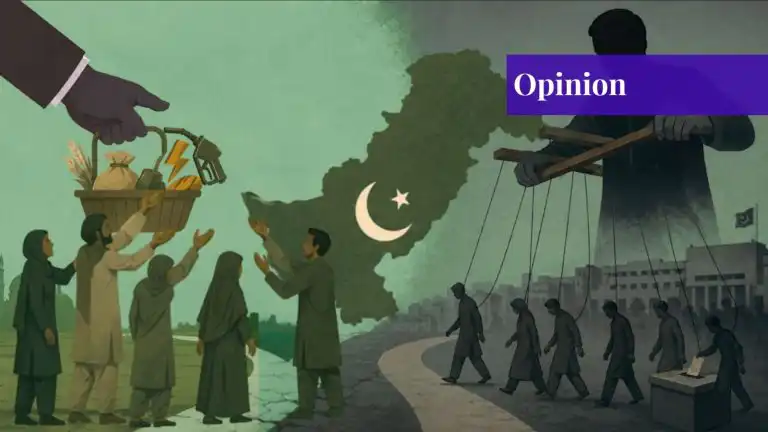
At its core, Pakistan’s electricity subsidy system is a classic case of energy populism. Governments equate cheap power with public empathy as if affordability itself were an achievement of governance. Consider the political cycle itself. In election years, power tariffs are frozen, load-shedding schedules are relaxed, and subsidy allocations rise. Between 2018 and 2023, federal energy subsidies averaged PKR 500-600 billion annually, roughly equivalent to Pakistan’s entire higher education budget. These subsidies were later rolled back after IMF pressure in 2023. The circular debt in the energy sector rose from PKR 1,148 billion in 2018 to around PKR 2,467 billion by March 2022, escalating our debt crisis. Yet, this generosity rarely ever benefits the poor in proportionate terms. Wealthier households, consuming more electricity, receive a much larger share of the subsidy pie.
This is the irony of Pakistan’s energy populism. It is regressive, yet hides under the guise of compassion. A system formulated to “help the poor” simply ends up rewarding consumption rather than need. It’s simple, really. Cheap electricity buys loyalty, and expensive truth loses elections. Energy has, in this way, become less a sector to be economically managed and more so an electorate to be pacified.
The Rot Beneath the Light
The electricity sector’s dysfunction is not purely political, though, but also bureaucratic. Pakistan’s state-owned distribution companies, like LESCO, MEPCO, and PESCO, lose roughly one-fifth of their power through transmission losses and theft. In some regions, the loss rate exceeds 35%. Yet these inefficiencies are rarely ever punished. DISCOs are still overstaffed, underregulated, and protected by political patronage networks. The consumer, the honest bill-payer, subsidizes not just the poor this way. The consumer ends up unintentionally subsidizing the corrupt, the inefficient, and the politically connected all at once.
This way, the tariff system itself is made for distortion. Industrial consumers often pay above cost to offset household subsidies. This ends up discouraging manufacturing competitiveness and pushes investment further and further away from the formal sector. The very backbone of economic growth, energy reliability, and pricing stability, is thus sacrificed to maintain a facade of affordability.
IMF, Dependency, and Sovereignty
The deeper moral cost is that subsidies, once introduced, create citizens who no longer demand reform and only demand relief. People come to see low tariffs as a right; they do not see it as a distortion. Each new government inherits both a fiscal debt and a psychological dependency.
And this is the perfect populist mechanism. One that turns those governed into beneficiaries. Voters no longer judge governments by competence, but instead, by compassion. Not by sustainability, but by short-term comfort. And every time a government tries to correct its tracks, it faces outrage as if truth itself were a massive stab in the back.
This way, the system reproduces itself. Power outages are blamed on the opposition, subsidy cuts are represented as cruelty, and the cycle of facade continues. The citizen pays the real cost, but invisibly, through inflation, taxes, and the gradual decay of their state’s financial credibility. Pakistan’s electricity crisis, therefore, is less about shortage and more about sovereignty.
Who Pays, and Who Decides?
Each time the International Monetary Fund steps in, the cycle simply repeats. The government agrees to raise tariffs, reduce subsidies, and improve collection efficiency. For a few months, reform seems imminent. But the closer the elections are, the more likely the same leaders are to undo their own commitments by postponing tariff hikes, announcing relief packages, and repainting fiscal irresponsibility as something generous.
The result of this is performative reform where frugality exists on paper, and populism persists in reality. Pakistan’s problem isn’t that it doesn’t know what to do; it’s that it doesn’t want to do it before an election. And even the IMF has learned to negotiate with this duplicity. Conditionalities are softened, and timelines extended.
Everyone pretends to be reforming, while the bill grows larger and larger, and larger.
When the Lights Go Out
The irony of this is that the people of Pakistan are not unaware. They know the lights will flicker, they know the bills will rise, and they know the government will blame its predecessors. Yet cynicism has completely replaced outrage. Energy scarcity has become so normalized here that even a crisis feels ordinary, a norm.
The greater question is perhaps this: can Pakistan afford to be home to politics that mistakes generosity for governance? True empowerment would mean letting citizens pay what energy actually costs, and holding the state accountable for providing it efficiently. Instead, the state continues to undercharge, overpromise, and underdeliver.
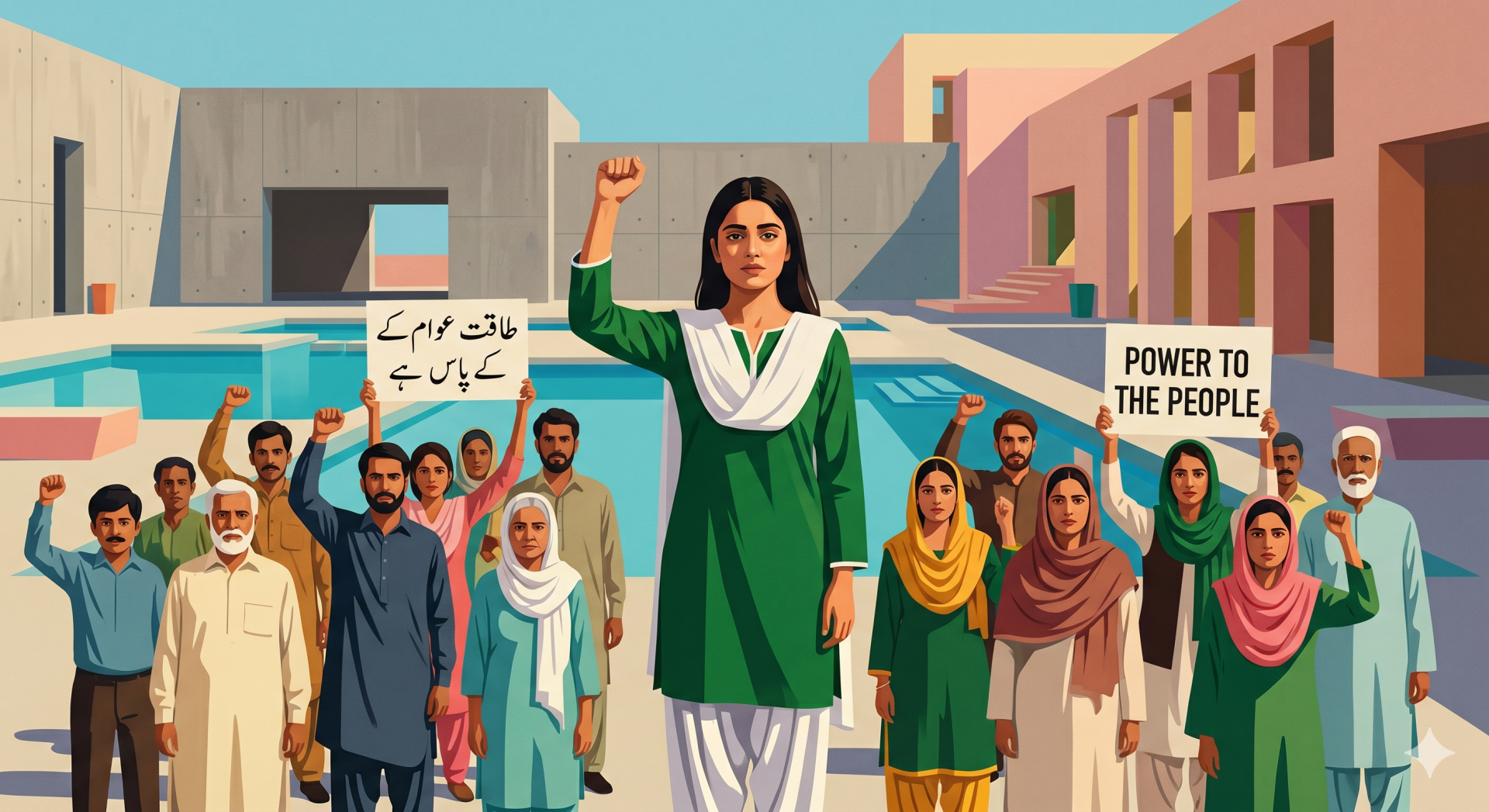
Power may have been promised to the people, but ownership never was.
Conclusion
Optics > order. That is what Pakistan’s electricity problem is. It is the result of a philosophy that refuses to exit the minds of our people. Bright in some pockets, broken in others, held together by loaned current – just like a power grid. That is why it is crucial to understand that real reform will require more than simple tariff hikes. For power to remain with the people, our state will need political courage and the willingness to tell citizens that “relief” is not a right. It will require the willingness to preach that true progress begins when the bill is honestly priced.
And until then, Pakistan’s story remains unchanged: every few years, a leader turns the lights on for applause, and when the bill arrives, the people, as always, pay in silence.
If you want to submit your articles and/or research papers, please visit the Submissions page.
To stay updated with the latest jobs, CSS news, internships, scholarships, and current affairs articles, join our Community Forum!
The views and opinions expressed in this article/paper are the author’s own and do not necessarily reflect the editorial position of Paradigm Shift.

Xeyna Khan is an 18-year-old writer from Karachi. A published author and poet since 2022, she began writing at 13 and now publishes essays on politics, economics, and philosophy through her Substack. In 2025, she placed globally in both Economics and History at the John Locke Institute, awarded by academics from Harvard University, and University of Oxford.