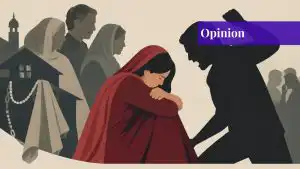

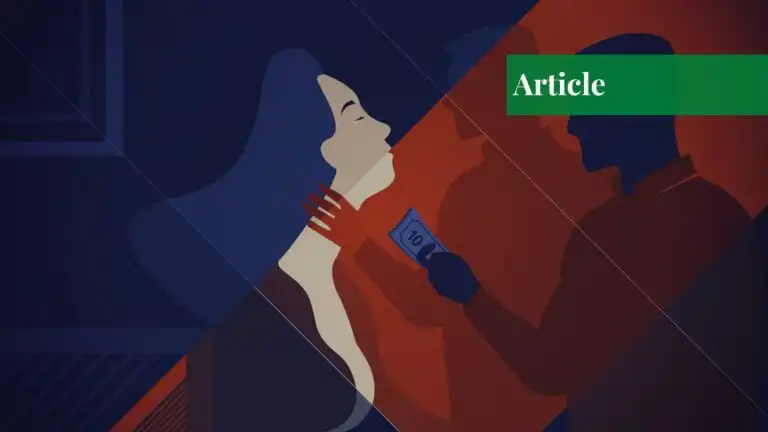
Prostitution—a taboo concept often only referenced in hushed whispers and conspiratorial glances—but what is it in reality? Does this outlawed profession serve as another tool of the patriarchy?
Prostitution refers to engaging in an act of sexual exchange for cash or other immediate monetary benefits. It is a crime across the globe, with a popularized exception in some developed regions, such as Amsterdam and Turkey. In most cases, it is women who are the prostitutes, while men are the clientele.
It is an old and universal phenomenon; equally universal is the condemnation of the prostitute, but there is relative indifference towards the client. To understand such an intricate network in society that flourishes at the same rate upon which it is accursed, one needs to analyze its development over the ages.
Historical Evolution
Mughal Empire (16th Century–18th Century)
Known as the “oldest profession in the world,” the Mughal era is considered the starting point for identifying the roots of prostitution in the subcontinent. However, at that time, women of such a profession were known as courtesans or “tawaif.” They thrived in the community and were part of the uppermost echelons of society. Akin to royalty, these women were a part of vast harems—concubines kept for the service of the emperors. Mughal Emperor Akbar was said to have over 500 concubines in his possession. The tawaif held a coveted status; they were respected and held great influence in state affairs as they had a direct relationship with the rulers.
Colonial Rule (19th Century–20th Century)
A new name came into play for the courtesans when Britishers came to the subcontinent: “The Nautch Girls.” The British brought with them the concept of the ideal “white woman” standard, heavily entrenched in patriarchal norms. Women were supposed to remain indoors and be shy and conservative.
When they stumbled upon the tawaifs, they instantly labeled them as “loose women.” The prostitutes were kept under surveillance and treated as carriers of sexually transmitted diseases (STDs). This brought a wave of newly minted laws that criminalized prostitution and set conditionalities of supervision on the sex workers. The “Contagious Act Diseases Act of 1868,” the “Devadasi Prohibition Bills and Act,” and many other provincial regulations, such as the “Prevention of Prostitution and Immoral Trafficking in Women and Girls,” played a role in this.
Dismay for the British soldiers and their lack of self-control concerning prostitution was projected onto the women. A particularly demeaning law, The Cantonments Act of 1864, institutionalized/regulated prostitution and restricted the movement of women to specific areas of town. As some time went on, and many of the British troops contracted sexually transmitted diseases, the women were yet again punished and stopped at random intervals for invasive medical checkups, and if such a request was denied, they were arrested and detained.
India
Within India, prostitution was a common practice; therefore, there wasn’t much protest against it. However, over time, due to some structural changes in the societal framework, sex work gained a reputation for being exploitative, oppressive, and downright degrading. As the Mughal appeal for concubines and tawaifs declined, the workers moved towards the underground scene of fame and debauchery—dancing in bars and nightclubs became their main source of income alongside prostitution.
Another name for these societally disgraced women was “devadasi,” an approved form of prostitution where kids, especially girls, were gifted off at puberty to their gods and goddesses for service – usually sexual. Many states of India have legalized prostitution but have criminalized pathways to it, such as establishing or running brothels. Delhi is seen as the capital of the red-light business in India.
Pakistan
Pakistan, like many other developing states, has been suffering from this epidemic. There are well-structured red-light districts in all major cities—Lahore and Karachi, especially. The prostitution rings in Pakistan intersect with other societal fault lines, which include: the sex trade, child marriages, human smuggling, and the vast begging circuit. All of these target the already vulnerable sectors of society: women and children.
They are sexually and economically exploited on the streets; the sex trade is usually the only avenue left for them, as they have no other skill set to capitalize on. The rampant corruption in the government and its policing institutions is what keeps this plague from being eradicated. Lax authorities overlook the issue, unwilling to address it properly, due to a lack of resources and factual data—both of which remain at low levels due to the taboo that surrounds and binds people into inaction.
Judicial Reforms and Laws in Pakistan
Under the Pakistani constitution, the state and its institutions are to prevent and eradicate prostitution, for it is declared a “social evil.”
- The Punjab Suppression of Prostitution Ordinance 1961
The Punjab Suppression of Prostitution Ordinance is an 8-page document that elaborates on the definitions and punishments regarding prostitution, soliciting, keeping or maintaining brothel houses, earning from prostitution, and much more.
- The Hudood Ordinance 1979
The Hudood Ordinance was ratified on 10th February in 1979, and it worked on molding existing judicial policies with Islamic rulings. The punishments for zina (sexual intercourse with someone an individual is not legally married to) included stoning to death or one hundred lashes with a whip.
- Pakistan Penal Code
The Pakistan Penal Code Section 371-A recognizes prostitution and the selling of person(s) for illegal sexual activities to be a crime punishable for up to 25 years.
Heera Mandi: The Diamond Market
Heera Mandi is one of the most well-known red-light districts in Pakistan. Situated in Lahore, it serves as a major hub for prostitutes to work in and for their willing clients to visit at their leisure. The area, also known as Shahi Mohalla, thrived even during the time of the Mughals. The stark difference between then and now is the lack of respect people hold for the women.
Many have come forward and shared their stories, with Maha being one of them (her last name has not been mentioned in publications or interviews for a semblance of anonymity). A wife-turned-prostitute described the circumstances through which she and many other women came to live there—forced marriages.
Men marry women from low-income families and pimp them out for extra cash. Without proper healthcare or even contraception, these women have to not only give up their dignity every day but have to single-handedly take care of and feed multiple children at the same time. These women need all the help they can get, as their only source of income is illegal.
They have to be careful in the business they partake in, because many of the Pakistani prisons are full of women like Maha who have been incarcerated for having sexual relations with a man they’re not legally married to. To keep up appearances, the prostitutes still refer to their clients as their husbands, or “shohar.”
Age is a big factor in Heera Mandi as well; the younger the woman is, the more likely she is to get more clients and bring in more money. They start earning at the age of 16 and peak by 25. Afterward, the women themselves start to manage the brothels and train the younger girls. Unlike the rest of the world, having a son born to a prostitute is deemed unlucky, while the birth of a daughter is celebrated, for a daughter can continue the trade which the son cannot.
Conclusion
Letting this issue run rampant while the authorities remain complicit leads to a weak and morally ill society. These women and children are vulnerable and need to be protected by the state. Access to rehabilitation facilities, social support structures, and alternative employment opportunities will go a long way in sustainably rehabilitating them.
If you want to submit your articles and/or research papers, please check the Submissions page.
The views and opinions expressed in this article/paper are the author’s own and do not necessarily reflect the editorial position of Paradigm Shift.
Hafsa Ammar is a graduate of the National Defence University, Islamabad. Her areas of expertise are narrative building and propaganda warfare, centered around the Soviet Union and modern-day Russia.