
Elections & the Rise of Right-wing Parties
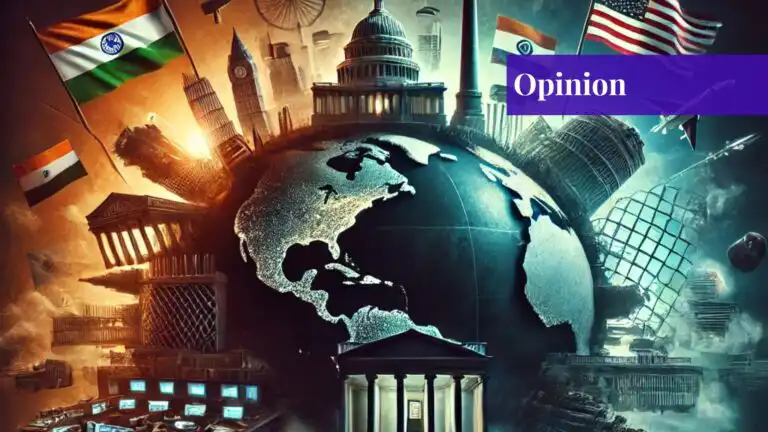
The year 2024 was the year of elections, wherein 62 countries had polls and new governments took office. Starting from Pakistan, where elections were held on 8th February 2024, some of the other countries include India, Argentina, France, the UK, South Korea, Iran, Indonesia, Belgium, Venezuela, Madagascar, Ghana, Uzbekistan, Ukraine, and most recently, the United States of America. So, 2024 didn’t remain an election year; it became “the election year.”
However, the world has seen a rise in the right wing coming into power across the globe. Right-wing parties are those parties that have a more nationalist and conservative lens of viewing things. They hold a traditional ideology and believe in the low involvement of government in the economy. Many countries have seen a change in their governments with the success of right-wing parties. Donald Trump in the US, Modi in India, Javier Milei in Argentina, Marine Le Pen in France, the European Conservatives and Reformist Group in Italy, and the Freedom Party in Austria—all these are instances of the right-wing parties taking over the world.
Implications
Interestingly, what has happened in the election year will have far-reaching impacts on global affairs in the current year and the years to come. The ascent of the right-wing often results in the decline of multilateralism and internationalism. Consequently, a lack of global consensus emerges on global issues like climate change, global health issues, and migration. Moreover, international organizations suffer because of the nationalist policies of the states. The same picture is what I can imagine for 2025. I will discuss some of the challenges that the world will face because of the successes of the far-right parties.
First and foremost, a blow to internationalism is evident. The nationalist agenda of the far-right doesn’t support global trade and economic cooperation, thus hindering the way of multilateralism across the globe. For instance, the tariffs on China (60%), and on Canada and Mexico (20%) by Donald Trump’s second administration will reduce trade among the countries, thus hampering economic growth.
Secondly, a hard-line stance on the immigration of people or refugees reflects a humanitarian crisis as well as negligence of the issues and conflicts of the people. In Germany, the Afd (Alternative for Germany) party intensified the rhetoric for immigration by distributing 3000 pamphlets calling for the deportation of illegal immigrants in Germany.
Thirdly, the right-wing parties are usually climate-skeptical and pay more heed to industrial growth than climate initiatives. This poses a grave challenge according to me in the current scenario. Especially, the 2nd withdrawal of the US from the Paris Peace Accord has become the last nail in the coffin. The superpower has rejected the initiatives for climate protection, and the other great powers will follow through. This will hit a blow to developing countries like Pakistan, which are more vulnerable to the impacts of global warming. According to the US, withdrawal from the Paris Peace Accord will save $1 trillion per annum for the country. And this is what tempts the businessman-turned-president the most.
Lastly, some of the right-wing parties show authoritarian tendencies, thus undermining the essence of democracy, press freedom, and the civil rights of the people. Such policies not only damage the norms of democracy but also create a dearth of accountability and the role of people from the states. Taking power in the hands and limiting the rights of people can be very threatening for the survival of democracy in such states. For example, under the government of Narendra Modi, the freedom of the press in India has largely suffered. India ranked 161 out of 180 in the World Press Freedom Index in the last year.
The aforementioned challenges require a balanced approach to be dealt with. Global affairs have yet to set a direction after the 47th President of the United States took office a few days ago. His policies will impact the whole world in one way or another. However, the countries should extend their efforts to create opportunities for multilateralism in the world. More economic, cultural, and social cooperation is required to keep the world from conflicts. A collective effort is needed to maintain harmony in the world, or else the world will become more polarized, divided, and far from interconnected.
If you want to submit your articles and/or research papers, please check the Submissions page.
The views and opinions expressed in this article/paper are the author’s own and do not necessarily reflect the editorial position of Paradigm Shift.

She is a clinical psychologist and author with over six years of experience in freelance writing, specializing in mental health, social issues, and global affairs. She co-authored L’Art de Vivre, a book on positive psychology, and contributed to flood relief efforts in 2022. She also qualified the CSS Special Competitive Examination in 2023. Through her work, she is committed to promoting resilience, raising public awareness, and fostering informed discourse by combining psychological insight with socio-political analysis.