Forests, Fires, and Pakistan
Deforestation has been at a higher pace in Pakistan than afforestation. The coverage of forests now stands at less than five percent of the total land area, which is one-fifth of what should have been the ideal proportion of 25 percent of the land area of an ecological nation. The forest coverage per capita in Pakistan is 0.05 hectares of land, whereas it is one hectare on average in the world. Thousands of hectares of forest are disappearing annually because of logging activities, forest fires, and forest land conversion for cultivation and other uses. At the same time, every government in power has launched a new tree-planting campaign, which is larger in scale than the previous one.
Reasons for the Slow Growth
Let us start with the weather conditions in the country first: nearly 60 percent of the country receives inadequate precipitation to sustain any forest on its own. Only those areas that receive rainfall and have other favorable conditions for the sustenance of a forest survive. These forests are limited to some special areas only: the temperate forests in the northern mountainous region, narrow riverine strips on the banks of the Indus, the mangrove forests in the Indus delta, and the plantation forests sustained through human labor.

Add the high population growth rate of more than 2.5 percent on top of it, and the equation becomes unworkable. As far as the consumption of wood goes, it satisfies almost a third of the energy requirements of the country. Wood is used widely for heating and cooking purposes in rural as well as urban areas.
Fire As a Rapidly Growing Menace
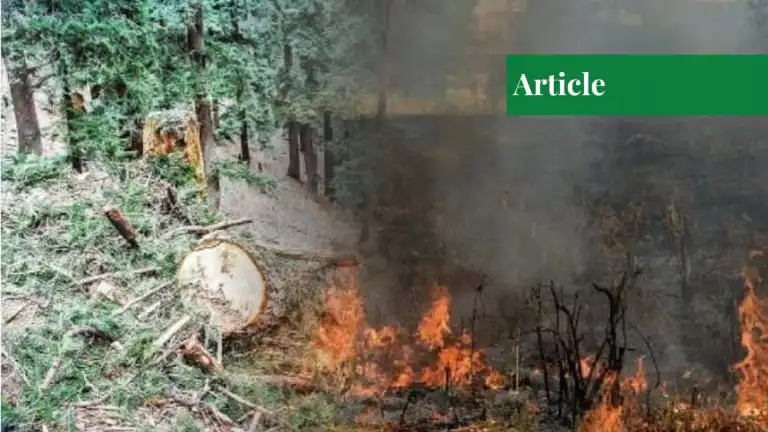
Fire used to be something unfortunate. It has turned out to be something inevitable. The Margalla Hills above Islamabad have had nearly 300 fires within the last two decades, consuming 25,000 hectares of plants and shrubs and beginning the season in April, not in June. In Khyber Pakhtunkhwa, Azad Kashmir, Chitral, and Hingol National Park of Balochistan, you can find a similar pattern all over Pakistan’s map.
The components are almost always the same—a long dry period, strong winds, dry leaves and wood acting as fuel for the flames, and a spark—a human being. Fire doesn’t consume the area without a trace. Soil microorganisms die out, regeneration is impossible, the dense forest is reduced to scrubland, which cannot protect the area from the next fire, and the additional smoke adds up to an existing problem of smog affecting Pakistani cities during winter.
The Vanishing Juniper
Then there is Ziarat. This valley contains the so-called second-largest juniper forest in the world—trees that, according to many studies, are between two and five thousand years old and thus predate most civilizations to grace the area with their presence. In the past three decades, the forest has been reduced by almost a third of its size, and the number of people living near it has increased fourfold since the 1980s.
Throw into the mix agricultural expansion, illegal felling of firewood, marble extraction, medicinal berry picking, and climate change with increasing aridity in the region, and you end up with a shrinking forest. The valley was named a biosphere reserve by UNESCO in 2013. But, despite this international recognition, no money from the international community has gone to the conservation of this site, as residents and foresters claim.
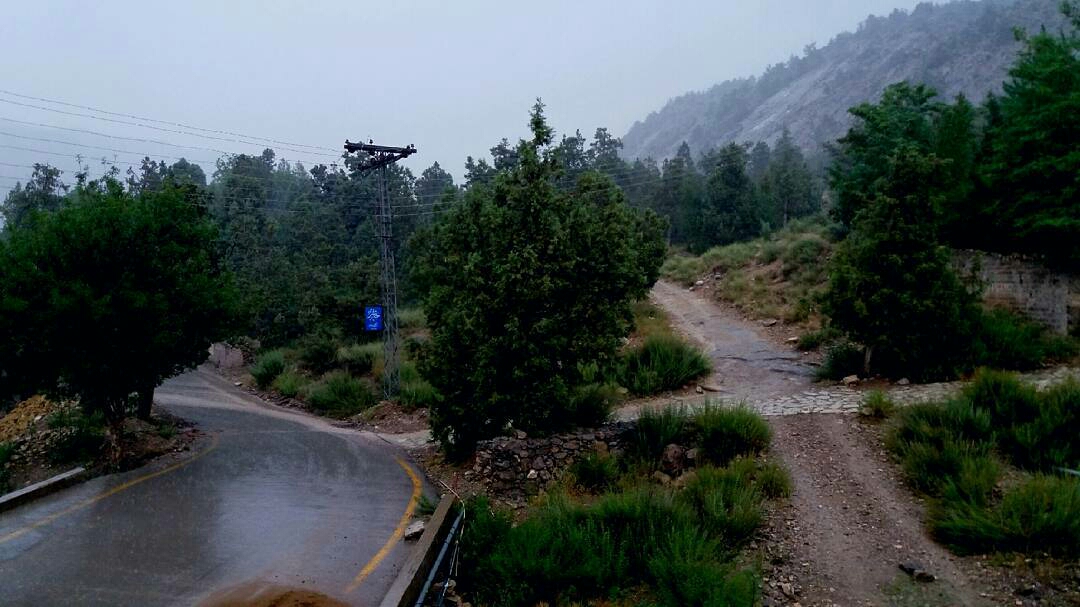
Other Balochistan juniper forests such as Kalat, Loralai, Harnai, and Pishin get even fewer chances, partially due to the security situation that does not allow officials to research these areas. And juniper is very forgiving; some species only grow an inch every two years, meaning that once you cut it down, the damage is irreparable for a millennium or two.
Further to the east in the Sulaiman range, running from Zhob to Sherani, lies one of the biggest pure chilghoza pine forest belts in the world, accounting for almost a fifth of all forests in Pakistan and providing the only remaining habitat for the endangered straight-horned Sulaiman markhor. Cutting down those trees was prohibited before 1971. Later on, due to local conflicts and the breakdown of the irrigation system, the local population started relying again on forests as their main source of living, and the condition of the forests deteriorated rapidly throughout the ’80s and ’90s.
The solution, however, did not come from any governmental program. In 1991, WWF-Pakistan launched a campaign against serious opposition at first, creating, however, a market instead of prohibition and saving the trees by giving people an incentive not to cut them for financial gain. The Kasa Ghar Community-Based Organization has grown from that initiative and has now conserved nearly 9,000 hectares in nine villages, winning a prestigious award, the UN Equator Prize, in 2019. Then, the provincial government intervened, but this time, the scale was reduced.
The Balochistan Forest Department assured in 2022 under the Ten Billion Tree Tsunami Programme to preserve one thousand acres of forests in Sherani along with providing seedlings. On its part, Khyber Pakhtunkhwa suggested the establishment of a first-of-its-kind transboundary national park in the Koh-e-Sulaiman Range.
Looking Ahead: What Pakistan’s Forests Face by 2050
The numbers are harsh. Even though Khyber Pakhtunkhwa is the only province that has seen results from its reforestation policies, the region will still see a decline in its forest cover from approximately 19 percent to less than 13 percent by 2100 because of the ongoing expansion of cities, encroaching on the areas that were recovered under the ten-year-long Billion Tree Campaign. According to current statistics, Pakistan stands at the 113th place out of 143 in terms of forest cover area. The studies repeat themselves, saying that the Bonn Challenge targets in Pakistan would remain just targets unless enforcement and land governance change in the country.
Climate change adds more pressure. As rainfall becomes even less predictable and average temperatures go up, the areas suitable for regeneration of species such as Ziarat juniper or Sulaiman chilghoza pine become increasingly scarce, meaning that the trees currently being lost will probably never grow again despite all the funding that might be allocated in the future. Drier seasons mean longer fire seasons, just as the trends observed in the Margalla Hills.
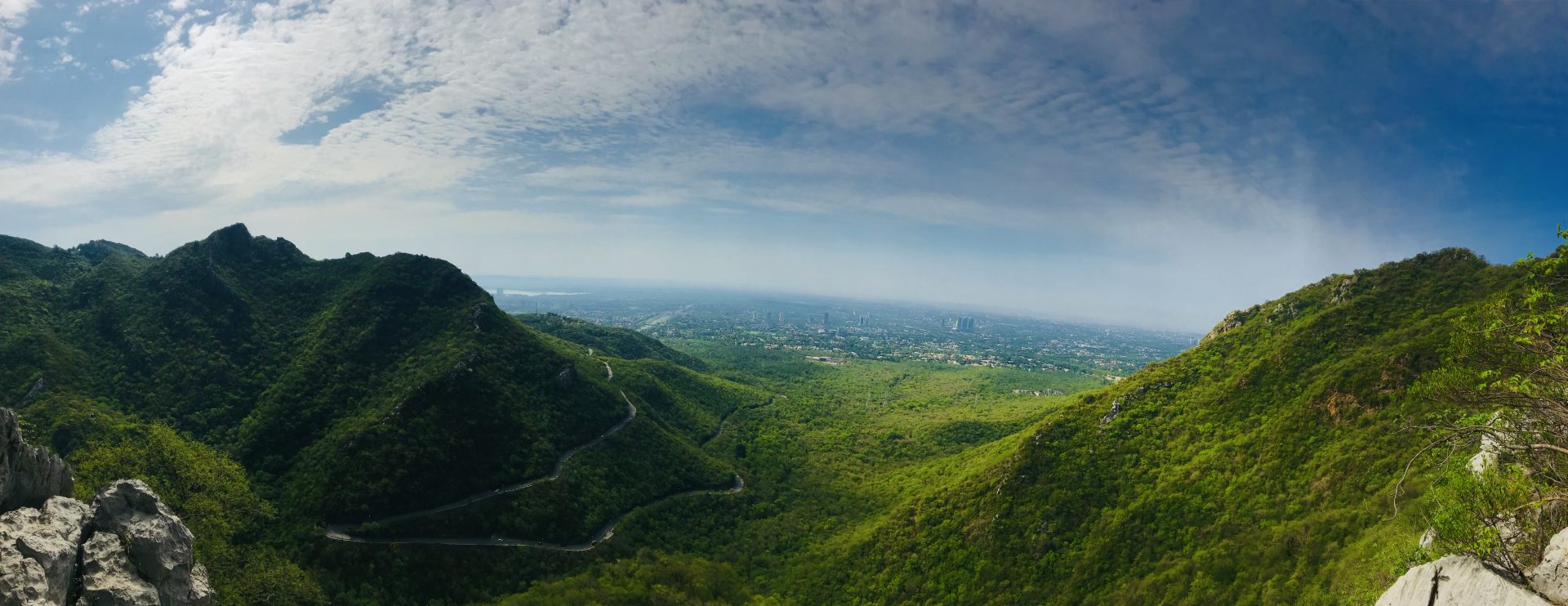
However, there is hope. Some models predict that large-scale afforestation could mitigate a considerable amount of carbon emissions in the middle of the century, and the case of Khyber Pakhtunkhwa proves that the trend can change its course, as it has done before. The thing that makes the difference is not the willingness. Pakistan has always been good at setting ambitious plans; new tree-planting records are set every few years in the country. The problem is what happens next: the permanent protection and community ownership based on what was done in Sulaiman and the new attitude towards ancient forests as something that can never be replaced once lost.
Initiatives and Their Limits
The Billion Tree Tsunami of Khyber Pakhtunkhwa, from 2014 to 2017, is the best example of how successful Pakistan was in reforesting its degraded hillside areas and increasing the proportion of forest cover in the province from about 20 to 26 percent. This project is one of the few projects in Pakistan that gained recognition from the Bonn Challenge and the World Bank. Another initiative that came after that is “Ten Billion Tree Tsunami in 2018,” which says that more than nine billion trees have been planted in all the provinces of Pakistan. Some independent observers, including IUCN, FAO, and WWF-Pakistan, have noted discrepancies in survival ratios, and in 2022 floods took away most of the newly planted trees. Now, Punjab has promised to double its forest cover within five years through hydroseeding and satellite monitoring.
However, once again, the same gap emerges—lots of plantation, but little effort in protecting what has been planted, no measures taken for preventing grazing, and no engagement with the community. And this gap was the same that prevented the Ziarat Forest Reserve from regaining its footing and enabled Margalla Hills National Park to go up in flames while saplings were being planted in other places.
Pakistan is not lacking in ambition when it comes to forestry. However, Pakistan is lacking in doing something much less glamorous and more laborious—protection of existing forests, fire prevention, and grazing control
If you want to submit your articles and/or research papers, please visit the Submissions page.
To stay updated with the latest jobs, CSS news, internships, scholarships, and current affairs articles, join our Community Forum!
The views and opinions expressed in this article/paper are the author’s own and do not necessarily reflect the editorial position of Paradigm Shift.

Nisar Khan Kakar is a writer and poet and a BS English student at Quaid-i-Azam University, Islamabad, Pakistan, hailing from District Killa Saifullah, Balochistan. He serves as Assistant Coordinator for Literary Prose at the Quaidian Debating and Literary Society (QDLS).