The Solar Energy Surge in Pakistan
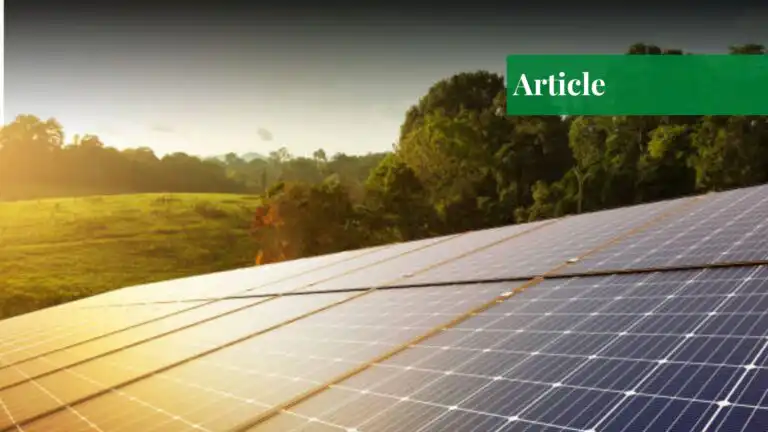
Following Prime Minister Shahbaz Sharif’s recent commitments to the IMF regarding increased electricity tariffs and suspension of any new subsidies for electricity and gas, electricity bills have become even heavier on the pocket. Amidst the extensive economic crises and soaring electricity bills, Pakistan underwent a silent revolution. The conversion of hundreds of thousands of Pakistanis to solar was pleasantly surprising, coming from an illiteracy-stricken Third World country. According to PIDE’s senior research economist, Pakistan currently houses 283,000 solar energy consumers. Energy Tracker Asia safely says that the country has become one of the world’s largest importers of solar panels.
The unexpected takeaway here is how this happened without any government initiative at all. It was a reasonable response from the people to the bank-breaking electricity bills. According to the Forum, “the country is now the world’s sixth largest solar market.” Furthermore, the overproduction of solar cells from China has led to cheaper prices, making Pakistan the third-largest receiver of Chinese exports.
The Burden on Non-solar Consumers
But in a country like Pakistan, unfortunately, every step forward seems to be a step backward. As more consumers gave up on the grid and switched to solar, the result was higher fixed costs for those who remained dependent on the grid. Households without solar, which are mostly lower and middle class, are left with rising electricity tariffs. Reuters discussed how it is only the opulent residents and businesses adopting renewable energy to escape rising energy tariffs.
In comparison, the urban middle class and apartment denizens find themselves stuck amidst valid barriers, like high installation costs and a lack of adequate space. As high-value consumers leave the grid, the national grid finds it difficult to adjust, and utilities lose money, resulting in increased prices for those who choose to stay.
This is yet another tier to the economic divide. The News International wrote in 2025 regarding the matter, highlighting the financial burden on non-solar users, stating that even a mere 5.0 percent drop in grid demand could add another Rs. 131 billion to the burden on non-solar consumers. Exacerbated economic inequalities are the last of what we need right now. The middle class is left yet again to suffer, and the old vicious cycle of working their backs off to earn minimum wage and having to spend most, sometimes all of it, on bills and taxes continues to repeat itself.
The PROFIT paper was written in 2024 about the industrial impact of the solar shift in Pakistan. It highlighted a 17% fall in grid electricity demand in Pakistan, leaving distribution companies in suffocating losses. These losses consequently lead to worsening working conditions for employees at these distribution companies, which gives yet another dimension to the previously discussed socio-economic divide.
Energy Inequality: A Burden on the Economy
The economic costs are not the only upshot of this uneven distribution. There is a vivid contrast in availability, capacity, and awareness when it comes to adopting solar energy between different areas of Pakistan. While urban cities like Lahore, Karachi, and Islamabad have undergone a discernible surge in residential solar setups, the semi-urban and rural areas continue to remain notably behind. The lack of proper infrastructure, technical education, and financial fungibility holds back lower-middle-class households from partaking in the solar energy surge in Pakistan.
The rising reliance on Chinese imports also has the potential to turn into total dependence. This makes Pakistan’s electricity system vulnerable to external political alterations, putting a question mark on the sustainability of the benefits of solar. Moreover, this dependency is no help to the staggering domestic manufacturing and unemployment rates. This should be given attention by the government so that an initiative is taken to create sustainable employment domestically and to localize solar production.
Environmentally, there is a paradox, too. There are multiple blind spots in the global solar market. IRENA, the International Renewable Energy Agency, is worried that as more people hop onto the global solar market frenzy, there might be a cumulative waste of 200 million tons by 2050. Pakistan, knee-deep in poverty, heat, and debt, is not ready for that fiasco.
A study conducted in November 2023 by Yan et al. aimed to investigate the consequences of energy poverty on income equality at different stages of economic development. Their analysis was based on data from 77 countries. The research showed through empirical evidence that access to electricity contributes to reduced income inequality, whereas renewable energy can increase income inequality in countries at an early stage of economic development. Though Pakistan was not among the 77 countries sampled, nonetheless, the results can be generalized. Pakistan currently stands at a developing economic stage, and the statistics discussed earlier in this article seem to be in harmony with the results of the study.
CGIAR discussed in their article “Where Energy Poverty Limits Not Only Lights but Lives,” published in October 2024, the effects of energy poverty on women, mainly the women of the rural southern Punjab. Relating rising costs of energy to the health risks it imposes on stay-at-home women. It is eye-opening and heartbreaking in a country where being gender aware is a far-fetched idea. The prime minister’s increased tariffs will only further exhaust the middle class unless the state makes efforts to make energy equally accessible to all.
Making Energy Accessible
The government needs to do more than lousy “bijli-sahulat” packages. Strategies can include implementing programs, which are subsidized, to install small-scale solar kits in lower-middle-class houses, or building a tariff system based on level of consumption rather than means of energy, or even reaching out to community organizations to help with grid fixed costs since renewable energy is, at the end of the day, not applicable for everyone (i.e., apartment dwellers).
Energy justice should not be solely about adopting clean sources. It should be about who can access it and at what cost. Renewable energy can be helpful and pocket-friendly, but in a country where the economy has never really been truly stable and huge social gaps pre-exist, the luxury of solar for the rich and the spine-breaking bills left for the middle class are but another chapter in the book of institutional violence.
If you want to submit your articles and/or research papers, please visit the Submissions page.
To stay updated with the latest jobs, CSS news, internships, scholarships, and current affairs articles, join our Community Forum!
The views and opinions expressed in this article/paper are the author’s own and do not necessarily reflect the editorial position of Paradigm Shift.

Momina Babak is a psychology student, a writer, and a hobbyist, shaped by the contradictions and complexities of the world around her. The deep sensitivity to injustice that she carries—whether systemic, cultural, or personal—fuels much of what she writes. Her feminism is rooted in empathy and resistance; her humanism is in the belief that every life carries worth and weight. She's drawn to political thought, critical debate, and the kind of storytelling that unsettles, questions, and heals. Through her words, she holds space for pain, for beauty, and for the truths we’re often taught to bury.