In the late hours of 19th January, Saturday, users and creators opened the TikTok app on their phones to a rather unusual message. The message read as follows: “A law banning TikTok has been enacted in the U.S. Unfortunately, that means you can’t use TikTok for now.” Furthermore, the note thanked President Trump for working with them on a possible solution, but the air was filled with frustration and anger leading up to this eventual ban on TikTok.

Find more statistics at Statista
Perhaps some of the users felt relief from the relaxation given by President Trump on the next day, giving the app a 75-day extension – though much cannot be said with certainty yet, as the future of the app remains unclear. Before moving further, it is important to understand the stated conditions of the ban.
The US government has passed a divest-or-ban law on TikTok. The Merriam-Webster dictionary defines divestiture as “the compulsory transfer of title or disposal of interests (such as stock in a corporation) upon government order.” For ByteDance, the parent company that owns TikTok, this means that either they sell the company to a US-based owner or pack their bags and go home. In most recent developments, President Trump has been pushing for 50% ownership of the app by the US, though it remains unclear what that exactly means.
TikTok Ban Timeline
The ban is not something new; it was first suggested during the 2020 Trump presidency by the president himself on the grounds that “he viewed it (TikTok) as a national security threat.”
However, during that time, the Supreme Court stayed the order as it was not in the hands of the president to ban the entirety of a company. Then, during the Biden presidency, the order was reversed, and it was re-enacted once again on similar grounds of national security. Thus, the app’s current state did not come about suddenly but through years of legal dispute.
Thus, the major reason being given for the ban is national security. The app’s Chinese ownership has been accused of being a threat to the security of the American state and people. The major charge is that of stealing data. According to the 2020 Executive Order issued by Trump, TikTok has been accused of stealing data, which the Chinese government might use to further their interests.
TikTok has also been accused of harbouring pro-China sentiments. The algorithm is said to manipulate the American youth into thinking of China more positively, opening doors to the narrative formation by a “foreign adversary.” ByteDance has tried to challenge the claims on several grounds, including that of free speech. However, the US government has argued that since ByteDance is a foreign entity, it does not have any grounds to invoke First Amendment rights. ByteDance has also tried to listen to these concerns, yet the company’s attempts have not been very satisfactory in resolving the issues.
Ever since the very first ban proposal on the app, several parties have shown interest in buying it. Though many rumoured, some confirmed, many major well-known people and companies have made offers for a buyout. In 2020, Microsoft confirmed their interest in purchasing the app from ByteDance. However, the company itself made no assurances as to a final decision for the sale. Microsoft had promised upgraded security features while retaining the user experience adored by many. It also addressed security concerns and assured that American citizens’ user data would stay within the country. Now, amid the latest ban, several buyers have come forward to make offers. One such buyer is Oracle, a software company. It has been suggested that, though ByteDance would still be involved with the app, it will only have a minority share.
According to NPR, Oracle will be taking over the development aspects of the app, such as software updates. It will also be responsible for the app’s security and algorithm. This addresses the two major concerns of the US state mentioned previously – that of national security and narrative manipulation. Thus, the deal with Oracle might actually happen, though President Trump has denied the news. Trump has claimed to have spoken to several people, and they’ve reportedly shown interest. One such name floating around is that of the real estate mogul Frank McCourt. McCourt’s group project Liberty has shown interest, and the Shark Tank star, Canadian billionaire Kevin O’Leary, has also joined the group. Other rumoured names include Tesla CEO Elon Musk – who seems to be close to Trump recently – and YouTuber Jimmy Donaldson, better known as MrBeast.
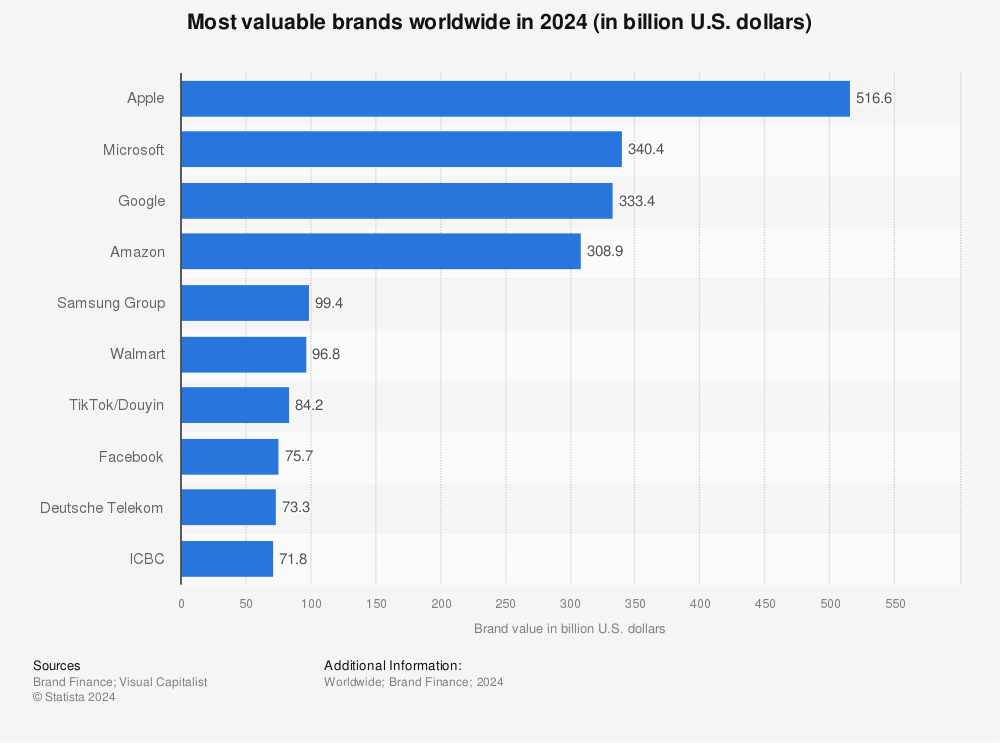
Find more statistics at Statista
Amid all of this chaos, several people have raised concerns, linking the ban to censorship and an abuse of the freedom of speech. It has been reported that one of the reasons behind the ban is the supposedly “pro-Palestinian” stance of the platform – the app has been accused of pushing pro-Palestinian content, especially after 7th October. The usual claims of antisemitism have been hurled towards the app. Many of the Republicans have made this quite clear. According to Jessica Washington, writing for The Intercept, several members of the Republican Party have clearly said that one of the reasons behind the ban is the pro-Palestinian content. The recent wave of support for the Palestinian cause amongst American citizens – resulting in nationwide protests – has also been partially linked to manipulation by TikTok algorithms. Thus, for many, the ban raises concerns regarding free speech; according to an article by Time, “a ban of TikTok would eliminate an important place for Americans to speak and be heard.”
So, for some, the argument is not that it is the platform that, being foreign, should have the freedom of speech. Rather, the users in the United States, have the right to choose the platform to speak and be heard; banning such a platform means banning free speech for 170 million Americans who use TikTok.
Future of Tiktok
Perhaps the ban is reminiscent, at times, of the Red Scare. Perhaps it is the effect of a new Cold War of information and narrative control. When people like Robert C. O’Brien say things along the lines that “Xi Jinping’s ambitions for ideological control are not limited to his own people…The effort to control thought beyond the borders of China is well underway,” they invoke conspiratorial discourse with racial undertones, demonizing a select population.
We should recall that in the 40s and the 50s, anti-Communism invoked an almost paranoid reaction from the state, resulting in extreme censorship of any dissenting voices. The whole business is rather ironic, too. For if pushing pro-Palestinian content – as an example – or pro-China content, for that matter, is manipulative, is pushing the opposite of it not also manipulation? Questions such as this remain hung in the air, as does the fate of TikTok. Although Trump might have shown support for the platform, it still remains a mystery as to what the future holds for the app, not only in terms of the ban but also in case a buyout happens. If that does happen, it remains unknown what the app would offer under the umbrella of new ownership and a changed algorithm.
If you want to submit your articles and/or research papers, please check the Submissions page.
The views and opinions expressed in this article/paper are the author’s own and do not necessarily reflect the editorial position of Paradigm Shift.

Shahalam Tariq is based in Rawalpindi, Pakistan. His writings on history, theory and literature have appeared in The Friday Times and Bazm e Dana. His poems have appeared in The Writers Sanctuary, Borderless Journal and Gentle Visitations.