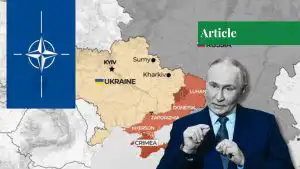


The war in Ukraine is one of the most complex cross-regional conflicts of our time. Despite diplomatic efforts and the threat of nuclear escalation, there has been no prominent diplomatic progress in resolving it peacefully. Therefore, the world, especially the West, turned to the US to find a peaceful solution to this growing discord, as the diplomatic leader it claims to be. The US has been ineffective and disappointing so far. As the Biden administration comes to an end it’s now up to the new US administration to handle this situation with grace. Donald Trump seems to be a strong candidate for victory in the coming term. Thus, in this piece, we will attempt to analyze the policies and statements of Trump regarding the conflict between Russia and Ukraine.
War In Ukraine
The Ukraine war is one of the biggest conflicts of the 21st century. It is a critical factor in global power competition because of its location and involved parties. Europe has always been the epicenter of power and global politics, maintaining a crucial role even after the United States established its hegemony. While wars and conflicts might be seen as common occurrences in other parts of the world, a clash at such a scale in Europe has become the source of great tensions. What exacerbates it is the involvement of great powers—the ancient rivalry between Russia and the West (specifically the US) raises the stakes involved.
The war in Ukraine continues to escalate, despite all diplomatic efforts, into a complex geopolitical crisis with implications reaching beyond the borders of Europe. The West’s united persistence in facilitating advanced weaponry to Ukraine to retaliate against Russian forces continues to add fuel to the fire. These weapons include tanks, long-range missiles, and air defense systems.
On the other hand, Russia keeps intensifying its military offensives, including missile strikes on civilian infrastructure and mobilizing more troops. This tug-of-war between Russia and the West seems to be gradually moving toward a long and exhausting war. Still, unlike the wars in the Middle East in the past this one has an actual risk of transforming into a global conflict, especially as the threat of potential nuclear escalation from Russia is at an all-time high. Both side’s unyielding stance is becoming a major hurdle in diplomatic efforts for peace.
The political tensions and security threats are not the only two factors that desperately call for a diplomatic resolution. According to the latest reports, this conflict has taken the lives of around 11,520 people and injured 23,640 so far.
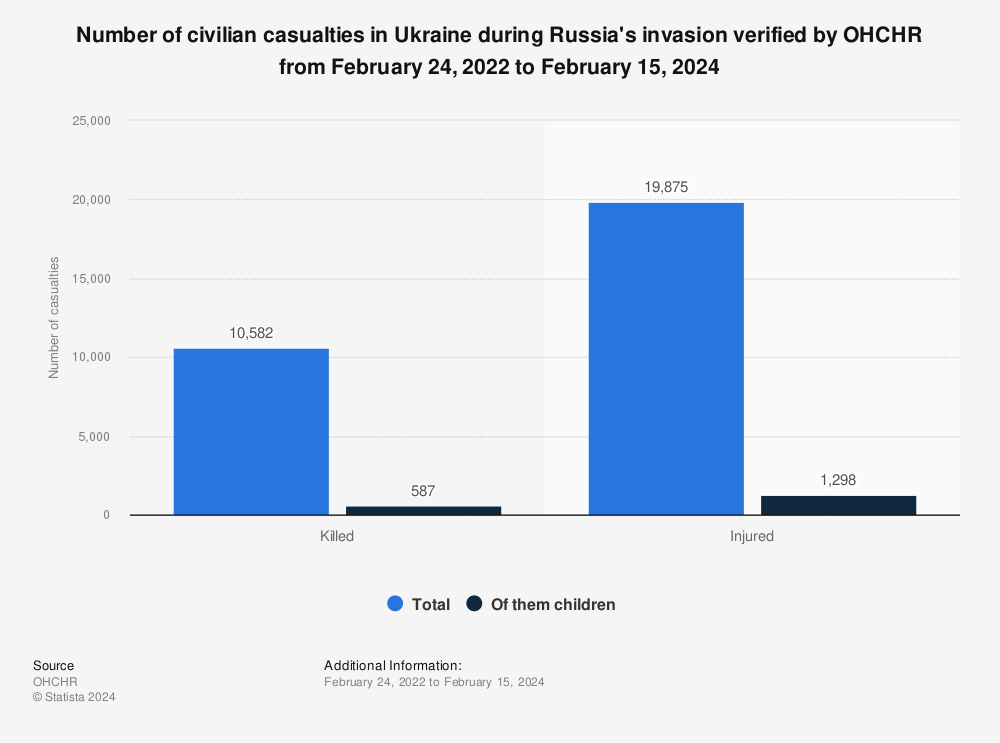
Find more statistics at Statista
Besides the loss of precious human lives, it is becoming a great economic strain, as it disrupts the global supply chain. The World Trade Organization (WTO) downgraded its growth forecast for global merchandise trade from 4.7% to 3%. This war has further led to an increase in prices for essential commodities globally, like oil, wheat, and gas. On top of the economic impacts of this war, it is becoming too costly for the US itself, as it has sponsored over $113 billion in military and financial aid to Ukraine. This significant strain on its budget is forcing the US to find more diplomatic ways to get out of this conflict turning into a lengthy warfare.
Trump’s Policies Regarding the Russia – Ukraine War
Donald Trump’s approaches in his last term toward the Russia-Ukraine conflict were inconsistent at best. While he did provide military and economic support to Ukraine, like anti-tank missiles against Russian aggression, at the same time he criticized NATO and US commitments to European security, raising concerns among allies. Trump’s skepticism toward NATO is not a well-kept secret as while addressing his campaign rally in 2016 he stated, “NATO is an obsolete organization… it’s got to be changed.”
Therefore, it’s not a shock that Trump remained hesitant when it came to collaborating with NATO and Europe on the Ukrainian crisis. He consistently voiced his disapproval toward the role of European states in supporting Ukraine and even went as far as withholding his support to Ukraine until they increased their level of participation. During a White House press conference in 2019, Trump stated, “I would withhold again and I’ll continue to withhold until Europe and other nations contribute to Ukraine… because they’re not doing it.” Another reason he withheld his support for Ukraine was its alleged corruption, going as far as calling it one of the most corrupt countries in the world.
This approach paired with Trump’s favorable attitude toward the President of Russia Vladimir Putin, led to mass criticism against his administration for not supporting Ukraine’s efforts to defend itself. Despite these controversies, his administration kept providing military assistance to Ukraine throughout his tenure.
Trump’s Future Promises and Claims
While campaigning for coming elections Trump has been openly criticizing the Ukrainian President Volodymyr Zelenskyy, claiming that Zelenskyy’s refusal to negotiate a peace deal with Russia is the reason behind the rapid escalation of war.
Addressing his supporters in Charlotte, North Carolina, Trump criticized Zelenskyy’s policies that he sees as responsible for “demolishing” the country and questioned what leverage Ukraine has left for negotiation now. He further claimed that the Ukrainian President should have made any concessions to Russia to settle the conflict before the invasion, he stated that “any deal—even the worst deal—would’ve been better than what we have now.”
Despite Trump’s criticism, in the latest visit of President Zelenskyy to the US to secure more military aid, he presented a “victory plan” that requires the US to provide Ukraine with long-range weapons and binding security guarantees. He also had a meeting with Trump, who further claimed that he would help in “ending this war quickly“.
As the 2024 US presidential election approaches, Trump actively claims to be the solution to the Ukraine-Russia war, and if elected will be capable of negotiating a settlement between Moscow and Kyiv. On the other hand, the opposition criticized Trump for potentially abandoning Ukraine. It is clear from his statements that if elected, Trump would not align with the highly optimistic dreams of the West of defeating Russia and resorting Ukraine to its previous glory.
He represents a realist perspective in which the weak must make a compromising deal with the powerful to preserve autonomy. This is not the ideal deal for the rest of the Western world and raises many concerns regarding Russia’s possible expansionist ambitions. But at the same time, it will prevent the possibility of great powers like the US and Russia coming into a direct conflict or a nuclear war and will prevent further economic damage to the countries involved.
To sum it up, Trump’s pragmatic approach to the conflict is ending the ongoing cycle of US finances supporting foreign wars. He is doing this by making a compromising deal with Russia, mirroring his previous views on US involvement in wars across the world. Even though it will strain America’s relationship with its long-time allies in Europe, it will protect US interests in various ways and allow the country to reallocate resources and focus on emerging challenges, such as China’s rapid growth.
If you want to submit your articles and/or research papers, please check the Submissions page.
The views and opinions expressed in this article/paper are the author’s own and do not necessarily reflect the editorial position of Paradigm Shift.

Ahwar Azhar is a student of Social Sciences majoring in International Relations, currently pursuing a bachelor’s degree at Bahria University, Islamabad. She is an aspiring IR scholar aiming to work in the areas of international stability, humanitarian relief, and international law. Her research interests include emerging technologies and national security.