Pakistan has a distinctive geostrategic location, lying at the heart of South Asia, Central Asia, and the Middle East. To the south of its location lies the strategically vital Arabian Sea, which provides access to the Asia-Pacific Ocean. The Gawadar Port allows access to the Strait of Hormuz, where 30% of world oil is transported annually. Geographically Pakistan shares borders with massive global economies like China and India and energy-resource-abundant states like Afghanistan and Iran. This makes Pakistan a pivotal player in regional stability and global power politics.
Since the country’s inception, the United States has always maintained a short-term strategic relationship with Islamabad through the lens of geopolitics. To stop the spread of communism, the US struck a mutual defense agreement with Pakistan and made it a member state of the Southeast Asia Treaty Organization (SEATO) in 1954 and the Central Treaty Organization (CENTO) in 1955.
After the Soviet Union invaded Afghanistan in 1979, Washington used Islamabad as the bulwark and breeding ground for training Mujahideen to fight the Soviets. Moreover, the US provided Pakistan with economic life support through aid, grants, and military assistance. During the Afghan War, Pakistan witnessed an economic boom as its GDP rose sharply. However, when the US adversary, the USSR, was defeated, the Americans left Afghanistan without any political settlement. Then the chickens came home to roost in Pakistan, which led to the proliferation of Kalashankof and drug culture, making Pakistan highly insecure and ungovernable. Hence, it can be said that Pakistan’s geostrategic location has been an essential variable in the equation of US security calculus. However, in the context of Pakistan, it has been a bane as Islamabad failed to materialize its geostrategic asset effectively into geoeconomics. Moreover, the unprecedented human and financial loss Islamabad suffered, tarnished the hope of becoming a hub of regional connectivity and prosperity for all states.
Convergence of Interest after 9/11
Great, unseen, and unpredictable changes that peppered the start of the 21st century. 9/11 was the flashpoint where the world was at the juncture of a paradigm shift. The US went to war in the ruins of Afghanistan under the slogan “War On Terror,” and Pakistan, under President Musharraf’s regime, co-opted with the US. Experts view that Pakistan had no choice but to cooperate with the US due to its immediate need for economic life support and lack of other options.
Daniel Seth Marky, author of the book “No Exit from Pakistan,” states that the Bush Administration said to senior officials in Islamabad that “if Islamabad does not comply with the US demand, we will bomb Pakistan to the stone age.” Hence, it can be said that the security agenda has been the binding factor in the relationship between the two states. Moreover, during this time, the war economy paid immense dividends to Pakistan as the GDP grew to 6 percent. However, the US’s bombing of tribal areas and thereafter the subsequent killing of Osama bin Laden in Abbottabad and undermining Pakistan’s sovereignty strained the relations between both states.
New Realities of US-Pakistan Relations
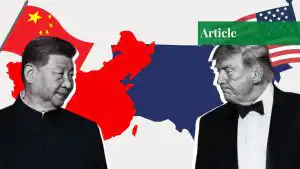
Since 2010 the geopolitical landscape has changed significantly with the rise of China as an economic power and emerging contender to US global hegemony. Pakistan has a deep, structural, and strategic relationship with China, which has frequently raised eyebrows in Washington. It is no wonder that Washington opposes the China-Pakistan Economic Corridor (CPEC), a flagship project of the Belt and Road Initiative (BRI) as Washington sees these developments by China as a means to deter the rule-based order.
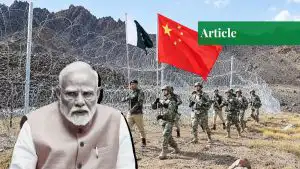
Regarding Pakistan, the US views its military failure in Afghanistan as a consequence of the sanctuaries Islamabad provided to the Taliban leadership. Hence, US officialdom accuses Pakistan of playing a double game. Amid all of this, the US views Pakistan as a partner in regional security, as it does not want Islamabad to go into the complete orbit of Beijing. Secondly, it intends to counterbalance New Delhi’s aspiration of strategic autonomy, as New Delhi is openly charting relations with Moscow, with whom the liberal world is at war. Washington does not want Islamabad to be an irritant in its Indo-Pacific strategy as it views that by facilitating Gwadar Port to China, Pakistan is deterring the US strategy of containing China. Hence, the US, under QUAD, is bulwarking India to contain China’s rise and wants Islamabad to upend the strategic balance with India.
Lessons and Future Policy Action for Pakistan
Pakistan must navigate its relations with the US. It must not get into the crosshairs of great power rivalry, as its economic life support depends upon the loans provided by the IMF; hence, it requires Washington’s blessing. Moreover, the US is Pakistan’s largest export destination and maintains a positive trade balance. Similarly, Pakistan needs to maintain relations with the US to counter insecurity. Likewise, America wants a stable, prosperous Pakistan, as an unstable, insecure, fragmented Pakistan is not in its interest and it can jeopardize American regional security and strategic interests. Both states must increase people-to-people contact and find areas of mutual interest like the threat from climate change, extremism, terrorism, and poverty.
As for Beijing, Pakistan must deepen its strategic relations with its iron brother. Beijing has always been a trusted, reliable ally to Pakistan in testing times and the hefty investment of $31 billion in CPEC projects shows that it has a deep strategic interest that aligns with Pakistan’s aspirations. Nonetheless, it will not suffice Pakistan’s emerging economic and security challenges. As the competition intensifies between the US and China, with Beijing’s militarizing the South China Sea and the arrival of new US naval bases in the Philippines, tension and escalation are heightening to a new level.
Thus, in the evolving geopolitical dynamics, Pakistan must chart a path of its own and maximize its interest in the name of strategic autonomy. It must invest in mutual benefits from both powers and avoid getting in the crosshairs. Islamabad must pivot its position from a geostrategic to a geoeconomic trajectory and leverage itself into a regional economic corridor that benefits all regional states.
If you want to submit your articles and/or research papers, please check the Submissions page.
The views and opinions expressed in this article/paper are the author’s own and do not necessarily reflect the editorial position of Paradigm Shift.

He is an MPhil scholar at NDU and is currently working as a writer at Independent News Pakistan (INP)