The US withdrew its troops from the Sahel country of Niger according to its agreement that it would “no later” stay in the country than September 15. After spending millions of dollars on military bases and maintaining 11 years of military cooperation to counter the influence of militant groups, this surprise defense divorce between the US and Niger is a great “blow” to Washington’s ambition to maintain an influence in West Africa.
US Presence in Niger
Following the US-led “War on Terror,” African countries that were the main targets of Al-Qaeda and other extremist movements received a great proportion of military aid from the US. The United States Africa Command Unit (AFRICOM) has been operational since 1998 in 26 African countries. In the 2022 US-Africa Summit, the US declared that relations with the entire continent were in the interests of the US.
Niger has been a strategically important country for US military operations in the Sahel region of West Africa and is home to major US airbases. Though Niger is a poor country, its geographic location and natural resources give the US the ability to perform its counterterrorism activities in West Africa. One of the most powerful regional branches of ISIS is ISIS-West Africa, which has killed and displaced thousands of people in Niger and in neighboring countries. This group works closely with Boko Haram, which is a Niger-based militant group. According to US officials, maintaining a military presence in African countries is crucial to monitor and counter armed groups and retaliate against threats of violence from these groups.
Importance of Nigerien Military Bases
In the landlocked Sahel region of West Africa, Jama’at Nusrat al-Islam wal-Muslimin (JNIM), the Islamic State Greater Sahara branch, and the Islamic State West Africa Province have strong footholds—these armed groups are considered a great threat not only to local governments but also for foreign partners. Preventing these groups from reaching the doorstep of the US and other coastal neighboring countries is vital to the foreign policy of the US which has primarily relied on its bases in Niger to monitor jihadist activities.
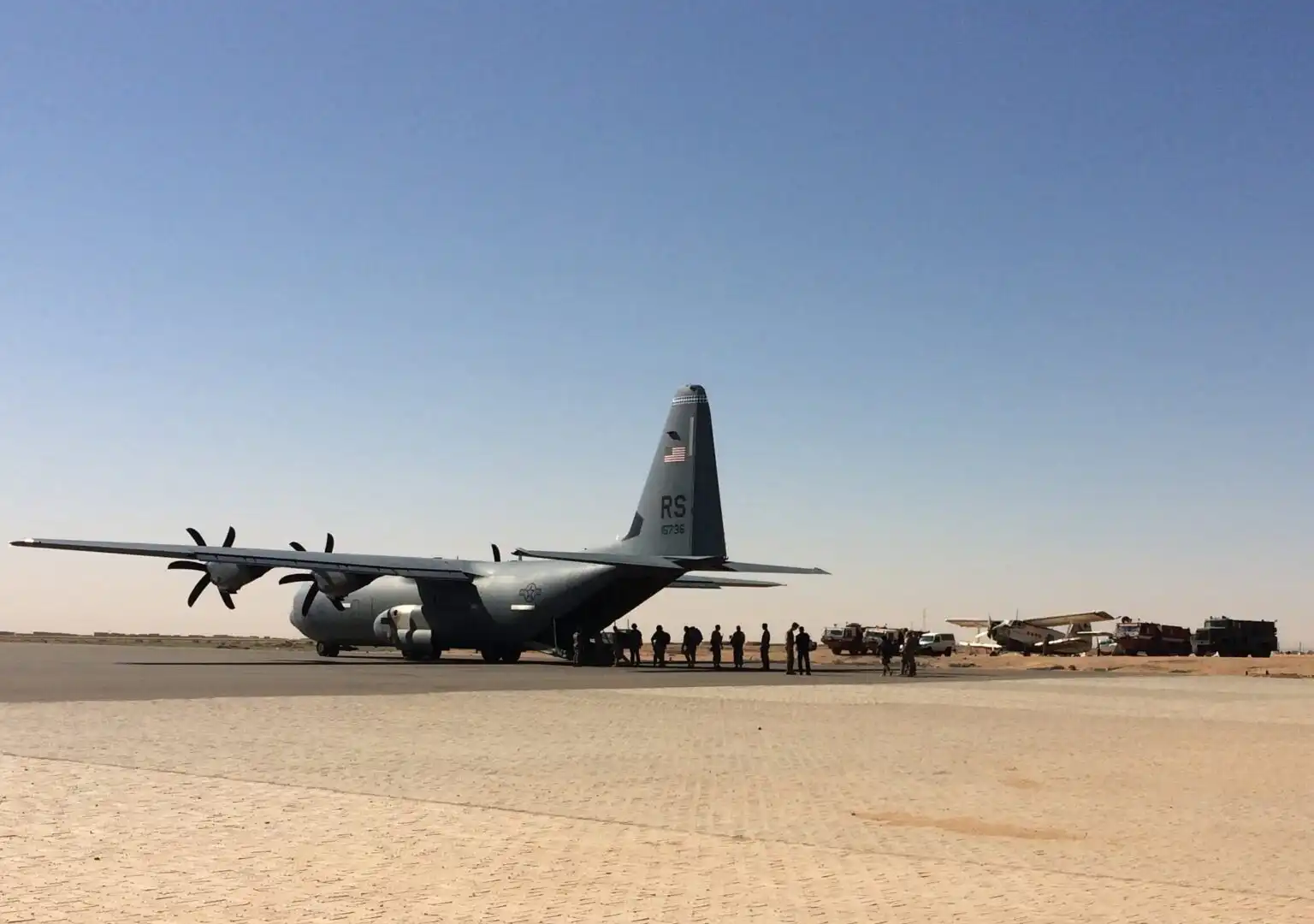
Air Base 101 and Air Base 201 are the two most significant bases of the US in Niger. The US invested heavily in these bases. Base 101 in Niamey and Base 201 in Agadez cost $110 million to build and is the second largest US base in Africa. The two bases hosted about 900 soldiers and additional personnel to make 1,100 people. Base 201 is closer to the tri-border area linking Niger, Mali, and Burkina Faso. Liam Karr stated that this withdrawal would degrade the US’ ability to keep an eye on what’s happening in the actual epicenter—the tri-border area where armed groups hold sway.
Niger’s Ruling Junta and the Coup
This withdrawal of American forces has slowed the interference and presence of the US in West Africa, and this has come as the result of deteriorating relations between Mali, Burkina Faso, Niger, and France—a former colonial power. Niger’s military junta successfully performed a coup d’etat and overthrew the democratically elected government in July 2023. The country became relatively democratic and stable and left behind the history of coups under President Mohamed Bouzam.
Niger has broken away from local democracies and formed alliances with the military-led nations of Mali and Burkina Faso. The Economic Community of West African States (ECOWAS) issued an ultimatum to overturn the coup and suspended relations with Niger. The trio of Mali, Burkina Faso and Niger quit the ECOWAS.
Niger is the former colonial state of France and had about 15,000 French troops. Bouzam regarded France as a key partner. The military junta accused France of destabilizing the country. After the condemnation of the coup by France, the junta demanded that the French troops leave Niger. The junta justified its coup based on poor economic conditions and the deteriorating security structure under Bouzam’s rule, and thousands of civilians supported this coup. Anti-French sentiments brewed under the surface in the past years, and the military junta built its support on these anti-French sentiments.
In 2021 and 2022, Niger suffered a massive amount of attacks, resulting in many people questioning the presence of French troops and other foreign troops in the country when they failed to stop attacks and enforced displacements. In December, more than 15,000 French troops departed from Niger.
The US failed to either align with or oppose the coup. On one hand, it wanted to maintain its defense agreement to continue its operation, and on the other hand, it pushed for the preservation of democracy and suspended aid to Niger. In March 2024, Niger suspended military agreements and thousands of Nigerians participated in large-scale protests demanding for the US military to leave.
The withdrawal of the US troops is the outcome of Niger’s increasing cooperation with Russia. The ruling junta demanded the withdrawal of the US troops after the US warned Niger against partnering with Russia which swiftly moved in to fill the void created by the withdrawal of US troops and deployed hundreds of Wagner Group fighters—now re-branded as Africa Corps—to help the military junta in fighting with jihadist rebellion groups in Sahel country.
Niger was not always so close to Moscow. In March 2022, Niger called for the end of the war on Ukraine. Niger was the last pro-Western country in Central Africa, but the coup in 2023 changed its dynamics. Mali opened the door to the Wagner group in 2021, which was followed by the Burkina Faso. When the Bouazam Government was overthrown, coup supporters also waved Russian flags. Russia signed an agreement with the Niger Junta-led Government for increased security and economic cooperation in March. By April, Russian military instructors and personnel from the defense ministry arrived in Niger.
Russia has also opened its embassy in Niamey. The former Soviet Empire relied on Niger’s hatred of France to impose its authority. Russia blamed the Western nations for sponsoring terrorist groups in West Africa–Niger in particular. The lack of US troops in Niger has increased the reliance of the latter on Russia for its security concerns.
The US withdrawal from Niger has also increased the possibility of China’s influence in Western and Central Africa. One of the most important trading partners of Niger has been China. The Asian giant has invested billions of dollars in the economic development of Africa in the form of the Belt and Road Initiative (BRI).
As China and Russia have already gained a foothold in Africa, the US will have to invest more to gain favor. The AFRICOM Commander visited Benin and Côte d’Ivoire, committed to connecting with like-minded countries. Benin, Côte d’Ivoire, and Ghana are prone to attacks by jihadist militants, so this vulnerability allows the US to maintain its presence in these countries. The US has an airbase in Benin, and Ghana already hosts the West-Africa Logistics Network led by the US Army. However, AES is hostile to its neighboring countries, and anti-West sentiments could endanger the presence of the US To continue performing its military operations, the US will probably need to overfly Niger, which might cause a problem with the Russian presence there.
If you want to submit your articles and/or research papers, please check the Submissions page.
The views and opinions expressed in this article/paper are the author’s own and do not necessarily reflect the editorial position of Paradigm Shift.

Eman Fatima is currently pursuing her Bachelor's degree in International Relations from Government College University Lahore. She has a keen interest in understanding the complexities of global politics and the dynamics that shape international interactions.