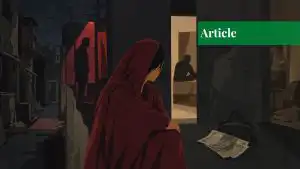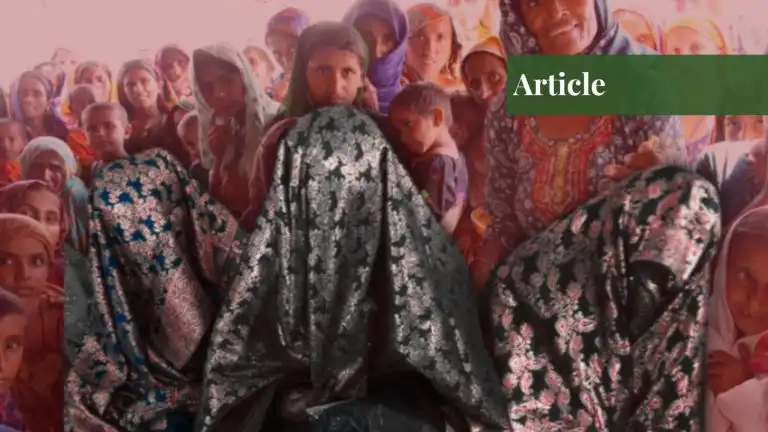
Vani, also known as “swara“, is a centuries-old custom prevalent in some tribal and rural areas of Pakistan. This practice exists under the garb of tradition, but at its core, it is a violation of human rights. Through the custom of vani, women, especially young girls and minors, are used in order to settle disputes between tribes or families. The female from the aggressor family is married off or given in servitude to a man of the aggrieved family. This temporarily or permanently puts an end to the conflicts, typically involving murder, kidnapping, sexual misconduct, and others. Swara has been under criticism for years now; however, the custom is still being followed, continuing the explicit robbery of the rights and future of many girls.
Origin and Cultural Context
“Vani” (derived from the word “vanay”, meaning “blood”) and “swara” (meaning “female rider”) refer to the practices tied to resolving the blood feuds and disputes among the tribes or clans. This traditional practice persists in some parts of the provinces of Punjab, Sindh, Khyber Pakhtunkhwa, Balochistan, and other tribal or rural areas. Called by diverse names, such as Sangchatti, Ijai, Sak, and Badl-i-Sulh, this custom allows for the resolution of conflicts by providing the girl(s) in compensation for the crime often committed by the male members of their families. It is rooted in the tribal codes, whereby the jirga (local informal court system) decides on such compensation to prevent further bloodshed.
The practice emerged some 400 years ago when two Pathan tribes of Mianwali engaged in a bloody conflict against each other. After the loss of around 800 lives, the jirga convened by the Nawab of Tank decided that giving girls as qisas (retribution) would end the conflict by establishing ties between the tribes. This decision set a precedent for future generations to follow, without thinking much of the un-Islamic, inhumane, and illegal foundations of the practice.
How Vani and Swara Work
The mechanics of this custom are horrifyingly straightforward. When a crime, such as murder, sexual assault, or abduction, is committed by any male member of a tribe or family against the other party, a jirga of influential people of the tribe is convened to mediate. If and when decided, the offending family is required to offer a female member, often a young girl or even a minor, to the aggrieved family as compensation for the crime. The girl is forcibly married to a male member (even an old man in many cases) of the rival family without her consent to “restore honour” or settle the dispute.
In some cases, the aggressor family is required to present multiple girls as and when demanded. The decision is binding, though not legally, but it is enforced through social and tribal pressure. In rare cases, the family is given other options, such as giving blood money to avoid vani. However, the option is often unaffordable for the aggressor family or unacceptable for one or both parties. The vani brides are sent to live with the aggrieved party, who never treat them as their family members. Rather, they face isolation, torture, abuse, assault, humiliation, and a lifetime of servitude.
Swara is not always given by the offenders only. In some cases, both parties exchange girls to form ties and end the dispute. The aggrieved party might get a piece of land or cash for their loss in such a scenario. Similarly, there are instances when the giving of one girl as vani by the aggressor side is followed by the exchange of two more girls, one from each side, to strengthen the ties between the hostile tribes. Nonetheless, the essence is the same in all circumstances: the practice is a blatant objectification and violence against females.
Legal Framework
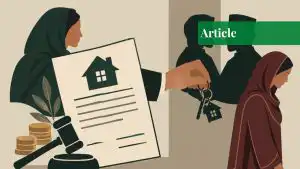
Pakistan’s legal framework has taken some steps to kerb the practice of vani and swara, though enforcement remains unsatisfactory. The practice violates several laws of the country, including the Prevention of Anti-Women Practices Act. In 2004, the Sindh High Court outlawed all parallel justice systems, including the jirgas. This position was endorsed by the Supreme Court on multiple occasions. Moreover, in 2005, section 310-A was added to the Pakistan Penal Code, explicitly criminalising the giving of women in badl-i-sulh or compensation. A landmark ruling of the Federal Shariat Court in 2021 declared the practice of vani un-Islamic, citing violation of fundamental rights, including discrimination, lack of consent, absence of dower, and denial of legal recourse.
The Supreme Court of Pakistan has also intervened at various instances. In 2006, it formed district-level committees to register complaints against the cases of Swara and push for initial action. In 2012, it took a suo motu notice against the report of a jirga’s decision in Balochistan to give away 13 girls in vani. In 2019, it declared the jirgas acting as courts illegal and held them violative of Pakistan’s commitment to human rights. Despite these legal interventions, the state has been unsuccessful in curbing the practice in the tribal and rural areas, where such cases are reported frequently.
Impacts of Vani and Swara
The impacts of vani are complicated and profound. The victims, specifically, and society, in general, are negatively affected. The consequences are catastrophic for the females sacrificed through this brutal tradition. Their basic human rights, in addition to their integrity, are compromised. The victims are compelled to face abuse, lack of education, psychological torture, regular assault, and violence. Bearing the unjust punishment for a crime they never committed, they spend their lives facing deprivation and stigmatisation. The trauma of being treated as a commodity rather than a human being is very often compounded by consistent torture, intense physical labour, forced pregnancies, and health risks.
Ironically, the custom might become a trigger to sow seeds of further disputes between the concerned families, as the aggressor family might sometimes face social or economic pressure to surrender unwillingly, and the aggrieved family often treats the girl as a symbol of enmity and unresolved grievance, fostering a long chain of resentment rather than resolution. In such cases, the exchange of girl(s) often leads to cold wars, which soon erupt into physical conflicts.
On a societal level, the swara custom perpetuates a cycle of gender-based violence and mistreatment. Treating women as mere objects to settle disputes reflects the cruel misuse of power dynamics. This practice is both the enabler and the product of the misogynistic structures that work to promote violence against women. This erodes trust in legal institutions, as communities continue to rely on jirgas and the local system, which frequently operate and pass judgments outside the law. Such customs function to hinder progress and bring defamation to the country at the international level, as they explicitly violate the global standards of human rights.
Islamic Perspective
The Islamic principles of justice, human rights, compassion, and dignity are openly disregarded through vani. Islam not only mandates women’s consent in their marriage but also prohibits forcing them into unions against their will. Moreover, Islam entitles a woman to a mahr (dower) from the groom. This financial right is openly neglected in marriages based on swara. The Islamic concepts of protection and compassion towards women are also compromised in this practice. The Islamic notion of qisas (retribution) is present to ensure true justice and punishment for the criminal, not to treat the innocent as guilty, as in the cases of swara.
Furthermore, Islamic teachings prioritise protecting the rights of the marginalised, including children and women, and reject all those practices rooted in pre-Islamic tribalism and ignorance. The Prophet Muhammad (PBUH) repeatedly emphasised the rights of women, including their right to choose their spouses. He (SAWW) has opposed coercion in marriage, which is inherent in the practice of vani. Scholars have time and again condemned the customs stripping women of their rights and urged the need to align the traditional practices with Islamic principles. By framing vani as un-Islamic, religious authorities can play a role in eliminating this cruel cultural practice from a society whose majority is Muslim.
Path Forward
Eradicating the customary practice of vani requires a multi-dimensional approach, countering the cultural sensitivity and systemic gaps simultaneously. Strengthening and training the law enforcement agencies to cater to the victims in such cases, without taking any political and cultural pressure, is paramount. The government must ensure that the writ of the state is implemented and local jirgas are dealt with seriously. The offenders must be swiftly prosecuted under the relevant laws of the constitution to make an example out of them. Running an awareness campaign, tailored to the tribal and rural communities, is the need of the hour. The local institutions, media, influential personalities, political leadership, and religious authorities should help the government in eradicating this custom.
Women of Pakistan must be empowered through proper education, vocational training, and financial security. Providing legal aid and establishing shelters can ensure immediate relief for the victims, whereas active community monitoring can decrease the occurrence of such incidents. To address the cause of the problem at the base level, engaging tribal leaders and men in healthy dialogue is essential. Pakistan can uproot the custom of swara by integrating grassroots activism and government resolve.
Conclusion
Vani and Swara serve to promote oppression, discrimination, and violence in the name of tradition. Their incompatibility with the Islamic and constitutional framework justifies the need for their quick elimination from the societal structure. The damage caused to the victims, along with the clear violation of international human rights, calls for community awareness and robust legal action. A country founded with the active involvement of females should strive to ensure that no woman or girl faces the inhumane treatment of being reduced to a bargaining tool and commodity to resolve disputes here.
If you want to submit your articles and/or research papers, please visit the Submissions page.
To stay updated with the latest jobs, CSS news, internships, scholarships, and current affairs articles, join our Community Forum!
The views and opinions expressed in this article/paper are the author’s own and do not necessarily reflect the editorial position of Paradigm Shift.
Laiba Khalid is a university student and emerging content writer with a keen focus on socio-political issues, governance, and policy. With a background in English and an interest in current affairs, she brings a critical and youth-driven perspective to contemporary debates. Laiba is particularly interested in bridging academic insight with real-world challenges. She writes with a commitment to clarity and research-based analysis.