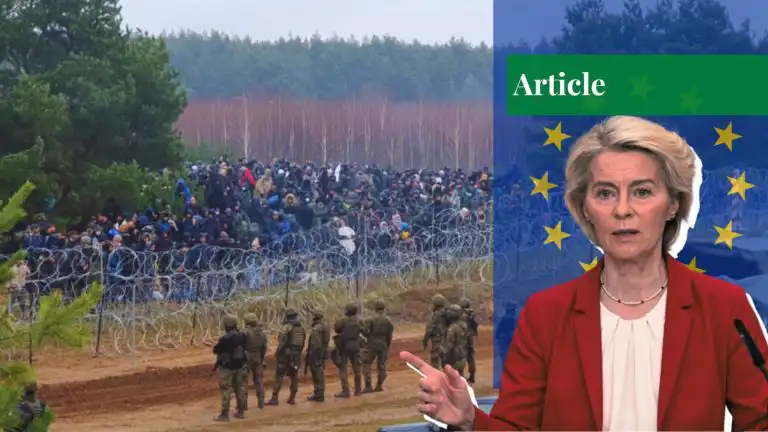
While the world is keeping its eyes on Ukraine, monitoring tensions in the South China Sea, and discussing the future of NATO, something else is happening on the Polish-Finnish-Russian border, in the freezing forests of Finland and Russia, and in the rough Aegean Sea. This has been going on for quite some time now, but it has not made headlines like tank parades do because it is a quiet war, yet one that shapes the security architecture of democratic countries.
Refugees and migrants are moving across borders in numbers that scare governments; politicians are being voted out of office for their stance on the problem; societies are falling apart because of it—in many cases, if not all, at levels too large to ignore. The whole process is not the result of an accident, but it is planned. Borders have become battlegrounds, while migration has been weaponized.
It needs to be said that it is not about the migrants themselves here. Men, women, and children who are crossing borders are, for the most part, fleeing from terrible conditions, which include war, poverty, and persecution. They are victims of circumstances that forced them to leave, as well as victims of states that use their movement to their advantage.
What Does It Actually Mean to Weaponize Migration?
The phrase is widely used in politics as a rhetorical device to refer to any immigration policy that one does not like. This, in turn, serves to cloud a critical issue, which makes it necessary to be precise.
The term “weaponization of migration” or “coercive engineered migration” refers to the control over the movement of populations by one state in order to achieve some political, economic, or military advantage over another target state. Weaponized migration does not refer to the voluntary movement of people but rather to the choice made by one state whether to start or stop the process of preventing certain population movement.
It is an important distinction to make. The influx of one million refugees into Europe following a conflict can be termed a humanitarian emergency, whereas a situation in which a government chooses to issue visas to people from other nations, fly them into a border town, and coordinate their entry into the country while carrying out military exercises is quite different.
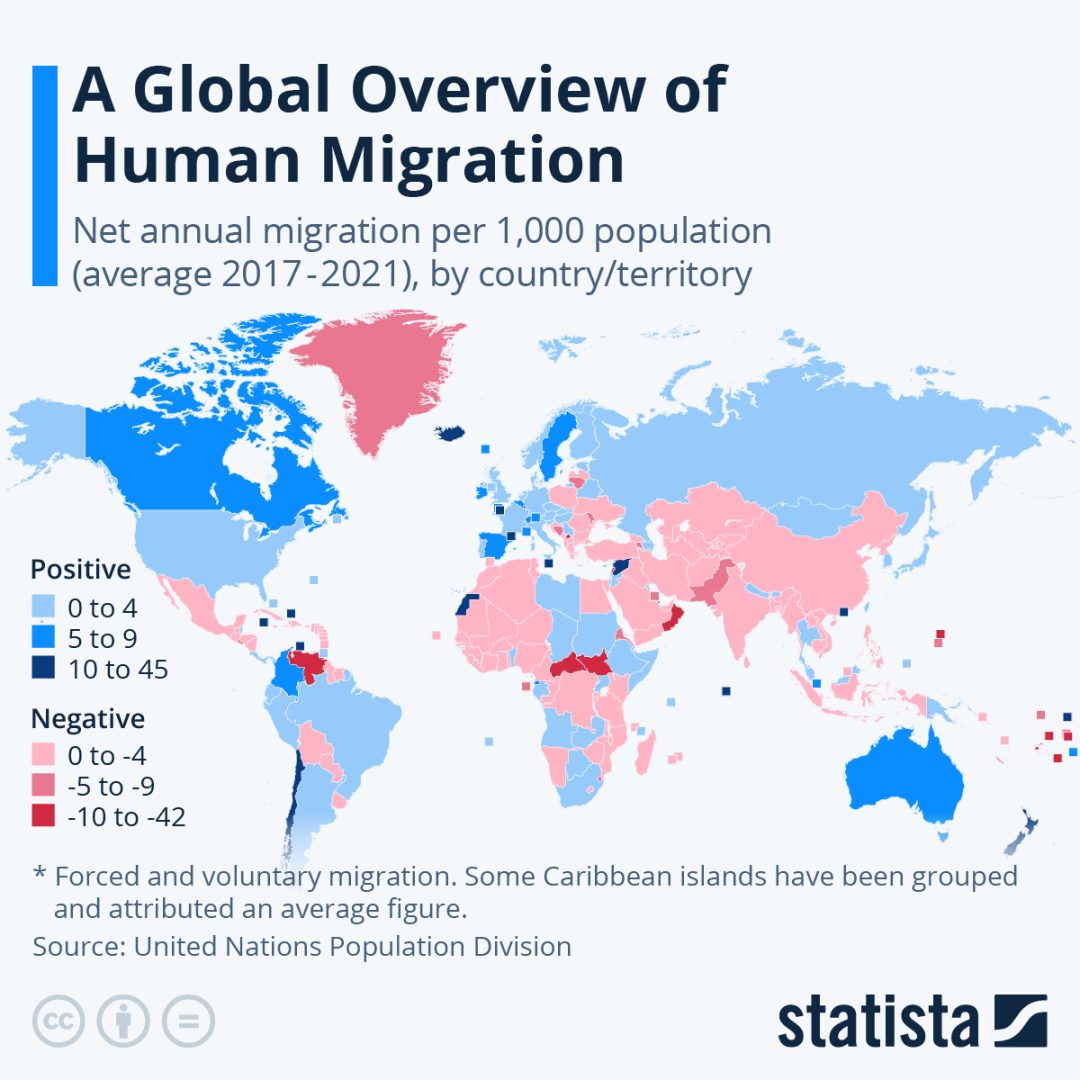
This logic is striking in its cynicism, and democratic countries are especially vulnerable to it. They function under the pressure of their own publics, under the burden of international humanitarian obligations, and in a political environment that has migration as a highly polarized and controversial subject. The arrival of a large number of people on one’s border automatically creates a situation of security concern, humanitarian dilemma, media scandal, and political crisis for nothing, without even sending a single soldier into the enemy territory.
This method functions due to the very true dilemma between the right of a state to regulate its borders and its humanitarian responsibilities towards asylum seekers. One cannot respond to such tactics properly, as they create a double bind: crack down on the migrants harshly and create images of brutality used by the propagandists, or tolerate the flow of people and prove the effectiveness of the strategy and thus encourage further actions.
The Mechanics: How a State Turns People Into Pressure
In practice, the operational models have typically followed a structured pattern across cases. Firstly, the state that wants to act aggressively against another state selects certain migrants or refugees who are already in motion, people who are coming from conflict zones like Syria, Iraq, Afghanistan, or the Horn of Africa, and are trying to reach Europe or any other destination. Secondly, it facilitates their movement by providing them with visas, transportation, and assistance in selecting the right border crossing point. Thirdly, it plants pressure against the target country during an ongoing political row or disagreement, whether sanctions, a diplomatic row, or a military objective, so that the target country understands the message being sent to it. Fourthly, it conducts disinformation campaigns portraying the target country as the attacker.
The disinformation element is an indispensable part of the process, rather than an additional one. For example, when Belarus created the border crisis between itself and Poland in 2021, the state media in Russia and Belarus launched a propaganda effort, which was carried out in 12 languages at once, such as Arabic, Russian, Polish, German, French, Spanish, Hungarian, Italian, Bulgarian, Lithuanian, and Georgian, among others, portraying Poland as a barbaric country that oppressed helpless migrants.

This is why weaponized migration is specifically a tool of hybrid warfare and not merely a form of political blackmail. It involves combining physical disruption, ambiguity, psychological operations, and political pressure into a single strategy, which is designed in such a way as to defy clear categorization and thus response. As was officially recognized by the European Parliament in its 2025 question directed at the European Commission, multiple reliable sources have confirmed that the Russian and Belarusian state actors have weaponized migration as a means of hybrid warfare against EU Member States, namely Finland, Poland, Lithuania, Latvia, and Norway.
The structure of democracies inherently disallows for rapid reaction. Democracies are deliberate. Democracies discuss. Democracies consult their lawyers. Democracies organize press conferences. Authoritarian regimes employing this tactic have no such limitations—and they are aware of it.
The Cases: Belarus and the EU’s Eastern Border (2021–2025)
One of the most well-known cases of weaponizing migration occurred along the borders of Belarus and Poland, Lithuania, and Latvia. It was due to political reasons since the EU refused to accept the results of the fraudulent elections of Alexander Lukashenko. In response, Lukashenko deployed something that costs him little but is very costly for his adversaries.
Starting in May 2021, charter flights sponsored by the government started flying in from Baghdad, Damascus, and other Middle Eastern cities into Minsk. The charter services, as highlighted by the Polish Institute of International Affairs, offered transport and accommodation services to the migrants. They were encouraged to head towards the borders of Poland, Lithuania, and Latvia. Whereas fewer than 100 migrants crossed the borders each month in early 2021, by July, the number had risen to over 3,000 migrants each month, a rise of over 30 times in a matter of weeks. Indeed, Lukashenko himself admitted that “we will not hold them back…We are not the final destination. They are going to enlightened, warm, and cozy Europe.”
By November 2021, the incident had reached the point where there were attempts by large crowds to storm the Polish fence, and the Polish government blamed the Belarusian military for giving migrants stun grenades. In 2021 alone, there were 39,700 attempts to cross the border, according to the Polish Border Guard. At least 20 people lost their lives in the forest borderlands during that winter. The military aspect was clear; the escalation at the border had started just one month before the Zapad 2021 military exercises.
This is not really a past event but a present situation. Poland stopped 30,090 migrants crossing its borders in 2024 from Belarus. In December 2025, a secret border tunnel in the vicinity of Lipszczany was detected through which over 180 people had made their way. This was the fourth tunnel discovered that year, showing a modification of strategy rather than its abandonment. In March 2025, Poland stopped accepting claims of asylum from the Belarus-Poland border, with the support of the European Commission, something that would have been politically impossible in Europe a few years ago.
Turkey and the Gatekeeper Model
The Turkish model, however, is much older and more complex and potentially more dangerous when considering the amount of leverage it has gained from its position. Hosting almost four million Syrians seeking refuge temporarily, Turkey understood early on that Europe’s need to control its migratory fluxes provided it with an important structural source of leverage. The agreement between the EU and Turkey regarding migration issues was signed in 2016, whereby the European Commission committed to paying billions of euros to Turkey in order to keep asylum seekers inside Turkey’s territory. The agreement itself was largely due to the said leverage.
In February 2020, having suffered military defeats in the Idlib province of Syria, Turkey made it clear that it would not do anything to stop migrants from crossing into Europe. What happened next can be characterized as “a well-coordinated effort by the Erdogan regime to challenge Greek state sovereignty and put pressure on the EU through diplomacy.” While the plan did not succeed (Greek border controls were effective, and a survey revealed that 90% of Greeks approved the tough measures), the readiness to apply the tactic, along with the experience of 2016, did not fade away.
Migration Weaponization in 2026: An Evolving Threat
What stands out in mid-2026 is not the longevity of this tactic but how normal it has become and how quickly it is changing.
The deployment of the strategy against Finland can be considered the most dramatic development to occur lately. Upon Finland joining NATO in April 2023, effectively doubling the length of the border shared by the alliance with Russia, the latter partially retaliated by sending migrants to the Finnish border. Thus, in November 2023, almost 1,000 migrants illegally entered Finland through Russia within a period of only two weeks; this number is almost five times greater than the number of asylum seekers who entered Finland from Russia throughout the first half of the year.
The closure of the eastern border by Finland was completed by December 2023. As per the Finnish Institute of International Affairs, this was not about experimenting with weaponized migration but rather about Russia actually utilizing it. This fact is supported by the Carnegie Endowment for International Peace, which notes that Finland officially sees weaponized migration as “hybrid warfare” and even legislates against it.
However, in December 2024, the Norwegian Police Security Service discovered another aspect of this affair that shed some light on what had been going on in 2015: the FSB had trained the migrants who entered Norway from Russia to conduct some espionage activities, specifically telling them to leave unfinished messages on their social media accounts containing information regarding their experience at the border control.
According to the Global Initiative against Transnational Organized Crime report from March 2026, both Minsk and Moscow still felt that weaponized migration was a viable option for use in the hybrid warfare tactics arsenal, while the possibility of other countries using weaponized migration was quite significant. Turkey is one such example. This tactic has not lost its credibility despite some of its failures.
The Dilemma Nobody Wants to Talk About
This is a discussion that is necessary but often avoided. The politicization of migration makes the liberal democracies vulnerable to the point that doing the right thing by honoring asylum laws, dignifying the migrants, and having open processes will aid the attacker’s strategy. Meanwhile, doing the strategically rational thing by fortifying their borders, halting their asylum process, and resisting might go against international law and provide the imagery for the disinformation strategy.
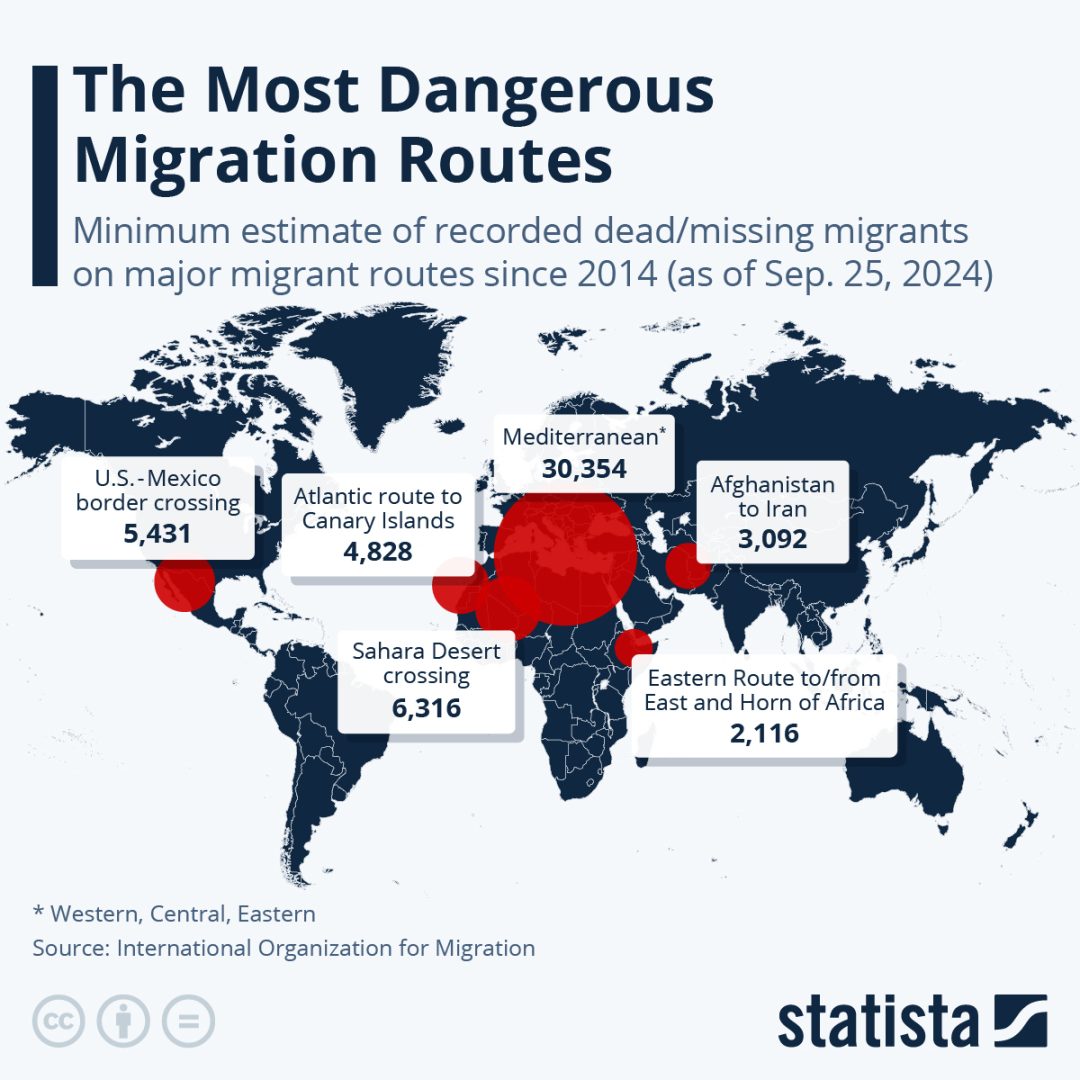
Interim measures were also noted by the European Court of Human Rights in relation to the Poland-Belarus and Latvia-Belarus border crises, emphasizing that security operations should not trump the right to protection under international law. Nevertheless, there was also a real hybrid threat being faced by Poland and the Baltic states, which the current legal framework was ill-equipped to handle. Both were happening at the same time, and denying either is pointless.
Those individuals who were stuck in the forest, whether they were the family from Iraq, the youth from Afghanistan, or women from Syria, were not weapons. They were individuals who were being used by the circumstances that made them leave their country, by the governments that moved them around, and finally by the politics that saw them as merely a security issue. Any real discussion about this situation has to take this truth into account, no matter how calculated the governmental plan was.
Conclusion
Weaponizing migration is not something that will end anytime soon. In fact, based on the examples from 2023 to 2026, it appears that such practices have only grown increasingly popular and effective, shifting both geographically, expanding into Finland and Norway after starting in Poland and Lithuania, and tactically, developing new strategies like tunnel digging and using intelligence agents.
The approach that needs to be adopted, as soon as possible, is a two-pronged approach that has been consistently avoided by most political systems: one that views engineered migration as a threat to security and demands an official response from both states and alliances but does not view migrants as the enemy. The two approaches are not mutually exclusive. In fact, they are the only intellectually coherent way of handling the situation.
NATO and the EU must evolve a doctrine that explicitly takes into account migration weaponization as a form of hybrid warfare, which provokes a legal, diplomatic, and kinetic response without evading the human rights considerations. The legal structure of the 1951 Refugee Convention was created a long time ago. It requires additional structures that consider state manipulation without compromising the fundamental protections established by it.
A more general lesson here is that recognizing that migration can be politically engineered does not make you prejudiced towards refugees; rather, it is a rational appreciation of a clear geopolitical fact. Blurring this line, or turning your back on the security component because you feel uncomfortable, will not serve refugees well. It will only benefit the states manipulating them. In 2026, when Europe’s borders start being threatened in ways that do not appear on any military list, such analysis will become a vital strategic necessity.
If you want to submit your articles and/or research papers, please visit the Submissions page.
To stay updated with the latest jobs, CSS news, internships, scholarships, and current affairs articles, join our Community Forum!
The views and opinions expressed in this article/paper are the author’s own and do not necessarily reflect the editorial position of Paradigm Shift.

Kainat Farooq is a passionate International Relations student with a strong interest in diplomacy, policy, and global affairs. She is dedicated to contributing thoughtful analysis and research on international issues.