Introduction
The concept of grey zone warfare emerged in the 21st century after the development of nuclear weapons. Due to nuclear weapons, countries started to avoid direct war between them, so they used ambiguous methods to achieve their national interests. This situation is between peace and conflict, as states are aggressive; they want an open war, but also, they fear nukes, so they promote cooperation through various means, either coercive or persuasive. This situation between peace (white) and conflict (black) is known as “grey zone warfare.”
The grey zone is warfare, not war. Collin Grey explains, “War is a relationship between belligerents, not necessarily states. Warfare is the conduct of war, primarily, though not exclusively, by military means. The two concepts are not synonymous. There is more to war than warfare.” War has a purpose; war asks about “why,” whereas warfare is about the means. It asks “what” tools, instruments, weapons, and technologies, and “how” tactics, techniques, and procedures (TTPs) were used.
There are four quadrants of warfare, which include regular warfare, irregular warfare, competition, and deterrence. The competition stage is known as a grey zone, as there is no direct war between the states; rather, they use political, economic, and cyber tactics to subjugate the enemy. Deterrence is used to prevent further escalations. There are some key characteristics of grey zone warfare, which include:
- Avoiding the Threshold: States avoid regular and even irregular warfare.
- Gradual Unfolding: States take small actions rather than acting aggressively.
- Attribution Ambiguity: States conduct operations covertly.
“The most dangerous conflicts today are not always wars in the conventional sense; they are ‘grey zone’ conflicts that use ambiguity, proxies, and non-military tools to achieve strategic goals.”
NATO Review 2018
Instruments of Grey Zone Warfare
Countries use the following instruments to avoid war and promote cooperation:
Political Tools
States use political tools to manipulate the political environment of an adversary state. To achieve this goal, they use diplomats and international organisations for negotiations. They also support opposition political parties of the rival state to overthrow their regime and gain alignment of interest from the opposition. They also spread religious violence and extremism in the rival state to engage officials in the internal clashes of the state. These tactics help in maintaining plausible deniability and spreading political unrest through shaping public opinion.
During the 2025 parliamentary elections in Moldova, pro-Russian networks weakened the pro-Western government of Moldova by spreading misinformation. It happened because Moldova had close ties with the EU and NATO, and Moldova was a part of the Soviet Union, so Russia wants to maintain its influence over it. Russia’s political move somehow influenced the elections without any military actions.
Economic Coercion
Economic coercion is the use of trade and economic pressure to achieve goals without direct conflict. In this case, states use their dominance over resources such as rare earths and natural resources like oil and gas, and disrupt the trade network of these resources to be exported to rival states. For example, in the Iran-Israel war, Iran blocked the Strait of Hormuz, which is known as the world’s largest and busiest oil trading route. Due to its blockade, many countries are suffering from an oil deficit. States also impose sanctions and tariffs to weaken the economic stability of the rival state. During the US-China trade war, China used this technique by not exporting rare earths to the United States so that it could weaken the US economy, and in response to this challenge, the US will remove or reduce the tariffs on China.
Cyber Operations
States use misinformation and propaganda to spread cyber warfare. Again, using these techniques, states accomplish their targets without any regular warfare. For these states, hacking is a key tool to decrypt the banking systems, energy grids, news channels, etc. By doing this, they can easily spread anti-state content on broadcasting channels and shape public opinion. By listening to or reading fake news, the public may be influenced and go against the state. This may cause violence in the state. The rival state has the benefit of attribution ambiguity, as it can hack the systems of other states with an anonymous identity. For example, in March 2026, a pro-Iranian hacker group known as “Handala” hacked Stryker, which is a US-based medical device manufacturing company, and they extracted all its data without any direct military confrontation.
Limited Military Activities
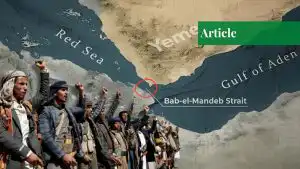
Limited military conflicts may occur in grey zone warfare. It includes supporting proxy militias of adversaries by training their fighters and providing weapons to them. For example, Russia used “Little Green Men” troops during the annexation of Crimea in 2014. It includes pressure building while avoiding open conflict. Iran’s support for proxies like Hezbollah and Houthis in Lebanon and Yemen, respectively. Doing this, they also maintain their ambiguity as they support non-state actors like proxy militias, but do not officially accept their activities.
Challenges of International Security
During grey zone warfare, states maintain their attribution ambiguity, which makes it hard to identify the perpetrator. Also, techniques used in grey zone operational space can escalate conflict, leading to a full-fledged conventional war. The legal and normative gap is the major challenge faced by the international community. International law, including the UN Charter, addresses open war between states, neglecting activities happening in the grey zone space. According to international law, using economic tactics to subdue the enemy does not violate any treaty, which makes deterrence difficult. Grey zone warfare blurs the line between peace and conflict. It complicates the international security environment.
Policy Recommendations
States and international organisations must develop the following legal framework to respond effectively:
- States must develop strong cyber defence strategies to counter cyber threats. For example, the EU’s Rapid Alert System monitors disinformation regularly.
- Strengthen alliances to increase an intelligence-sharing network, like NATO, that has policies on hybrid threats to deter coercive actions below the threshold of war.
- Implement Capacity Building Measures (CBMs) through training and cybersecurity support to reduce grey zone escalations.
Conclusion
Grey zone warfare has emerged as a defining feature of modern warfare. It does not include conventional warfare or any casualties. Without having boots on the ground, a state can manipulate and disrupt the stability of adversaries. This blurred line between peace and conflict reflects the changing nature of war. States use multiple techniques, including political, economic, cyber, and proxy, to achieve their strategic interests. Sometimes this grey zone can be escalated, and a draw can occur.
To reduce the threats imposed by grey zone warfare, states must adopt a strategic and effective framework. It will require coordinated actions of the military, governments, and intelligence to maintain international stability in an era where the boundaries between war and peace are blurred.
“The most consequential conflicts of the future are likely to remain in the grey zone, neither peace nor war, but persistent competition.”
RAND Corporation
If you want to submit your articles and/or research papers, please visit the Submissions page.
To stay updated with the latest jobs, CSS news, internships, scholarships, and current affairs articles, join our Community Forum!
The views and opinions expressed in this article/paper are the author’s own and do not necessarily reflect the editorial position of Paradigm Shift.

Syeda Farani Fatima is an undergraduate student of International Relations at the International Islamic University of Islamabad, with a strong interest in anti-corruption, counter-terrorism and geopolitics. Strongly committed to fighting corruption, terrorism, and supporting national reform through research and public service.