China’s rise over the past forty years has indeed altered the world’s power dynamics and challenged preconceptions about the international order. They transformed from being largely cut off from the world economy to the second-largest economy in the world, a big tech competitor, and a more diplomatic player on the international stage. Data from the World Bank shows that China’s share of global GDP grew from around 1.6% in 1990 to over 17% by 2023.
China’s ascendancy is not just quantitative and military: it is also about identity. What is China’s image of itself? How does it fit in the world in relation to history? Since Xi Jinping ascended to power in 2012, he has stressed China’s renewal and rejuvenation, the recovery of ancient glory. Xi is not just trying to portray China as a new power; he sees the country as one that is making a comeback to its former glorious days. Thus, to understand China under Xi, one must take a long-term perspective on the phenomenon of an ancient culture asserting its historical place in the world today.
This change has created a distinctive geostrategic identity that merges the old Chinese strategy with the new great power goals. China is pushing to make the stories of its ancient past a reality with measures such as the Belt and Road Initiative, military enhancements, technological progress, and a more aggressive diplomatic policy. Understanding this evolving identity is essential for understanding China’s actions and the broader transformations in the global system.
Here, the piece argues that Xi Jinping’s China is a mixture of old and new in terms of its geostrategic identity. Although concepts such as Tianxia, national unity, and being the center of civilization still affect the strategies, they are now employed to promote national rejuvenation and global influence as well.
Historical Foundations of China’s Strategic Identity
China’s current strategy comes from its history, too. For centuries, imperial China was the big player in East Asia, seeing itself at the center of a region it led. They had a view called Tianxia, meaning “all under heaven.” It highlighted cultural authority, political legitimacy, and keeping the region stable.
The traditional Chinese system was quite different from the modern Westphalian one, in which all sovereign states should be equal, because the traditional Chinese order was established on the basis of the belief in Chinese superiority. The system was abolished after imperial China’s collapse, but its philosophies remain alive in political discussions and planning in China today. China’s identity is shaped a lot by the memory of the “Century of Humiliation,” from the First Opium War in 1839 to 1949.
Foreign invasion, the loss of land, and domestic turmoil occurred during this period. As a result, this is a time when leaders emphasize the importance of unity, sovereignty, and self-reliance. Thus, they rely on history in order to make their messages stronger on national pride and independence.
Historical memory means more than just symbolism; it’s a strong political tool too. It provides a rationalization of the policies. In China, national rejuvenation is thus not seen as a new objective, but as a return to its ancient position in the world.
Xi Jinping and the Chinese Dream
In 2012, Xi Jinping’s election was a big deal for China’s strategy. Upon the assumption of power, he spoke about the “Chinese Dream of National Rejuvenation. This concept spread rapidly and was the basis for domestic and foreign policymaking as well.
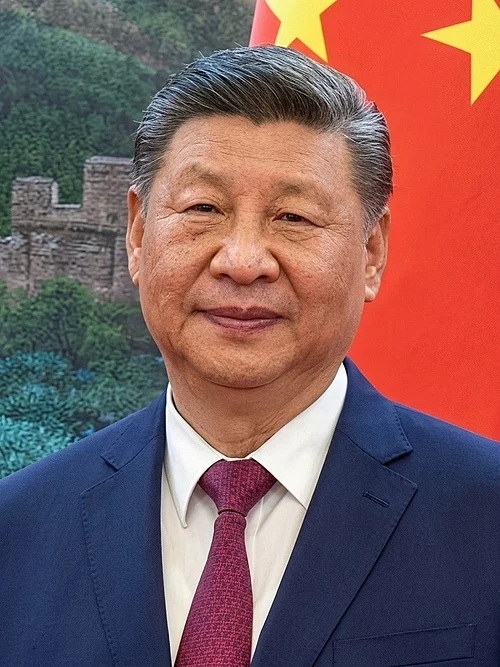
The Chinese Dream is about rejuvenating the prosperity of the Chinese nation, strengthening national cohesion, modernizing the military, and enhancing the nation’s global influence. Unlike his predecessors, Xi is much more confident in how China is represented in the international arena.
China’s economy has boosted confidence, too. In 2012, when Xi took charge, China’s GDP was around US$8.5 trillion. It grew to over US$18 trillion by 2024, making China a major player economically on the global stage.
There is also a political objective, namely, national rejuvenation, which is supported by the process. The legitimacy of the Communist Party and the rise of China are two inseparable issues for Xi, and it is a powerful narrative for the past and future. So, from this perspective, the Party is the savior of the restoration of the glory of China.
Xi has also pushed the idea of a “Community with a Shared Future for Mankind.” He believes that the rise of China offers opportunities for cooperation, not conflict, all across the world. This is supposed to console people outside the country and help strengthen China’s position in the international arena as well.
The Belt and Road Initiative: Reconnecting History and Strategy
China’s geostrategic identity is changing, as evident in the Belt and Road Initiative (BRI) launched by Xi Jinping in 2013. The idea is to expand linkages across Asia, Africa, Europe, Latin America, and the Middle East via investments in infrastructure, transport, energy, and digital networks. Over 150 countries and many international organizations have signed up for the program.
The BRI is unique due to its historical symbolic value. China projects the initiative as part of a long tradition of trade and culture sharing, connecting with the old Silk Road. This is to help Beijing portray its expanding influence as normal, peaceful, and mutually beneficial.
The Belt and Road Initiative also helps achieve important strategic objectives. It promotes economic cooperation, enhances China’s economic influence, and deepens political ties with the countries involved. Engagements under BRI have topped US$1 trillion since it started.
This is a Chinese initiative that combines history and the goals of the current world. Beijing is not only maintaining its tradition but also incorporating a strategy to help the rejuvenation and its global influence; it’s creating a coherent image of its vision.
Military Modernization and the Pursuit of Strategic Power
Economic growth and diplomacy are insufficient to bring about the national rejuvenation that Xi Jinping has in mind. One of China’s developing geostrategic identities is the modernisation of the People’s Liberation Army (PLA). Military reform is one of the biggest reforms in modern Chinese politics under Xi.
In 2015, Beijing started big military reforms aimed at turning the PLA into a high-tech force with a high level of capability, and which can conduct multi-domain operations. That can involve reorganizations, streamlining bureaucracy, and enhancing skills in cyber operations, space operations, and AI.
China’s dedication to modernizing its military is clear from its defense spending. In 2024, according to SIPRI, it spent around $314 billion. That puts it in second place in the world in military spending, only after the US. Almost half of Asia and Oceania’s military spending comes from China too, showing its rising influence in the region.
Beijing sees military modernization as key to sovereignty and national security. According to leaders, a robust army can defend the country’s territory and economy and also prevent the ignominious experiences of the past. So, military power is seen as crucial for national rejuvenation, not just as a way to expand.
Despite this, the growing military power of China is a concern for its neighbours and great powers. Other countries are closely monitoring China due to matters such as the South China Sea dispute, Taiwan’s issue, and the competition between China and the US. Every single one of these illustrates Beijing’s goal of making itself stronger and changing the security landscape in the region.
Technology, Manufacturing, and the New Foundations of Power
It is no longer the case, China, that its rise will be limited to military power. The country sees tech supremacy as key to national power, too. With nearly 30% of the world’s manufacturing output, China leads in making stuff. This enables them to exercise significant influence in world business and supply chains, enhancing their economic position on a global scale. Therefore, Beijing has to rely on this industrial power to enhance its influence in the world.
China has been spending a lot of money on technology in recent years, such as artificial intelligence, quantum computing, renewable energy, semiconductors, 5G. Programs like “Made in China 2025” Demonstrate their commitment to further innovate at home, cut down on foreign tech.
With increasingly fierce competition from the United States, tech development is essential at this time. Both countries are looking at tech as a major component of their competition, given restrictions on the export of advanced semiconductors, growing tech security concerns, and debates over digital infrastructure.
For China, technological self-sufficiency isn’t just about the economy; it’s a must for strategy, too. Control of key tech is important to their sovereignty, security, and future well-being.
This drive for innovation is indicative of China’s evolution in its goals. Economic growth is the main focus of past leaders, but in today’s world, tech leadership is an essential key to the country’s revival.
The Paradox of China’s Rise: Peaceful Development or Strategic Assertiveness?
Currently, China’s geostrategic identity leads to a significant gap between its words and deeds. China continues to talk about peace, cooperation, and win-win solutions. They say they are not trying to be hegemonic and that their ascent will be different from others.
But their deeds bring questions to mind. China’s military muscle-flexing, increased operations in disputed waters, and attempts to alter some provisions of global governance. So, here are those who ask, can China’s rise be peaceful?
This tension is really obvious in the South China Sea. About one-third of worldwide maritime trade goes through that area annually, which is especially vital to international shipping. It’s a combination of economic pressures and security concerns that have led China to grow in its presence in the region, but it is causing some of the surrounding nations to sit on the fence.
China thus finds itself in this strange situation: They claim to be engaged in peaceful development, but at the same time, they are developing their economy, technology, and military capabilities to alter the power dynamics in the region.
This apparent contradiction makes sense when you look at it from China’s point of view. They consider their policies to be defensive measures and do not read them as evidence of expansionist aspirations. Strengthening is for them only a question of holding on to their side of the deal and defending their own interests in a very competitive environment.
It is fundamental to comprehending the actions of the Chinese to understand that they are not just revisionist nor merely status quo. Rather, it is a matter of gaining more influence within a system that they believe requires change to reflect the changing reality of the present.
Tradition and Modern Power: The Emergence of a New Geostrategic Identity
Under the leadership of Xi Jinping, China has shown that the identity that you have had throughout history is equally important as your economic and military strength. But they are not simply discarding old identities in favor of new ones; rather, they are incorporating both into their efforts in resolving contemporary problems.
The modern rulers are using the notions of unity and ancient civilization in their strategy of regenerating the country. As a consequence, China has managed to present itself not just as a powerful state, but also as a civilization-state. Therefore, in doing so, China is not only able to justify its global identity based on historical identity but also pursue contemporary objectives.
Therefore, we can conclude that the position of China in the international arena cannot be understood through its military and economic strength alone. It requires an understanding of Chinese identity as perceived by them from their history and culture.
Conclusion
The Xi Jinping Era sees China combine continuity and change in its geo-strategy. By coupling its past with its present geopolitical goals via the concept of national rejuvenation, China transcends simply improving its economy and its military capabilities.
The BRI, military reform, technological advancements, and increased diplomatic efforts illustrate how China has used its rich history in shaping its world power status. The concepts of Tianxia and the Century of Humiliation are just some of the examples of ancient narratives still influencing China’s strategies, albeit under new interpretations.
China’s ambitions follow a long-term political plan. Beijing wants to achieve the “great rejuvenation of the Chinese nation” by 2049, the centenary of the People’s Republic of China. So, they’re working toward this goal on their set timeline.
Since it represents nearly 18 percent of the total world’s population, whatever China decides about its project has significant ramifications for the international community. Understanding China’s next steps requires consideration of its view regarding the relationship between its past, identity, and power. In its bid for rejuvenation, the combination of its historical heritage and power politics greatly impacts contemporary politics. Therefore, it is clear that such a combination will determine how international politics develop.
If you want to submit your articles and/or research papers, please visit the Submissions page.
To stay updated with the latest jobs, CSS news, internships, scholarships, and current affairs articles, join our Community Forum!
The views and opinions expressed in this article/paper are the author’s own and do not necessarily reflect the editorial position of Paradigm Shift.

Tehreem Ahmed is an MPhil scholar in International Relations with research interests in China’s foreign policy, International Political Economy (IPE), and regional security dynamics. Her work focuses on China’s growing influence in global affairs and its impact on regional and international politics.