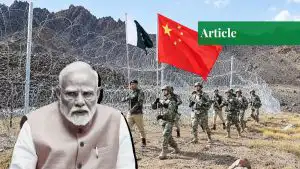
New Delhi has successfully launched Agni-5, a ballistic missile from Odisha. Its launch time conveys a special signal. Multiple media outlets, including Reuters, reported that this launch came just before the visit of PM Narender Modi to the Shanghai Cooperation Organisation (SCO) summit; the test underscores strategic signalling.
Agni-5
The Agni-5, an intermediate-range ballistic missile with an estimated range of approximately 5,000km, makes key parts of China and all of Pakistan within its range. The CSIS Missile Threat project analysis reveals that Agni-5 will play an important role in the long-term deterrent strategy. New Delhi has strived for accuracy and survivability of its system; the accuracy and survivability are the features that matter in deterrence.
One launch would not be enough for the power imbalance in Asia; however, the test confirms and validates guidance and operational procedure, which will enhance the effectiveness of India’s Strategic Forces Command. In simple terms, Agni-5 is vital for long-range targets, which obviously has implications militarily.
Signal for China
According to the Chinese perspective, India is trying to further advance long-term capabilities; meanwhile, both countries are reimagining diplomatic ties. SIPRI Yearbook 2025 reports that China has a larger quantity of nuclear heads than India. The former has 600, while the latter has 180 stockpiles. However, numbers do not represent the full picture; range, mode, delivery, and survivability also matter in the context of deterrence.
China is expected to undermine the test publicly and express concern privately ahead of the SCO summit. Secondly, China may meticulously examine whether it’s a doctrinal shift or not, or what the next steps of India are. If India is aggressive in its deployment, so likely that China will take countermeasures to strengthen missile defence and focus on warhead production. Currently, China has the potential to absorb the Agni-5 test silently without showing any urgency.
Options for Pakistan
The test of Agni-5 is not only a diplomatic headache for Islamabad but also a visible security threat. The Foreign Office of Pakistan has categorically condemned the test of Agni-5 as aggressive and destabilising for the region. This diplomatic posture was meant to attract intentional attention. Apart from statements, let’s look at the possible options Pakistan has in the future.
Deterrence
Islamabad has anticipated a defence upgrade of India, so Islamabad has already fielded a range of ballistic missiles for deterrence. The test of Agni-5 could be a compelling reason for Pakistan to promptly improve its missile system and specify a doctrine for credible deterrence.
Reliance on Partner
Pakistan and China are enjoying a strategic partnership; most probably, this relationship will bolster Pakistan’s confidence. Beijing supplies a large quantity of conventional arms, Pakistan may get diplomatic backing, an advanced missile system, and the sharing of intelligence to counter India.
Chance of Escalation
Misinterpretation of moves can be disastrous if Islamabad acts aggressively towards this test, so it enhances the risk of escalation. In order to avoid tension, transparency and reliance on a backdoor channel are vital.
Arms Race or Balanced Competition
An Agni-5 is less likely to instantly bring Pakistan and India close to escalation. States always invest in defence by improving missile systems for credible deterrence. SIPRI’s assessment of global nuclear trends reports that both Asian giants India and China are upgrading their defence capabilities; even a slight advancement in India’s missile system can instigate China and Pakistan to reevaluate their investments and capabilities.
Similarly, more precise and long-range forces often shorten crisis timelines, enhancing the risk of miscalculation. Furthermore, proliferation pressure, head-to-head security competition can stimulate investments in cyber capabilities, missiles, and air defences, which make crisis management more arduous. The timing of Agni-5 Tests is close to high-level meetings (Modi’s trip to China), introducing tension rather than pure engagement.
De-Escalating Tension
To prevent escalation, it is mandatory to exchange notifications before military exercises, deployments, or tests. Subsequently, it reduces miscalculation and misreading. Operational military hotlines between India and Pakistan, and India, China, should be given importance. Shanghai cooperation organisations should be used to build confidence and provide justification for actions. So, these steps would improve bilateral relationships, prevent escalation, and miscalculation.
Final Take
Agni-5 will not change the balance of power overnight, as China is more advanced compared to India. However, the test of Agni-5 can be a security concern and diplomatic headache for Pakistan. What is concerning for Pakistan is the Agni-5 range and its ability to target every key area of Pakistan. However, several measures, such as exchange of notification before deployments and tests, encouragement of operational military hotlines and diplomacy, reduced the risk of escalation. The Shanghai Cooperation Organisation is a valuable opportunity for China, Pakistan and India to strengthen ties and clarify actions. Then, the Asians would be able to enjoy peaceful lives.
If you want to submit your articles and/or research papers, please visit the Submissions page.
To stay updated with the latest jobs, CSS news, internships, scholarships, and current affairs articles, join our Community Forum!
The views and opinions expressed in this article/paper are the author’s own and do not necessarily reflect the editorial position of Paradigm Shift.

Imtiaz Munir is currently pursuing a BS in English with a focus on linguistics and literature at Bahria University, Islamabad. He is an active reader with a strong grasp of political theories, having explored concepts like justice and forms of government. He enjoys analyzing political themes with a philosophical approach. At present, he is working on his research thesis to meet academic requirements and further his interest in critical analysis.