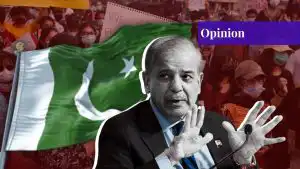
Pakistan’s proposed 2026 civil services reforms have brought the country’s bureaucracy back into the center of the national debate. After years of reform proposals, the government has now moved towards a comprehensive restructuring of recruitment, training, promotion, performance evaluation, and senior-level appointments. The reform process, led by Planning Minister Ahsan Iqbal, has reportedly produced agreement on 43 of 46 recommendations after extensive deliberations. The remaining disagreements concern some of the most consequential questions, including specialized recruitment, the language of the CSS examination, and the proposed National Executive Service (NES).
The debate is significant because Pakistan’s civil service continues to operate within a largely generalist and hierarchical framework. The government itself has identified weaknesses, including limited domain expertise, a mismatch between qualifications and assignments, weak links between performance and career progression, slow decision-making, and inadequate digital capacity. The proposed reforms therefore seek to move public administration towards specialization, measurable performance, and technology-enabled governance.
Why Pakistan Needs Sweeping Civil Service Reform
The case for civil services reform is not new. Pakistan’s administrative structure has deep roots in a colonial model that was designed primarily around maintaining order and collecting revenue. According to the Planning Ministry, that framework has not evolved to meet the economic, technological, and developmental demands of a modern state.
The problem is particularly visible in economic governance. An earlier reform approach, discussed by The News, had proposed specialized recruitment for senior economic positions, including greater access for professionals from the private sector and other fields. Yet such proposals repeatedly failed to translate into sustained institutional change. The newspaper argues that the continued reliance on a generalized bureaucracy has contributed to persistent capacity gaps in economic management.
The latest reform package attempts to address this structural weakness by creating professional cadres in fields such as education, health, finance, information technology, agriculture, engineering, and commerce. The objective is to ensure that officials working in specialized ministries possess relevant knowledge and develop expertise over their careers rather than repeatedly moving between unrelated administrative assignments.
CSS Reforms and Specialized Recruitment for Bureaucracy
One of the most important elements of the Pakistan civil service reforms is the proposed transformation of recruitment through the Central Superior Services (CSS) examination. The government is considering specialized recruitment through either cluster-based examinations or separate examinations for different occupational groups. The CSS framework would remain, but recruitment would become more closely connected to professional domains.
The proposed changes also include allowing candidates to attempt compulsory CSS papers in either English or Urdu. Supporters of the proposal argue that excessive emphasis on advanced English proficiency can exclude otherwise capable candidates, while critics within the reform process have raised concerns about maintaining the quality of CSS aspirants and the role of English in higher education and official work. The Express Tribune reported that this remains one of the issues on which members of the reform committee have differed.
Other proposed CSS reforms include digitalizing the examination process, shortening recruitment to a six-month cycle, and potentially raising the passing threshold from 33 to 40 percent. GRE- and SAT-style analytical questions have also been proposed to assess reasoning and comprehension more effectively.
Performance-Based Promotions and National Executive Service in Proposed Civil Service Reforms
Another major component of the civil service reform plan is the attempt to change how bureaucratic careers progress. The proposed framework would place greater emphasis on competence, measurable performance, and results rather than seniority alone. Key performance indicators could become part of career management, while performance evaluations and promotion boards would be restructured to provide a more comprehensive assessment of officers.
The proposed National Executive Service is more contentious. Under the plan, selected Grade 20 and above positions could be opened to candidates from the government, academia, and the private sector through competitive, contract-based appointments tied to predetermined performance indicators. The proposed appointments would generally run for five years.
The idea is intended to bring specialized expertise into senior government positions. However, opponents within the reform process have questioned whether such a system could create disparities between career civil servants and externally recruited officials and whether contract-based appointments would necessarily produce better performance. The Express Tribune also reported concerns about potential politicization and the value of accumulated government experience.
Civil Service Training and Digital Governance Under the New CSS Reforms in Pakistan
Recruitment alone cannot transform public administration. The proposed reforms therefore place considerable emphasis on training. Up to half of training could be devoted to domain-specific knowledge, while officers from BS-17 to BS-20 could be required to complete specialized short courses. The National Management Course could also be shortened, while existing training institutions may be consolidated into a proposed National University of Public Administration.
Technology is another central feature. The Planning Ministry has stressed that digital literacy, artificial intelligence, data systems, and digital applications are increasingly essential to government decision-making and public service delivery. This represents a shift from viewing bureaucracy primarily as administrative machinery to treating it as a professional knowledge-based institution.
The Real Challenge: Implementing Civil Service Reforms 2026
The biggest test of Pakistan’s civil service reforms may not be designing the package but implementing it consistently. Pakistan has witnessed several reform initiatives over the past decades. Dawn has noted that earlier reform programs were often weakened by bureaucratic resistance and insufficient political commitment, arguing that restructuring individual components without addressing the wider institutional system could produce another incomplete reform exercise.
The government has proposed an implementation committee that would monitor execution and report monthly to the prime minister, with full implementation targeted within 120 days after approval. The estimated cost has been reported at around Rs11 billion.
The multi-party consultation is therefore particularly important. The Planning Ministry has emphasized that civil service reform should not remain the project of a single government or political party but should acquire broader institutional and political ownership.
Conclusion
Pakistan’s 2026 civil services reforms represent an attempt to address a longstanding mismatch between a largely generalist bureaucracy and the increasingly specialized demands of modern governance. Specialized recruitment, CSS reform, performance-based promotions, professional training, digital governance, and wider competition for senior positions could substantially alter the structure of public administration if implemented coherently.
Yet the history of civil services reforms suggests that institutional continuity will matter as much as the reform blueprint itself. The government will need to clarify unresolved questions, preserve merit and transparency, address legitimate concerns over recruitment and senior appointments, and ensure that reforms survive changes in political leadership. The ultimate measure of the 2026 civil service reform agenda will therefore be not the number of new cadres or revised examinations, but whether Pakistan’s bureaucracy becomes more capable of translating public policy into timely, measurable, and citizen-focused outcomes.
If you want to submit your articles and/or research papers, please visit the Submissions page.
To stay updated with the latest jobs, CSS news, internships, scholarships, and current affairs articles, join our Community Forum!
Find our FREE quizzes and MCQs here!
The views and opinions expressed in this article/paper are the author’s own and do not necessarily reflect the editorial position of Paradigm Shift.

Abdullah Nisar holds a degree in journalism and mass communication from the International Islamic University, Islamabad. He is currently working as a freelance journalist.