What Is CSS 2027 MPT? FPSC Preliminary Test Rules, Marks & Passing Criteria
For years, the Central Superior Services (CSS) examination in Pakistan has been associated primarily with its written papers, demanding essay writing, current affairs knowledge, and the intense competition for a limited number of vacancies. For CSS 2027 aspirants, however, the competition begins much earlier. The MCQ-Based Preliminary Test (MPT) has become the first formal barrier between an aspiring candidate and the CSS written examination.
Under the Federal Public Service Commission (FPSC) rules, the MPT is specifically designed to shortlist the CSS competitive examination candidates for the written examination. It consists of 200 multiple-choice questions carrying 200 marks and has a qualifying threshold of 33%. Earlier, the MPT was considered relatively easy. However, every year the FPSC is making it harder for the CSS aspirants to pass the MPT exam.
The CSS 2027 Exam Now Starts Before the Written Exam
The introduction of the MPT fundamentally changed the structure of the CSS examination. Previously, candidates could proceed directly toward the written stage after meeting the basic eligibility requirements. Now, the preliminary test stands between registration and the written examination. This means that CSS preparation can no longer be viewed as a single-stage process.
The MPT is not merely an administrative formality. FPSC’s rules explicitly define it as a preliminary test intended to shortlist candidates for the written examination. It is conducted annually before the written examination, and its validity applies only to the corresponding year’s competitive examination. For an aspirant, this creates a practical dilemma. Preparing exclusively for the written examination without adequately preparing for the MPT can mean spending months developing essays, notes, and optional-subject strategies, only to be eliminated before those preparations can even be tested.
Why the CSS MPT 2027 Is a Serious Challenge for Written Examination
At first glance, a 33% qualifying threshold may appear relatively low. A candidate needs 66 out of 200 marks to qualify. But the difficulty lies not necessarily in the threshold itself. It lies in the breadth of knowledge that the test demands and the speed at which candidates must demonstrate it. The MPT is a broad-based screening examination rather than a test confined to a single academic discipline. Candidates therefore have to prepare across several areas while simultaneously developing the ability to answer objective questions quickly and accurately.
This is particularly challenging for candidates who have spent months preparing through a subjective, analytical approach for the CSS written examination. The skills required are different. The written CSS examination rewards argumentation, analysis, structure, and expression. The MPT, by contrast, requires rapid recall, recognition, and decision-making. A candidate may understand an issue deeply but still lose marks if they cannot identify the correct answer within the limited time available. That distinction makes the MPT more than a smaller version of the CSS examination. It is a different examination requiring a different strategy.
The 200-Minute Clock in the FPSC Preliminary Test Changes the Game
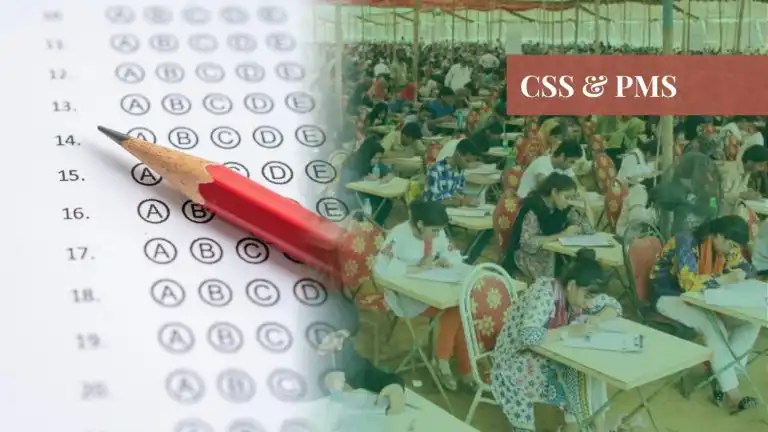
The MPT comprises 200 MCQs and is conducted over 200 minutes. That effectively gives candidates an average of approximately one minute per question. This creates another layer of competition. Candidates are not simply competing on knowledge; they are competing on knowledge, accuracy, and time management simultaneously. A difficult question can consume valuable time that could have been used to answer several easier ones.
Conversely, rushing through the paper can increase careless mistakes. For CSS aspirants accustomed to spending considerable time constructing a single written answer, this transition can be particularly demanding. The lesson is straightforward: MPT preparation requires practice under examination conditions, not merely reading.
Why Current Affairs Preparation Matters for CSS 2027 MPT
The MPT also changes how candidates should approach general knowledge, Pakistan affairs, Islamic studies, English grammar, and current affairs. The CSS MPT syllabus includes major portions from all these subjects. CSS aspirants traditionally prepare current affairs for analytical questions, focusing on causes, consequences, competing perspectives, and possible policy solutions. For the MPT, the same knowledge must often be converted into quick factual recall.
A candidate therefore needs to know not only why international development matters but also potentially who, where, when, and what. This does not mean abandoning analytical preparation. Instead, candidates should build a two-layer system: first, understand an issue comprehensively, and then convert that understanding into concise facts, figures, institutions, personalities, dates, and concepts that can be tested through MCQs.
The Biggest Mistake: Treating CSS MPT as an Afterthought
Perhaps the biggest danger for CSS 2027 aspirants is assuming that MPT preparation can be completed at the last minute. The temptation is understandable. Aspirants often want to begin immediately with optional subjects, essays, précis, and current affairs, because these are perceived as the “real” components of CSS. But the MPT determines whether a candidate gets access to that written examination in the first place.
FPSC’s CSS 2026 written examination notice made this explicitly clear: only candidates who qualified the MPT were eligible to apply for the written examination. The consequences are therefore significant. A candidate who fails the MPT does not get an opportunity to demonstrate their preparation in the written examination that year.
How Aspirants Should Prepare for CSS MPT 2027
The solution is not to abandon written-exam preparation and focus entirely on MCQs. Instead, aspirants should integrate MPT preparation into their broader CSS strategy. First, candidates should become thoroughly familiar with the official syllabus and rules rather than relying entirely on academy notes or social media material. FPSC itself emphasizes that its website is the primary source of information for candidates. Second, candidates should regularly solve MCQs while preparing their broader subjects. This turns passive reading into active recall.
Third, they should maintain a separate factual revision system. Important dates, constitutional provisions, international organizations, geographical facts, economic indicators, scientific developments, and current-affairs facts should be reviewed repeatedly. Finally, candidates should practice complete MPT-style papers under timed conditions. The objective is not simply to increase the number of questions attempted but to develop the judgment required to move quickly between easy, moderate, and difficult questions.
A New First Test of CSS Readiness
The MPT has introduced an important change in the psychology of CSS preparation. Success now requires candidates to demonstrate their readiness twice: first through a broad objective screening examination and then through the demanding written examination. For CSS 2027 aspirants, this should change the preparation timeline. The MPT should not be treated as an obstacle that appears immediately before the written examination. It should be considered the first stage of the CSS journey itself.
Ultimately, the MPT may be only a screening test, but its consequences are anything but minor. It determines who gets to take the next step. For thousands of Pakistanis preparing for CSS 2027, therefore, the question is no longer simply whether they are ready for the written examination. The first question is whether they can get through the door. And that door is the MPT.
If you want to submit your articles and/or research papers, please visit the Submissions page.
To stay updated with the latest jobs, CSS news, internships, scholarships, and current affairs articles, join our Community Forum!
The views and opinions expressed in this article/paper are the author’s own and do not necessarily reflect the editorial position of Paradigm Shift.
Abdullah Nisar holds a degree in journalism and mass communication from the International Islamic University, Islamabad. He is currently working as a freelance journalist.