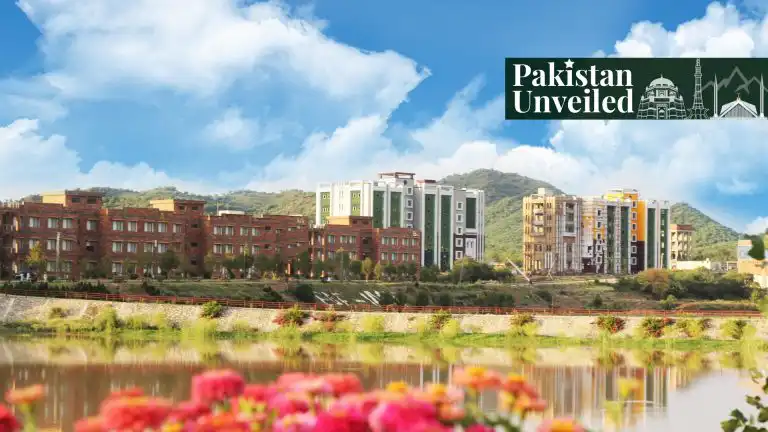
An Overview of PAF IAST (Haripur)
Over the past two decades, Pakistan’s higher education has witnessed a significant transformation with increasing focus on engineering, innovation, science, and technology. The Pak-Austria Fachhochschule: Institute of Applied Sciences and Technology (PAF IAST), an institution established to bridge the gap between academia and industry through the European Fachhochschule (University of Applied Sciences) model, is among the most ambitious initiatives in this regard. Unlike many Pakistani universities that focus on theory, this institute prepares graduates with practical skills, research capabilities, and entrepreneurial thinking.
Pak-Austria Fachhochschule: A Vision Rooted in Applied Education
The concept of PAF-IAST originates from the German-Austrian Fachhochschule system, which integrates classroom learning with industrial training and applied research. The institute was established as part of a broader vision to modernize Pakistan’s technical education infrastructure and strengthen the country’s industrial competitiveness, equipping students with practical skills rather than mere theoretical knowledge. The project originated in 2005 with a proposal spearheaded by renowned scientist Atta-ur-Rahman to establish internationally collaborative universities in engineering and technology. The PAF-IAST institution was formally inaugurated in September 2020 in Mang, Haripur, Khyber Pakhtunkhwa.
International Collaboration
One of PAF-IAST’s defining characteristics is its international orientation. The institute has been established through collaboration with several universities in China and Austria, bringing international curricula, academic expertise, and research partnerships to Pakistan. This collaboration not only enables knowledge transfer, faculty development, and joint research projects but also provides student exchange opportunities, exposing Pakistani students to global technological standards.
The university continues to expand its international footprint through partnerships with institutions in Europe, China, and the United Kingdom, facilitating collaborative degree programmes and research initiatives.
Academic Philosophy: Learning by Doing
Unlike traditional universities where theoretical instruction dominates, PAF-IAST places practical learning at the centre of its educational philosophy. Every academic programme incorporates laboratory work, industrial internships, project-based learning, and close interaction with industry.
The institute emphasises that technical education should not merely impart knowledge but also cultivate practical competencies demanded by modern industries. Consequently, internships are mandatory, allowing students to gain hands-on experience before graduation.
Areas of Academic Excellence
PAF-IAST focuses on disciplines that are expected to shape Pakistan’s future industrial and technological development. These include:
- Artificial Intelligence
- Robotics
- Computer Science
- Railway Engineering
- Mineral Resource Engineering
- Nanotechnology
- Agricultural and Food Technologies
- Chemical Engineering
- Materials Engineering
- Electrical Engineering
- Software Engineering
The university has also established specialized research centres, including the Sino-Pak Center for Artificial Intelligence, the Centre of Excellence in Transportation and Railway Engineering, the Nanotechnology Centre, and facilities dedicated to mineral resources and agricultural technologies.
A Modern Campus for Innovation
Situated near Haripur, approximately 65 kilometres from Islamabad, the university occupies a purpose-built campus designed specifically for applied learning. Smart classrooms, advanced engineering laboratories, digital libraries, innovation spaces, student hostels, sports facilities, and a naturally scenic environment create a conducive atmosphere for academic and personal development.
The campus reflects international standards in technical education infrastructure, supporting collaborative learning and interdisciplinary research.
Research and Innovation
Research at PAF-IAST is directed towards solving practical industrial and societal challenges rather than pursuing purely theoretical investigations. Faculty members and students engage in applied research across engineering, artificial intelligence, transportation systems, advanced materials, and sustainable technologies.
The university has gradually increased its research profile, with publications appearing in internationally indexed journals, while continuing to strengthen collaborations with foreign institutions and industry partners.
Industry Linkages and Employability
One of the institute’s principal objectives is improving graduate employability. Pakistan has long faced criticism that university graduates often lack the practical skills required by employers. PAF-IAST attempts to address this challenge through:
- Mandatory industrial internships
- Industry-oriented curricula
- Collaborative research with industrial partners
- Skills development programmes
- Entrepreneurship support
- International exchange opportunities
This approach aligns education with labour market demands and prepares graduates for careers in both domestic and international industries.
Contributing to Pakistan’s Knowledge Economy
Pakistan’s future economic growth increasingly depends on technological innovation, industrial modernisation, and a highly skilled workforce. Institutions like PAF-IAST represent an important shift from conventional higher education towards technology-driven human capital development.
By combining international partnerships, applied research, and practical education, the institute contributes to national priorities such as digital transformation, industrial productivity, technological self-reliance, and innovation-led economic growth.
Moreover, its emphasis on emerging technologies—including artificial intelligence, robotics, and advanced manufacturing—positions graduates to participate in the Fourth Industrial Revolution.
Challenges Ahead
Despite its promising model, PAF-IAST faces several challenges. As a relatively young institution, it must continue expanding its academic reputation, research output, faculty development, and industry partnerships. Sustained investment, effective governance, and continuous curriculum modernisation will be essential to maintaining international standards.
Building stronger links with Pakistan’s manufacturing sector, attracting international students and faculty, and commercialising research outcomes will further determine the university’s long-term success.
Conclusion
The Pak-Austria Fachhochschule: Institute of Applied Sciences and Technology represents one of Pakistan’s most innovative higher education initiatives. By adopting the European University of Applied Sciences model, it shifts the focus of higher education from theoretical instruction to practical competence, industrial collaboration, and technological innovation.
As Pakistan seeks to build a competitive knowledge economy, institutions such as PAF-IAST can play a transformative role in producing engineers, researchers, and innovators capable of addressing national development challenges while competing in an increasingly technology-driven global economy. If the institute continues to strengthen its international collaborations, research ecosystem, and industry engagement, it has the potential to emerge as one of South Asia’s leading centres for applied science and technological education.
If you want to submit your articles and/or research papers, please visit the Submissions page.
To stay updated with the latest jobs, CSS news, internships, scholarships, and current affairs articles, join our Community Forum!
The views and opinions expressed in this article/paper are the author’s own and do not necessarily reflect the editorial position of Paradigm Shift.
Abdullah Nisar holds a degree in journalism and mass communication from the International Islamic University, Islamabad. He is currently working as a freelance journalist.