Power dynamics during the greater part of the previous century were rather predictable; whoever owned oil ruled the planet. Countries were fighting over oil, making alliances to acquire more of it, and even creating new territories in order to gain access to these valuable resources. In 2026, a similar, yet much more subtle situation can be observed; the only difference is that the resources at stake in the present scenario seem rather unfamiliar to most of us.
These are critical minerals, and the fight to secure access to them is quickly turning into one of the key battles of the decade. The battle over these resources is playing out through various forms of international trade policy, outright embargoes on exports, massive government stockpiles, and agreements made in places such as Kyiv, Kinshasa, and Canberra. But as with most resource wars in history, those who live in closest proximity to the mines that produce them are rarely the biggest beneficiaries.
What Counts As A Critical Mineral, And Why Now?
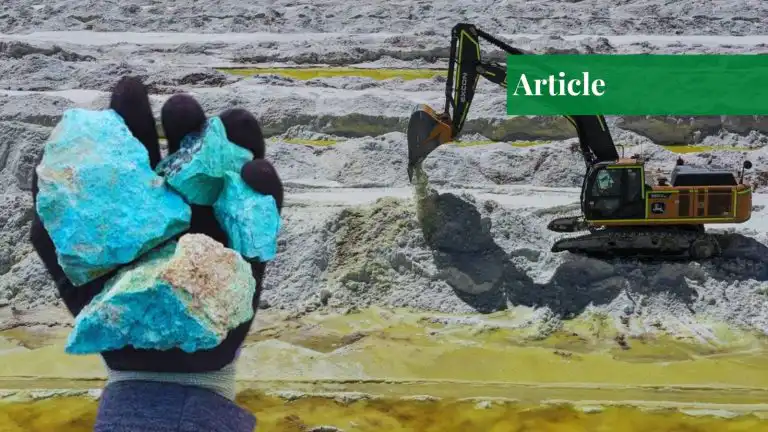
The term “critical minerals” applies to the particular category of minerals regarded as vital for contemporary economic activities, and also non-renewable. Lithium and cobalt are used for making batteries; rare earth elements such as neodymium and dysprosium are necessary for manufacturing powerful magnets; nickel and graphite for batteries; copper is used everywhere when it comes to electrical stuff; and finally, gallium, germanium, antimony, scandium, and yttrium for semiconductors and military equipment.
The difference here lies in the demand. It has not been that there was no need for these resources; some of them were being mined for decades. There was a need, but now the scale and importance of the need have become different. With the transition towards electric cars and the construction of green energy facilities, along with AI data centers, it all became a problem all at once. In 2025, according to an industry analysis done by IEA and cited in 2026, investments in the extraction and processing of such resources made up a total of $128 billion compared to $80 billion in 2023, which marks a 62 percent increase.
And then factor in the aspect of defense, which includes modern missiles that use sophisticated guidance mechanisms and fighter planes with specialized alloys, and you get a range of materials that exist at the crossroads of three things simultaneously: green technology, technological supremacy, and military readiness. That crossroad is exactly why critical minerals carry such geopolitical weight.
What is missing from most media headlines is that China’s dominance in critical minerals is not due to the quantity of its mining. Rather, it is what comes next after mining.
As stated by CSIS in its analysis in March 2026, while China accounts for only 10% of the total global production of lithium, cobalt, and copper, it has an estimated 40 to 90% market share in their processing. Furthermore, a multi-institutional study conducted earlier in 2026 estimates that China has 90% share in rare earth processing, alongside its dominant market share in tungsten (80%) and antimony (60%). Simply put, even if the mineral was mined elsewhere in Australia, Chile, the Democratic Republic of the Congo, or wherever else, the chances are high that they would still go through Chinese refining.
This choke point allows Beijing to leverage without having to rely on stockpiles, and over the last two years, China has applied it more and more often and effectively. Specifically, in December 2024, China halted the exportation of germanium, gallium, and antimony, three mineral resources extensively utilized in military-related manufacturing from the US. Later, on April 4, 2025, China imposed export restrictions on seven rare earth elements and all their derivatives. As reported by the IEA, export volumes dropped so drastically that automakers in the US, Europe, and other regions faced difficulties in acquiring permanent magnets, leading some companies to scale down operations and even suspend production entirely. While volumes eventually rebounded, the price levels in Europe were still six times higher compared to those within China.
On October 9, 2025, Beijing escalated its approach by introducing export controls on five additional rare earth elements. For the first time, it also added extraterritorial rules, requiring export licenses for products made outside China if they contain Chinese-origin materials or rely on Chinese technology. Although these measures were suspended for one year after the Trump–Xi summit, China Briefing noted that the underlying licensing system remains fully intact. In effect, the framework is designed to allow Beijing to tighten or loosen restrictions at will; the immediate level of harm is secondary. The system itself functions as the leverage, whether or not it is actively applied at any given moment.
The impact is already visible. CSIS research published in May 2026 found that yttrium exports to the United States dropped sharply after the April controls took effect, from more than 333 metric tons in the eight months prior to just 17 metric tons in the eight months after. Aerospace manufacturers reported shortages and had to ration supplies of a material essential for turbine blade coatings. Dr. Gracelin Baskaran, who leads CSIS’s Critical Minerals Security Program, has emphasized the structural challenge facing Washington: while efforts to build alternative supply chains are underway, most credible assessments agree they will not be able to replace Chinese supply before the November 2026 deadline and likely not for several years beyond it
How The Rest Of The World Is Responding
Governments outside China have moved on multiple fronts simultaneously, building stockpiles, signing bilateral deals, and trying, slowly, to construct alternative supply chains.
The United States has leaned most heavily into state-backed industrial policy. The Department of Defense committed $400 million to MP Materials, currently the country’s only fully integrated mine-to-magnet rare earth producer. MP Materials, in turn, signed a $500 million long-term supply agreement with Apple. According to NYU Stern’s Center for Business and Human Rights, the 2025 “One Big Beautiful” legislative package allocated $2 billion to a National Defense Stockpile transaction fund. The Trump administration also announced a separate $12 billion critical minerals stockpiling initiative designed to bring in private-sector capacity. In Congress, lawmakers from both parties have introduced proposals for a broader Strategic Resilience Reserve.
Washington has also pursued a wave of bilateral mineral agreements. CSIS tracks deals involving Ukraine, Saudi Arabia, Thailand, Malaysia, Japan, and the DRC, each focused on upstream investment, processing cooperation, and long-term supply arrangements. The most politically charged of these is the Ukraine deal. President Trump initially framed it in blunt transactional terms, telling Fox News he wanted “the equivalent of $500 billion worth of rare earth,” and the negotiations were rocky enough that a planned February 2025 signing in Washington was shelved after a public clash between Trump and President Zelensky. The deal that eventually emerged established a jointly governed reconstruction investment fund, with Ukraine retaining full control over its mineral resources, while profits for the first decade are reinvested domestically rather than distributed. Ukraine’s Geological Survey estimates the country holds around 5 percent of the world’s critical raw materials, including 19 million tons of proven graphite reserves and roughly a third of Europe’s lithium deposits.
However, it is clear that the EU’s position is much weaker, and the EU acknowledges this. Within its Critical Raw Materials Act, which was passed in 2024, the EU has declared that the EU will not rely on imports exceeding 65% from one specific third-country source for any particular strategically important raw material, with at least 10% of this resource being sourced domestically. There is a lot of ground to cover because the EU owns just 0.5 percent of global reserves of rare earths and sources none domestically, making it fully reliant on imports from China. In March 2026, the European Commission presented the Industrial Accelerator Act to follow up on the earlier measure, and according to the article by Foreign Policy, the issue of critical minerals seems to be the only area where cooperation between Washington and Brussels has been achieved in an otherwise tense relationship regarding Greenland, NATO, and Ukraine.
Australia has taken a more confrontational tack closer to home. In May 2026, Canberra ordered six Chinese shareholders in a domestic rare earth company to divest their stakes within two weeks, a direct move to keep rare earth assets out of Chinese hands, and a sign that the contest over these minerals is now playing out inside the borders of supplier nations themselves, not just between Washington and Beijing.
Africa And The New Resource Politics
The only place where the abstract concept of “supply chain security” meets real life is perhaps the Democratic Republic of the Congo. This African country accounts for over 70% of the global supply of cobalt, an element that powers the rechargeable batteries used in smartphones, laptops, and electric vehicles.
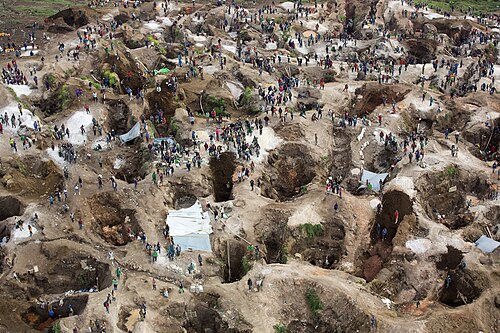
The magnitude of human cost contained within that supply chain is enormous and widely known. According to a report by The Wilson Center, among the approximately 255,000 Congolese engaged in artisanal cobalt mining, there may be around 40,000 children under the age of 14 who earn only $2 a day through manual work and mining with bare hands. According to testimony delivered to the US House Foreign Affairs Subcommittee on Africa in February 2026, the numbers could reach up to 200,000 children under 14 years old working in the cobalt mining sector, pointing to a structural issue which replicates the global one – mined cobalt manually mixed with industrially-mined cobalt before refining, done in places other than mines sites, “often beyond effective oversight or accountability.”
A separate 2026 sustainability industry report estimates that 15 to 30 percent of all DRC cobalt production still originates from artisanal mines with documented child labor, unsafe conditions, and environmental contamination despite years of industry initiatives like the Responsible Cobalt Initiative and the Fair Cobalt Alliance. Full traceability from mine to battery cathode, the report concludes, remains “technically and logistically difficult” in regions with limited governance capacity.
The DRC has become the latest country drawn into the great-power minerals scramble on terms it largely did not set. Following a June 2025 peace agreement between the DRC and Rwanda, Kinshasa approached Washington with a proposed “minerals for security” arrangement explicitly modeled on the US-Ukraine deal for access to mineral wealth in exchange for security guarantees. Companies, including KoBold Metals, backed by Bill Gates and Jeff Bezos, are actively pursuing access to Congolese deposits. Public Citizen’s Global Trade Watch has criticized the negotiations for a lack of transparency, noting that the communities living in the mineral-rich regions at the center of these deals, communities that have already endured years of documented human rights abuses, have not been consulted at all.
The pattern here is not new. What is new is the framing. A century ago, the language used to justify resource extraction from Africa was explicitly colonial. Today, it is the language of supply chain security, energy transition, and strategic partnership. The deals are negotiated in Washington boardrooms and signed by heads of state. The cobalt is still dug out of the ground by hand, often by children, for less than the price of a cup of coffee a day.
Conclusion
By the measures that get reported most often, export volumes, stockpile sizes, and the number of bilateral deals signed, it is tempting to score this race like a sporting contest, with China currently ahead and the US, EU, and their partners scrambling to close the gap. There is truth to that framing. China’s near-monopoly on processing capacity, built up over three decades while the rest of the world treated refining as a low-value, low-priority activity, is not something that gets reversed in a single presidential term, regardless of how many billions are committed to stockpiles and subsidies. The 2026 industry consensus is fairly stark: rebuilding independent processing capacity at scale is a project measured in decades, not years.
But the scorecard framing has a real problem. China’s leverage comes from a licensing system that can be tightened or loosened, which means it is a tool of pressure rather than a wall. Every time Beijing deploys it aggressively, it accelerates exactly the diversification it is trying to prevent. The suspended October 2025 controls, the Australian divestment order, and the sudden burst of US-EU-Japan cooperation are all direct responses to Chinese pressure, and all of them chip away, slowly, at the dependence that gives China its power. Beijing appears to understand this, which is part of why its restrictions have so often been calibrated and temporary rather than total.
The other problem with the scorecard is harder to shake. Framing this purely as a contest between great powers obscures who actually bears the costs. The cobalt miners in the DRC, the communities near lithium and rare earth deposits in Ukraine, whose resources are now bargaining chips in a geopolitical settlement, the artisanal workers whose labor gets laundered into clean, traceable-looking supply chains before it reaches a phone or a car battery, none of these people are “winning” or “losing” this race in any meaningful sense. They are the terrain on which it is being fought.
That is, in the end, the oldest story in resource geopolitics, wearing new clothes. The minerals have changed. The language has changed from oil to lithium, from colonies to supply chains, from gunboats to export licenses and sovereign wealth funds. But the basic shape of the contest, and the question of who pays for it, will look uncomfortably familiar to anyone who has read this story before.
If you want to submit your articles and/or research papers, please visit the Submissions page.
To stay updated with the latest jobs, CSS news, internships, scholarships, and current affairs articles, join our Community Forum!
The views and opinions expressed in this article/paper are the author’s own and do not necessarily reflect the editorial position of Paradigm Shift.

Kainat Farooq is a passionate International Relations student with a strong interest in diplomacy, policy, and global affairs. She is dedicated to contributing thoughtful analysis and research on international issues.