End of the Traditional Kill Chain Concept
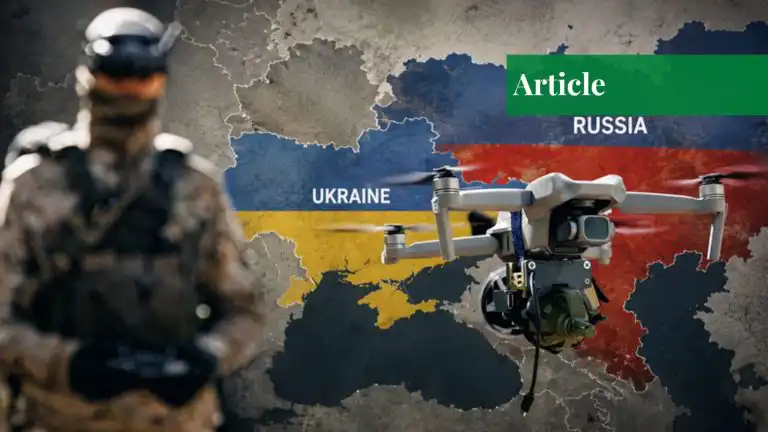
When Abraham Karem pioneered modern drone technology in the 1970s, neither he nor the Israeli Air Force, with which he was closely associated, could have anticipated the transformative impact drones would have on modern warfare. Today, battlefield drones have demonstrated capabilities that challenge traditional notions of military superiority, as evidenced by the ongoing Russia–Ukraine war.
Ukraine’s strategy, which relies heavily on the extensive use of drones, has challenged Russia’s conventional military advantages, particularly its dependence on overwhelming firepower and artillery. In many instances, Russia’s reliance on massed firepower has been undermined by the unconventional and adaptive nature of Ukrainian drone operations, which have expanded the practical application of the traditional kill chain concept.
Rather than relying on rigid, top-down command structures, Ukrainian infantry units and specialized strike formations, such as Madyar’s Birds, operate with a high degree of autonomy. These units employ ad hoc networks to rapidly identify targets and deploy first-person-view (FPV) drones against logistics hubs, radar systems, and defensive positions before the enemy can react.
Since the beginning of the conflict, Ukraine has increasingly oriented its military doctrine around a network-centric warfare model that integrates weapons systems, intelligence assets, and command infrastructure into a unified information network. The primary objective of this approach is to shorten the kill chain, with drones serving as a critical enabling capability.
In confronting Russia’s military forces, the extensive use of artillery and 152 mm self-propelled howitzers, such as the 2S19 Msta-S, has effectively transformed the airspace extending approximately 10–35 kilometers from the front lines into a lethal “death zone” for both sides. This “kill zone” has made it increasingly difficult for Russian armored formations and massed troop concentrations to maneuver without being detected and targeted. In many respects, this development reflects the military doctrine advanced by Captain Basil Liddell Hart during the First World War, commonly known as the “Indirect Approach.”
The indirect approach advocates striking an opponent’s vulnerabilities through maneuver, deception, and surprise rather than confronting its strengths directly. At first glance, Ukraine’s extensive use of drones against Russia’s formidable firepower appears to challenge the strongest component of Moscow’s war machine. In practice, however, these operations exploit a critical vulnerability: Russia’s dependence on expensive conventional military assets that are increasingly exposed to inexpensive, mass-produced drones and loitering munitions. As a result, relatively low-cost unmanned systems have altered the cost-benefit calculus of warfare, enabling Ukraine to impose disproportionate costs on a materially superior adversary.
Towards Becoming a Drone Superpower
However, Ukraine’s ambition to become a drone superpower has not been an easy undertaking, as its wartime budget remains significantly smaller than Russia’s. Moreover, drone warfare is not exclusive to Ukraine, as Russia also intensified its drone campaign throughout 2025 to unprecedented levels. In 2025 alone, Russia reportedly deployed more than 54,000 Shahed-type drones against Ukraine. These drones, largely assembled from commercially available components, are estimated to cost up to $50,000 per unit.
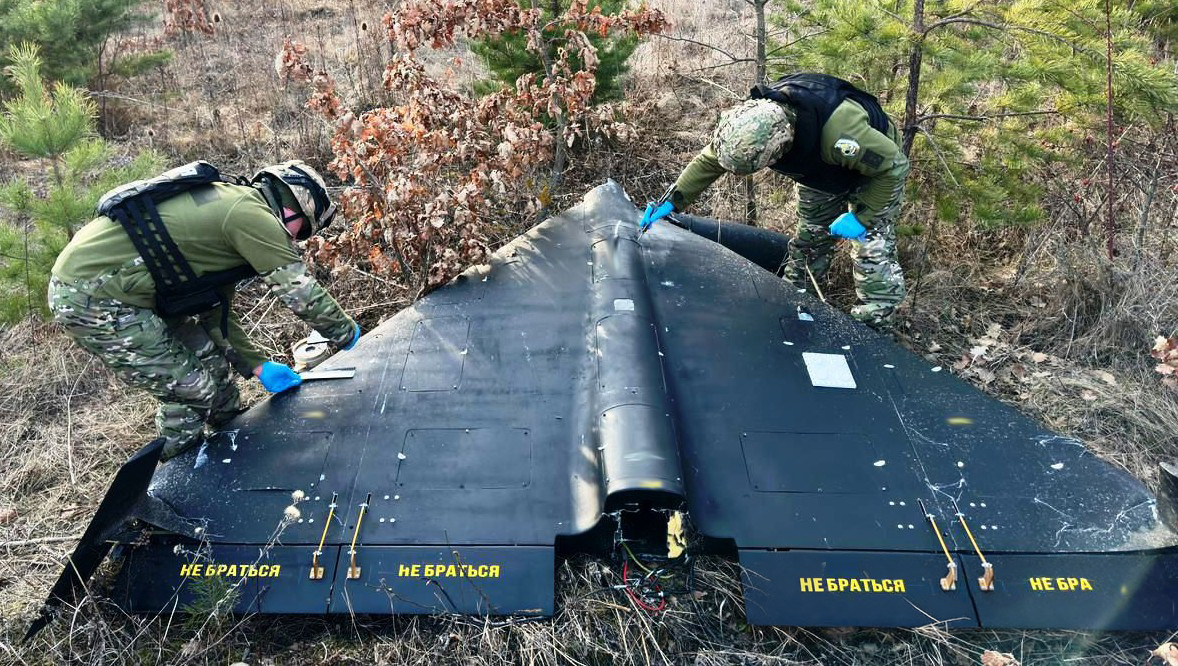
In response, Ukraine developed a small-scale air defense system known as Mala PPO. This anti-drone ecosystem incorporates interceptor drones, mobile fire units, and automated anti-aircraft systems, thereby reducing reliance on costly surface-to-air missiles. When employed effectively, the system significantly reduces the threat posed by Russian Shahed-type drones. It provides a cost-effective alternative to deploying more sophisticated air defense systems and expensive interceptor missiles.
Beyond the success of its mass production of small offensive drones and the Mala PPO system, Ukraine has also demonstrated a remarkable ability to project drone operations deep into Russian territory, attracting considerable attention from military analysts worldwide. Operation Spiderweb, conducted in June 2025, exemplifies another innovative application of Ukrainian drone warfare. The operation involved coordinated long-range drone strikes against multiple Russian airfields located deep within Russian territory.
Using only 117 FPV drones, with a combined estimated cost of approximately $117,000, the operation reportedly damaged or destroyed more than 40 Russian aircraft across five airbases, assets collectively valued at over $7 billion. The operation highlighted a growing asymmetry in modern warfare: relatively inexpensive unmanned systems can impose substantial financial and operational costs on a conventionally superior adversary. As a result, Ukraine’s drone strategy has become an important case study in the evolving relationship between technological innovation, military effectiveness, and cost-efficient force projection.
Obvious Limitations
Notwithstanding their significant contribution to Ukraine’s military operations, drones also possess inherent limitations. In particular, Ukraine’s mass-produced drones are increasingly challenged by faster, jet-powered Russian systems, such as the Geran-4, which can reportedly reach speeds of up to 500 km/h. Furthermore, Moscow has adapted rapidly to the growing threat posed by Ukrainian drone attacks by expanding its interception and electronic warfare capabilities. These developments could undermine any excessive reliance on drones as a singular military solution.
Moreover, Russia’s ability to conduct large-scale missile strikes and sustain troop mobilization on the ground remains largely unaffected by Ukraine’s drone-centred strategy. While drones have undoubtedly altered the character of modern warfare, they have not rendered conventional military capabilities obsolete.
Nevertheless, the growing prominence of drones on the battlefield has challenged several long-established military doctrines. The operational effects generated by drone warfare often fall outside the assumptions of conventional military thinking. The Russia–Ukraine war is not merely a military stalemate; it is also a contest in which Ukrainian resilience and technological innovation have constrained many of Moscow’s strategic ambitions. In this regard, drones have exposed the limitations of several traditional theories of warfare that were once regarded as foundational principles.
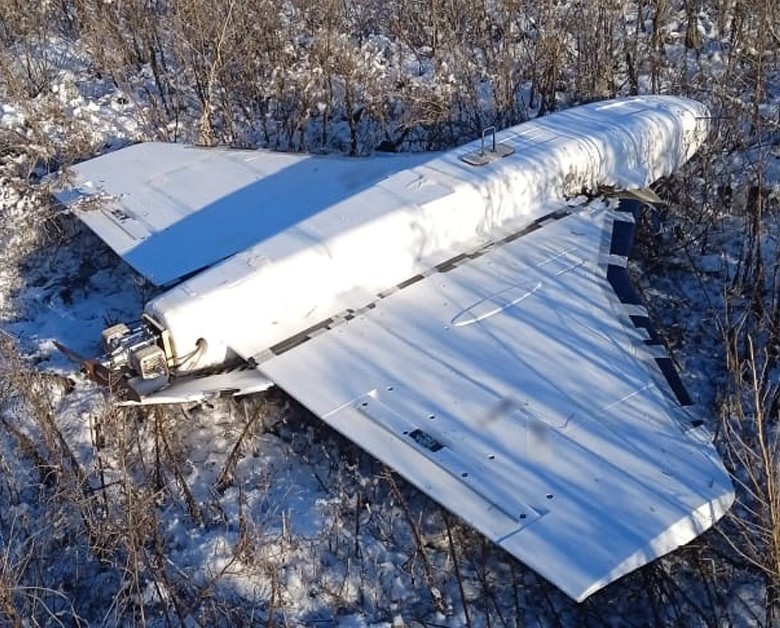
Russia’s unsuccessful attempt to achieve a rapid victory through surprise during the early stages of the invasion illustrates this transformation. Persistent drone surveillance has significantly reduced the ability of military forces to conceal troop movements and preparations. For example, Ukrainian forces have repeatedly monitored and targeted Russian troop concentrations before offensive operations could be launched. This development suggests that the traditional concept of strategic surprise is becoming increasingly difficult to achieve on a modern battlefield characterized by continuous aerial surveillance and real-time intelligence.
Equally significant is the challenge drones pose to the conventional concept of air superiority. Traditionally, command of the air has been regarded as a decisive factor capable of shaping the outcome of military conflicts. Given Russia’s numerical advantages in combat aviation, conventional military theory would have predicted a far greater degree of Russian dominance in the air domain. Yet the course of the war has demonstrated that relatively inexpensive unmanned systems can complicate and constrain the operations of a conventionally superior air force. The extensive use of drones by Ukrainian units has forced Russian aircraft to operate under increasingly restrictive conditions, thereby reducing the effectiveness of Russia’s aerial operations. Consequently, the conflict has demonstrated that air superiority alone no longer guarantees operational freedom in contested battlespaces saturated with unmanned systems.
Taken together, Ukraine’s coordinated employment of drones throughout the Russo–Ukrainian War represents a significant development in military science. The conflict has highlighted how relatively inexpensive, adaptable, and mass-produced unmanned systems can reshape battlefield dynamics, challenge established doctrines, and redefine traditional assumptions regarding firepower, surprise, and air superiority.
If you want to submit your articles and/or research papers, please visit the Submissions page.
To stay updated with the latest jobs, CSS news, internships, scholarships, and current affairs articles, join our Community Forum!
The views and opinions expressed in this article/paper are the author’s own and do not necessarily reflect the editorial position of Paradigm Shift.

Punsara Amarasinghe is a former post-doctoral researcher affiliated with Scuola Superiore Sant Anna (Sant Anna School for Advanced Studies), Pisa, Italy. He is a PhD holder in Public International Law from the Institute of Law, Politics and Development at Scuola Superiore Sant Anna. He holds an LL.M. from the South Asian University, New Delhi, and completed his undergraduate studies in law at the Faculty of Law, University of Colombo, Sri Lanka.
He completed another master's degree in international relations from the HSE, Moscow. He has held two visiting research fellowships at the Global Legal Studies Centre at the University of Wisconsin, Madison, and Sciences PO, Paris. He was affiliated with the Minerva Center for Strategic Studies at Hebrew University, Jerusalem, for a brief period in 2019.