Cricket as Public Diplomacy
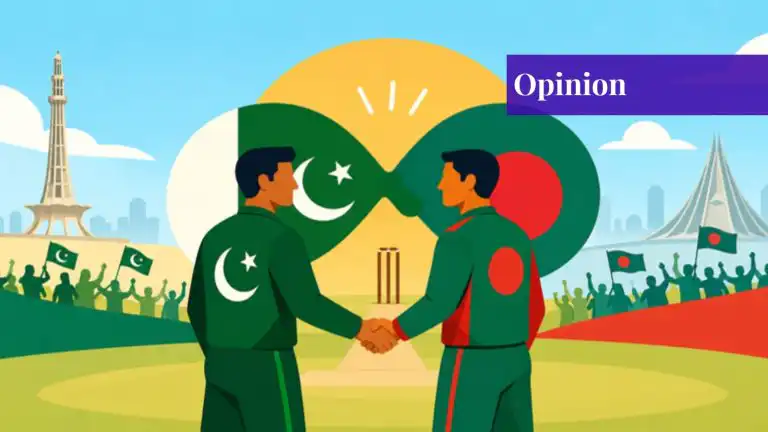
One of the famous arenas where politically conflicted South Asian states compete and come together is cricket. Both Bangladesh and Pakistan have used the code to play politics, nationalism, and to promote an image in the rest of the world. Cricket has been both a peacemaker and a war-maker in Pakistan. The positive effects of “cricket diplomacy” in the 1980s and early 2000s include the sensational visit of General Zia-ul-Haq to Jaipur in 1987 and the “Friendship Series” in 2004 under Prime Ministers Atal Bihari Vajpayee and Rahul Gandhi.
However, in cricket, with the Mumbai terror attack in 2008, there has been a greater emphasis on geopolitical issues. Bangladesh has been a more complicated story with some love for Indian cricket and some bitterness at their dominance, but cricket in the country has not been eliminated either. Bilateral cricket has vanished, and Pakistan continues to be banned from the Indian Premier League (IPL), a testament to how ‘nationalism’ overrules the game. This trend is evident in cricket’s recent politicization.
In early 2026, the Board of Control for Cricket in India (BCCI) directed the Kolkata Knight Riders (KKR) franchise of the Indian Premier League (IPL) to release Bangladeshi pacer Mustafizur Rahman on grounds of “developments all around” – code for political pressure between New Delhi and Dhaka in the wake of former Prime Minister Sheikh Hasina’s exile in India. Bangladesh retaliated with a ban on IPL broadcasts and threatened to pull out of matches in India. That a player’s contract became a diplomatic issue highlights cricket’s evolution into a geopolitical tool. The Bangladesh Cricket Board’s outcry and its appeals to the International Cricket Council (ICC) were as much public diplomacy as institutional protest – a re-enchantment of a sporting insult into a moral critique of sovereignty and justice.
The Power Politics of the BCCI
The narratives of Pakistan and Bangladesh are part of a broader South Asian hierarchy underpinned by India’s economic power and size. The BCCI governs 80 percent of the international cricket market, giving it disproportionate control over scheduling and grounds governance. Led by Jay Shah – son of India’s home minister – the board’s decisions are increasingly seen as an expression of Indian government policies and dominance. In rejecting Bangladesh’s bid to shift its World Cup games from Indian cities to Sri Lanka, the ICC was not making a logistical but a political decision.
The centralization has ramifications for South Asian cricket diplomacy. The eight-year ban on bilateral cricket in Pakistan, the country’s entry into lesser-league cricket tournaments, and its refusal to attend lucrative cricket leagues are indicative of a systemic imbalance, which is a reflection of the country’s diplomatic isolation. The isolation of Bangladesh after the Mustafizur affair suggests that even smaller states will be isolated if they go against the hegemon. Once a game of chivalry, the “gentleman’s game” mirrors the political inequalities of the world.
“Emerging Alignments and the Politics of Boycott”
A recent development is a sign of the changing face of cricket diplomacy. The refusal of Pakistan to take part in the sporting events held in India, under the current political environment, is a continuation of its policy of sport being intertwined with broader geopolitical issues, which it adopted in the past. Remarkably, Bangladesh has now started to align more with some of Pakistan’s views. Dhaka showed displeasure with the India-dominated cricket administration and threatened to review its engagement in cricket affairs hosted in India in opposition to Indian unilateral moves against its players.
Although Bangladesh did not pursue a boycott, its symbolic support of Pakistan’s accusations of unfair cricket governance is a sign of a new but fragile alliance among the smaller cricketing nations of the South Asian Association for Regional Cooperation. This is not about bilateral alliances so much as resistance to power asymmetries – and shows how cricket diplomacy is no longer just bilateral (India-Pakistan) but increasingly about coalitions among states seeking to balance the global structure of cricket.
Narratives of Resistance and Essence
However, Khan’s cricket is not all about power. Pakistan and Bangladesh adeptly utilize cricket to forge national narratives of resilience and virtue. Pakistan’s cricket culture is a bridge between the culture of the state and the culture of the people. It was personified by Pakistan’s World Cup victory in 1992 by former Prime Minister Imran Khan, a chief symbol of disciplined populism and national regeneration. In the midst of every turmoil, cricket in Pakistan offers a sense of belonging for its people, a place of pride, unaffected by class and politics.
In Bangladesh, nationalist sentiments have been more democratic. Cricketing heroes such as Mashrafe Bin Mortaza have challenged the nationalist excesses that accompany tense sporting contests and encourage supporters to prioritise citizenship as much as fandom. “If everyone who shouts ‘patriotism’ obeyed traffic rules for even one day, Bangladesh would be transformed,” he once said. These statements demonstrate how sporting heroes can recast patriotism as moral responsibility and compassion.
From Soft Power to Symbolic Warfare
In South Asia, cricket was once the most successful medium of soft power, connecting the unconnected when diplomacy failed. However, politics now “ruins cricket” as Indian nationalism and economic power play out in a “weapon of nationalism.” The exclusion of Pakistani players from international leagues and Bangladesh’s disputes over IPL shows how opportunity in sport is increasingly reliant on political allegiance in contemporary global politics.
The ICC’s complacency in this regard further supports this claim: the staging of matches, participation, and even media coverage are determined by geopolitical realities. In this environment, cricket diplomacy via handshakes and sportsmanship camaraderie is complex. India’s and Pakistan’s failure to shake hands in the 2025 Asia Cup was a sign of the end of sportsmanship as a diplomatic ritual.
Reviving the Spirit of the Game
For cricket to be a bridge and not a border, South Asian governments must distinguish cricket from national politics. Public diplomacy here should focus on human exchanges, respect for players regardless of country of origin, and regional co-operation. Cricket should be solely treated as a sport.
Pakistan and Bangladesh, with their differences in rank and power, can help this cause by emphasizing narratives of camaraderie and civility, by showing that “fair play” is good for national pride. Cultural exchanges, exchanges of women players, and exchanges of youth teams could help revive the sport’s trans-border camaraderie, as an alternative to zero-sum nationalism that prevails on the field.
As C.L.R. James noted, cricket is “with theatre, ballet, opera, and the dance.” It is a theatre of national imagination. The challenge for Pakistan and Bangladesh is not to win every game against their opponents, but to win the game back from politics, to remind their citizens that just as in diplomacy, sport should seek not only victory but also understanding.
If you want to submit your articles and/or research papers, please visit the Submissions page.
To stay updated with the latest jobs, CSS news, internships, scholarships, and current affairs articles, join our Community Forum!
The views and opinions expressed in this article/paper are the author’s own and do not necessarily reflect the editorial position of Paradigm Shift.

Fatima Khan is an undergraduate student of international relations focused on the geopolitics of South Asia and regional studies. She is passionate about tracking geopolitical developments, foreign policy dynamics, and the evolving landscape of international affairs