The concept of freedom has always been the subject of political philosophy in human history. From ancient times, man has been thinking about how he can live without any external interruption. Freedom in classical liberal thinking meant that the government should not interfere in human affairs. But today, freedom not only means personal sovereignty, but it also includes the effects of human rights through social justice, welfare, and technology.
Classical Concept of Freedom: Absence of Interference
Philosophers such as John Locke (1632–1704), Jean-Jacques Rousseau (1712–1778) Immanuel Kant (1724–1804) described independence as a life free life of government interference. According to him, a human being should be free unless their freedom is harmful to others. According to John Locke, the real task of the government is to ensure the natural rights of man (such as life, freedom, and property), with minimal interference. Rousseau, advocating general will, argued that individual rights should be protected in interactive communities.
The First Amendment to the US Constitution is a great example of classical freedom. It gives people the right to speak freely, practice religion, and come together peacefully. According to classical liberalism, blocking free expression on platforms like Facebook or Twitter is against personal freedom, and governments should not control these platforms.
But critics say that classical freedom does not work equally for everyone. Issues such as poverty, racism, and lack of educational opportunities prevent some people from using their freedom fully. For example, if one belongs to a poor family, they face difficulties in getting education and employment opportunities, while rich people are easily educated and educated in the best institutions. The law gives freedom to everyone, but in fact, not everyone can fulfill their dreams because of financial difficulties. Therefore, people who have difficulty reaching their destination due to economic obstacles cannot be called completely free.
Modern Freedom: Balance between Technology and Social Challenges
In today’s era, the concept of freedom has changed.
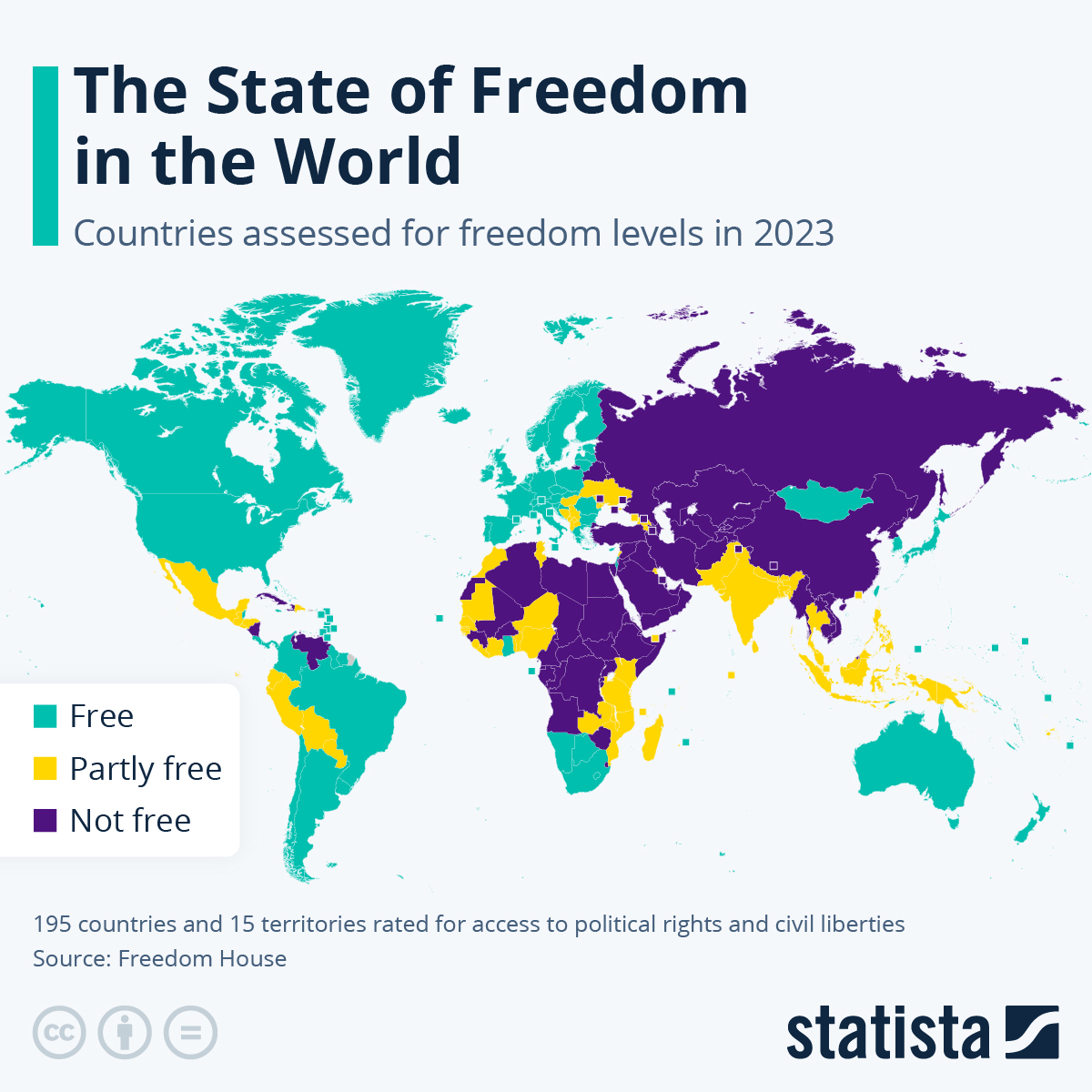 You will find more infographics at Statista
It is no longer limited to freedom from obstacles, but it has also included social justice, progressive freedoms, and technological rights. That is, the concept of freedom is now widespread – it is not limited to just avoiding.
Isaiah Berlin’s Distinction: Negative vs. Positive Freedom
Berlin divides freedom into two parts: negative freedom and positive freedom. Negative freedom means that an individual should be free from external obstacles or restrictions. There should be no interference from the state or any other authority, allowing the individual to make their own decisions. An individual should have the necessary resources and opportunities to enhance their abilities and achieve their goals. All these things together not only strengthen the individual’s sovereignty but also give it a sense of social responsibility.
Universal Basic Income (UBI) is a clear example of how people can achieve positive freedom without traditional employment. When financial pressure is reduced, people can focus on their desires and goals. Some people say that the scheme can discourage working, and also pose a risk of rising prices, which can deteriorate the balance between economic protection and individual freedom.
China’s Social Credit System:
China’s social credit system tracks citizens’ behavior and scores based on financial behavior and legal activities. Supporters say the system promotes public morality, while critics view it as excessive control of the government on personal freedom. In the case of a low social credit score, various facilities may be deprived, which is against the principle of freedom, as it affects personal sovereignty. This example can be seen under negative freedom.
Surveillance and Privacy:
As technology is developing, many people are afraid of losing their privacy because surveillance systems have become very powerful. Edward Snowden’s NSA revelations in 2013 highlighted tensions between national security and personal freedom. The main point of the ongoing debate about Mass Surveillance (Mass Surveillance) is whether it is permissible for people to impose sanctions on privacy based on security requirements. This example falls under the category of both positive and negative freedom.
Comparison of Classical and Modern Freedom
Classic liberalism emphasizes freedom, protection of individual rights, and restricting state power, but it ignores social, economic, and ethnic obstacles that prevent many groups from gaining their basic rights. For example, minority groups often lose equal opportunities. George Floyd’s death in 2020 proved that the guarantees of classical independence in the United States failed to deal with systematic issues such as racial prejudice. Although there is a guarantee of equality and independence at the constitutional level, in practice, African American citizens are not able to achieve complete freedom. Classical laws do not provide considerable protection for preventing discrimination, which makes the weaker sections unsafe.
On the contrary, modern freedom provides the resources through which they can achieve personal development and happiness. Businesses use these resources to challenge social injustice and contribute to the formation of a fairer system. But we also see a conflict between digital rights and expression. In the digital era, the balance between freedom of expression and online rights has become a complex issue. In 2021, when social media platforms banned the account of former US President Donald Trump to spread violent content, the question was raised whether corporate censorship was imposing freedom of expression. The platforms claim that they take steps in the interest of consumers, but people were worried that the right to expression has been restricted. In the digital period, this matter is more confusing because consumers have to choose between free expression and corporate principles, which decide which material is acceptable.
Navigating the Complex Terrain of Freedom
The concept of freedom has gone through significant changes since ancient times. Over time, its definition has not been limited to freedom from state intervention but has become a wide range of concepts, including social justice, economic opportunities, and digital rights. The fundamental rights given in the classical freedom system fail to eliminate obstacles that limit the individual’s freedom.
In today’s world, freedom means not only avoiding interference but also the freedom that man can develop and improve his life. But this comprehensive theory also brings many challenges with it, especially in a world where technology has added everything to each other. Technical aspects such as monitoring, censorship, and data management raise serious concerns about privacy, security, and personal freedom. The early period of the 21st Century calls on us to establish a balance between personal freedom and collective welfare. We have to create a system that will protect the rights of the individual as well as ensure social equality. Modern society has to be alert so that freedom, whether it is classic or modern, can meet the needs of each individual, and no class is ignored.
If you want to submit your articles and/or research papers, please visit the Submissions page.
To stay updated with the latest jobs, CSS news, internships, scholarships, and current affairs articles, join our Community Forum!
The views and opinions expressed in this article/paper are the author’s own and do not necessarily reflect the editorial position of Paradigm Shift.

Linta Rasool is a passionate scholar committed to continuous learning and academic writing with a focus on , International Relations, Current Affairs, geopolitics, Pakistan Studies and English Literature. Actively engaging in workshops, conferences, and social initiatives, she embraces diverse cultural perspectives while staying attuned to the dynamic global and political landscape.