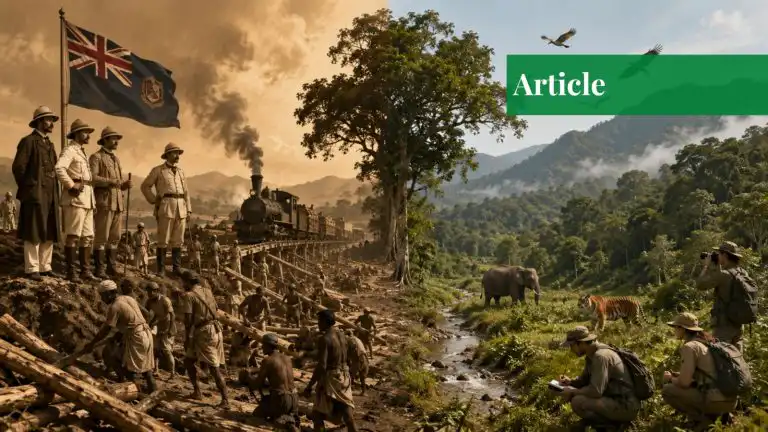
While many of us relate the idea of colonialism to the past, most of the colonial practices still exist in the modern world. The Global North still exploits the resources, expertise, and sovereignty of the Global South in new forms, and environmental conservation is not an exception. Historically, environmental conservation has had a noble universal premise: to preserve nature against detrimental human activities. However, in the background, there is a sinister history involving expelling indigenous people and suppressing their eco-caretaking responsibility and valorizing Western ecological principles to the rest of the world.
From the establishment of Yellowstone National Park to current-day fortress conservation in Africa and Asia, the idea of environmental protection has had little cooperation with people but instead has been about the fortification of places against people. It is not a matter of chance in history; rather, it is an extension of colonial power where the Global North decides which landscapes are worth protecting, which people belong to them, and whether or not they have to be excluded.
The Myth of “Pristine” Wilderness & Colonial Erasure
The myth of a “pristine” wilderness where no people managed to live is one of the longest-standing and most devastating colonialist beliefs of conservation. When the European colonizers came to North America in the 1600s, they found themselves in the middle of expansive terrain that had been set under the care of the Native people for thousands of years of Indian stewardship, such as forests maintained by careful burning and grasslands managed by seasonally moving livestock.
To the Americans, however, these were not developed landscapes; they were rather the untamed wilderness, a representation of how they were failing to realize native land practices. Selecting these lands with the idea of remaking them through clearing forests, fencing pastures, killing buffalo, and yet lamenting at the kind of nature they were demolishing, settlers did so because they believed in their civilizing mission.

According to the American Invention of National Parks by Roderick Nash, the contradiction is recalled by the 19th-century artist George Catlin, who painted and claimed to have observed American Indian life. Further, in 1832, Catlin toured the lands of indigenous people, romanticizing what he referred to as the grace and beauty of nature, all the while he was demonizing native people as debauched by colonialism. His solution? The government secured the park to conserve the land and the Indigenous people living in it, but not the tribes, who had been occupying the land for generations.
Historian Roderick Nash argues that, as discussed in The American Invention of National Parks, Catlin provided the ideological rationale of Yellowstone, the world’s first national park. Opened to visitors in 1872, Yellowstone was hailed as a “wonderland” of nature free of people, but the park came into existence only through the forceful expulsion of the Shoshone, Bannock, and Crow. The park set the model of conservation in the whole world: a myth of wild nature, which is only possible due to the disappearance of the indigenous people.
Yellowstone National Park
The idea given by George Catlin was succeeded by President Ulysses S. Grant when he designated two million acres of northwestern Wyoming as Yellowstone National Park. It was established in 1872 by forcefully relocating the Shoshone, Bannock, Crow, and other native communities to make way for their territories and was fraudulently advertised as a wilderness paradise, even though it was under indigenous people’s stewardship. This dispossession created cataclysmic ecological impacts, such as wildfire-prone systems with suppressed indigenous fire practices and buffalo, a culture-driven ecological keystone species, to near extinction.

Although hailed as an environmental success, the establishment of Yellowstone boasted the racist myth that authentic nature needed no presence of the Indigenous people, while simultaneously catering to white tourism and sport hunting. This colonial legacy has been contested in the park today with tribes reasserting their rights and knowledge, in a way providing paradigms to Indigenous-led conservation where people are placed back in the context of nature and not as its murderers.
Fortress Conservation: Displacement & Violence
Fortress conservation, where conservation focuses more on wildlife than on people, originated during colonialism with ideologies that misrepresented indigenous land as vacant wilderness to be preserved. This practice has resulted in the violent expulsion of communities such as the Maasai in Tanzania and Adivasis in India, who had long managed these ecosystems sustainably through such practices as controlled grazing and management of fire.
Farmer and philosopher Wendell Berry keenly noted that sustainable agriculture cannot, under any circumstance, deplete either the people or the land, a fact that has been significantly undermined by many conservation models that disengage Indigenous peoples entirely from their environments. Moral posturing about environmental safety has served as a cover many times to justify land grabs by governments and even international organizations, which, in many cases, have overturned the traditional stewardship to commercial tourism and resource mining. The Mkomazi Game Reserve in Tanzania has seen pastoralists driven off their land by the British colonialists, whom the post-independence regimes have taken up.
In the same light, biodiversity has caused Adivasi to be evicted in favor of tiger reserves in India, even though they historically managed diversity. The brutal irony is in the way these places labeled as protections often allow mining, lavish safaris, and other predatory behavior and criminalize subsistence practices of Indigenous peoples. In Ngorongoro, Kenya, and in the Himalayas in India as well, today, the disbanded communities are struggling to take their positions back as stewards, and it is this fact that shows that the ecological balance can never be complete with humanity taken out of nature—so complete that there is an inseparable mix. And this new movement is confronting that colonial myth of the wilderness in a state of nature and providing a different vision of conservation grounded in justice and reciprocity and a hard-won and practiced wisdom of people who have worked to nurture these lands since time immemorial.
Neo-Colonialism in Modern Conservation
Although the negative consequences of colonial conservation are increasingly understood, global environmental agendas remain dominated by Western NGOs and governments with increasing expressions of what one author terms a kind of green colonialism, one that still favors foreign interests to the detriment of indigenous sovereignty. Such neo-colonial relations find themselves translated into the financing, policymaking, and ground-based enforcement decisions whereby Euro-American conservation groups such as the WWF and Wildlife Conservation Society end up having an inordinate say in the way that Global South ecosystems are managed.
The carbon offset market is a perfect example of such an imbalance: overseas projects in Kenya, Congo, and the Amazon regularly relocate indigenous peoples off of their land in the name of helping with climate change, yet we still see companies in the Global North pumping out pollution. In 2019, BuzzFeed News’s article titled “WWF Funds Guards Who Have Tortured and Killed People” demonstrated how NGOs in charge of conservation have been secretly funding violent anti-poaching teams that torture and kill indigenous hunters in the Congo Basin, despite their efforts to market themselves as liberal environmental watchdogs.
These practices date to what historian Richard Grove refers to as green imperialism, the centuries-long culture of pillaging tropical ecosystems on the pretext of preserving them (Green Imperialism). This reasoning is the same rationale behind 30×30, the more recently proposed scheme to establish 30 percent of the Earth as protected zones by 2030, a plan that has had to weather criticism. Driven by something necessary to provide, the policy threatens to render 300 million people (mostly Indigenous) displaced without their consent.
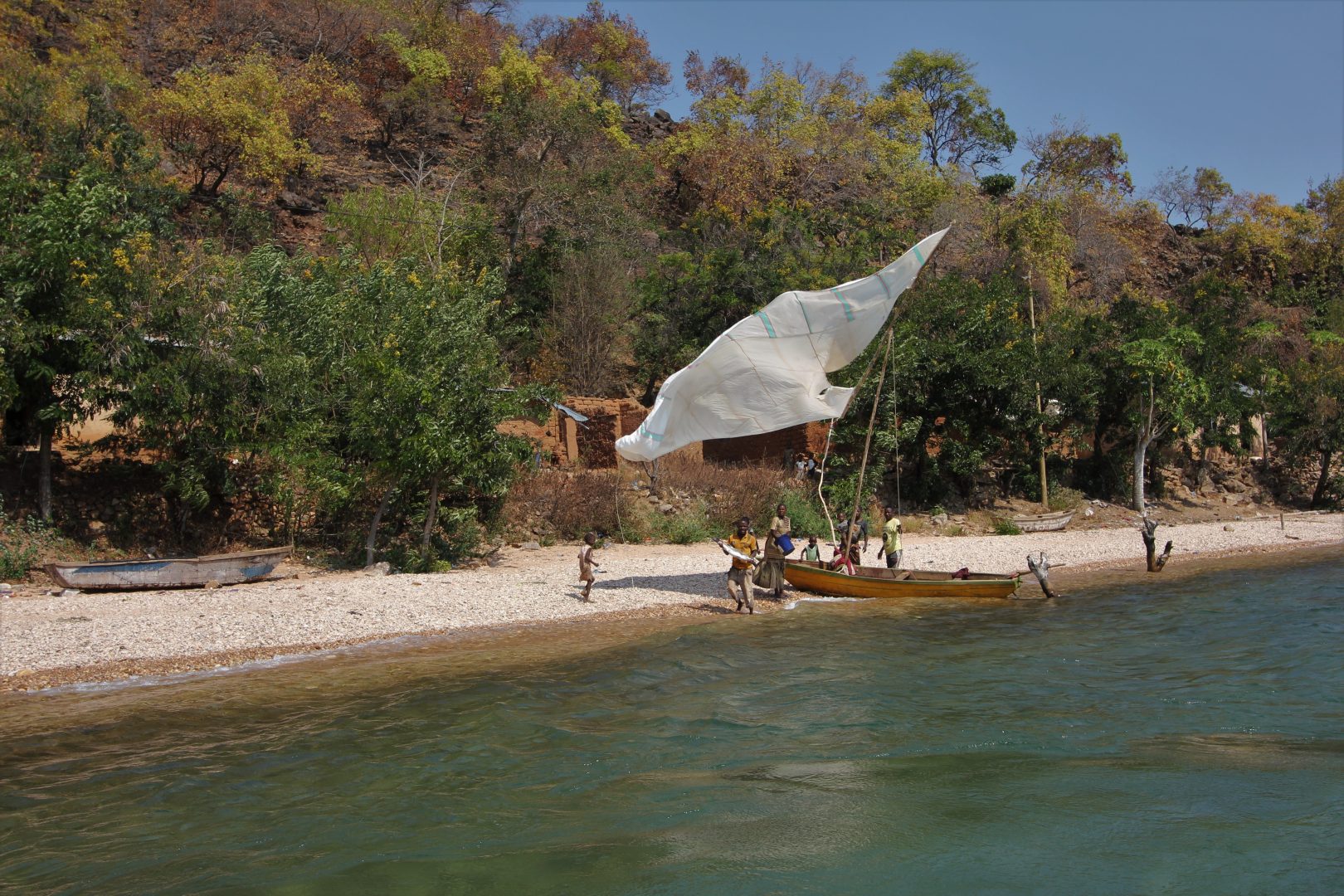
The presence of the WWF in the Congo Basin, where Baka tribes were beaten, set on fire, and even starved to death as a result of ecoguard brutality, shows how the contemporary version of conservation tries to replicate colonial violence through a hierarchical and military style of control. But there are alternatives. In Namibia, community-managed conservancies have increased the population of wildlife by fourfold, focusing on Indigenous knowledge, whereas the Rights and Resources Initiative promotes land titling as an approach to conservation.
These models not only support that decolonizing conservation is a question of justice, but it is also a question of effectiveness. With the climate emergencies intensifying, the world cannot continue using conservation policies that are perpetuated as a sacrifice zone, where the Global South has to take the blame for Western climate culpability.
Conclusion
Environmental conservation history is interwoven with colonialism—a practice that has marked policies even nowadays. From its violent formation of Yellowstone to its current violation of indigenous land in the name of fortress conservation and carbon offsets, the notion of pristine wilderness has been used as an apparatus of erasure so that the Global North can illegitimately reassert its dominance over land and resources, as well as stories with claims to ecological stewardship. But this model has been ecologically and ethically unsuccessful: the repression of Indigenous activities has exacerbated wildfires, biodiversity, and climate insecurity and implemented a system in which conservation has become, more embarrassingly frequently, violence.
It is time to decide whether to continue the system based on dispossession or create a vision of conservation that entails solidarity, rather than separation. The soil and those who were to be its custodians await.
If you want to submit your articles and/or research papers, please visit the Submissions page.
To stay updated with the latest jobs, CSS news, internships, scholarships, and current affairs articles, join our Community Forum!
The views and opinions expressed in this article/paper are the author’s own and do not necessarily reflect the editorial position of Paradigm Shift.

Tayyaba Naseer is pursuing her bachelor's degree in international relations from Government College University, Lahore. She chooses to write about the most significant human emotions and the world we live in. She is passionate about unearthing the hidden conspiracies that create our world and how every one of us is interlinked in this intricate web.