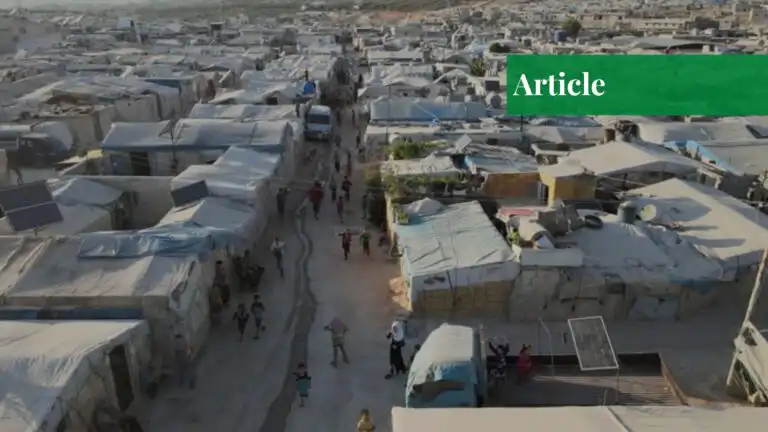
The most pressing humanitarian issues of the 21st century are migrants’ rights and the global refugee crisis. Millions of people are leaving their homes as refugees in search of shelter and alternative futures as political instability, climate change, poverty, and conflict create record levels of displacement. The migrant rights issue calls for urgent attention to global policy discourse involving government, international institutions, and civil society.
Difference between Migrants and Refugees
The primary difference between refugees and migrants is the reasoning behind leaving the country and their legality. Migrants are people who move intending to better themselves outside their home country. They move and do not flee threats against their lives. Unlike refugees, migrants do not possess a set legal position in international law, so it is up to national states to craft policies to promote their rights, provided they are guaranteed their fundamental human rights. Refugees are defined as individuals compelled to leave their native land because of serious threats posed to their life or freedom on the grounds of persecution, war, violence, and when their government does not provide protection. They leave as the government is persecuting them for breach of the law.
Statistics of the Global Refugee Crisis
According to the reports of UNHCR, as of the end of 2024, 122.6 million people estimated worldwide had been leaving their homes, of whom almost 43.7 million were refugees, making the refugee crisis one of the most critical global issues of our time. There are 4.4 million stateless people around the world who have been refused nationality and lack access to fundamental rights, including freedom of movement, work, health care, and education. The report also says about one in 67 people worldwide has been forced to flee.
Palestine
Leaving their homes in pursuit of a better, safer life is one of the most painful decisions people make every day, wherever in the world. Nearly 06 million Palestinian refugees are in the care of UNRWA, while over 35 million refugees are formally registered with the UNHCR, making up a sizable fraction of this population. Furthermore, about 72.1 million people are internally displaced, frequently because of protracted conflicts and natural disasters.
More than 76% of displaced people are hosted by developing nations, which disproportionately carry the burden of hosting refugees’ people. The largest refugee populations, including those in need of international protection, were found in the Islamic Republic of Iran (3.8 million), Turkey (3.3 million), Colombia (2.9 million), Germany (2.6 million), and Pakistan (2 million).
Afghanistan
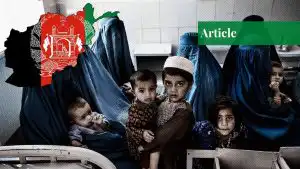
There were still about 10.9 million Afghans displaced, mainly as a result of the rise in Afghans living in refugee-like conditions compared to prior years. More than 1.4 million Afghan refugees are officially registered in Pakistan as of December 2024, based on UNHCR, and an additional 600,000 are thought to have fled since the Taliban regained control of Afghanistan in 2021. In response to the UN (United Nations) calls for ongoing assistance and protection for over 1.5 million Afghan refugees, the Pakistani Government has approved an extension of registration cards for these persons.
Bangladesh
In Bangladesh, approximately 1.1 million Rohingya refugees live in congested camps like Kutupalong, with inadequate medical treatment and frequent natural disaster threats.
Sudan
In other parts of the world, extended displacement is similar in nations like Sudan, where rising conflict has forced nearly 5.7 million people to escape, even to neighbouring countries like Chad.
Democratic Republic of Congo
Likewise, the Democratic Republic of Congo is grappling with one of the most prolonged crises in history, with over 6.1 million internally displaced people and around a million refugees fleeing their homes seeking safety abroad.
Syria
With almost 6.8 million Syrian refugees applying for asylum in other states and an additional 6.9 million internally displaced, Syria remains the largest source of migrants.
As Filippo Grandi, the UN High Commissioner for Refugees, said: “Behind these stark and rising numbers lie countless human tragedies. That suffering must galvanize the international community to act urgently to tackle the root causes of forced displacement.”
Significant financial limitations are impeding efforts to resolve the situation. The UNHCR reported a 40% gap in 2024, endangering the ability to provide displaced populations with essential services, including food, housing, and medical treatment. Most of the humanitarian aid is provided by wealthier countries, yet they frequently fall short of their resettlement obligations to refugees. This creates an imbalance that necessitates more equitable international collaboration by placing a large portion of the responsibility on developing nations with limited resources.
While countries like Spain and Canada have made progress in resettling Syrian and Afghan refugees, the overall global response is insufficient. Refugees often encounter legal hurdles, limited employment opportunities, and societal discrimination in host countries.
Indeed, this is a crisis of solidarity more than a problem of numbers. The crisis undermines the international order of justice, equality, and dignity. As wars break out and the climate crisis looms, the forcibly displaced are the most exposed of us all. It will take a broad response based on sympathy, unity, and action for the Universal Declaration of Human Rights. Alongside justice, tolerance, and human decency, a claim for migrants’ rights is a prerequisite to a more prosperous and peaceful world. We celebrate Human Rights Day every day; let the voices of those millions forced to flee through acts of violence and natural disasters sound like a demand for action on the part of individuals, institutions, and states everywhere.
If you want to submit your articles and/or research papers, please check the Submissions page.
The views and opinions expressed in this article/paper are the author’s own and do not necessarily reflect the editorial position of Paradigm Shift.

The writer is Arslan Mehndi Nekokara, Lecturer at GCUF Chiniot Campus. He did an MPhil in Political Science from Punjab University Lahore.