We hear the word “public debt” all the time, but what is it, and why do governments take on debt?
According to FRDLA 2017, the definition of public debt in Pakistan is “Total Debt of the Government,” which refers to the debt of the central Government (including the Federal and Provincial Governments) serviced out of the consolidated fund and debts owed to the International Monetary Fund (IMF) less the accumulated deposits of the Federal and Provincial Governments with the banking system.
Simply put, the debt owned by Federal and Provincial Governments is public debt. When governments run budget debts, they have two options: either to cover the deficits by taxing more, which is usually not chosen by most political governments or to finance them through borrowing, which is the more favoured option.
For the past thirty years, Pakistan has continuously sought IMF bailout loans. Recently, it entered the 24th program with the IMF, through which it will receive $7 billion in 37 months. This has allowed the IMF to manage Pakistan’s economy.
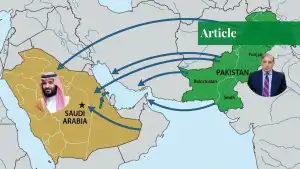
During its 2008-2013 government, PPP borrowed $25 billion to focus on energy projects, taking loans from the IMF, China, and Saudi Arabia. PML-N, during its reign from 2013 to 2018, borrowed $49.8 billion, largely for infrastructure (CPEC) but with limited export growth. The PTI government of 2018-2022 borrowed $52 billion in short-term loans to stabilize the currency and support fiscal crisis recovery.
Here, we need to understand that governments never pay for their expenditures. Debts such as these are financed by taxing the people. Governments take loans for deficit financing (to finance the difference between expenditure of government and total revenue), debt servicing (repayment of interest on debt and principal amount of debt), infrastructure projects (like dams and motorways), program loans (these loans are soft loans and used for economic reforms), and lastly to funds the expenditure of war.
On the positive side, debt facilitates infrastructure and capital investments, stimulates growth when used productively, improves access to markets and increases investor confidence, and finances social investments, education, health, and social programs.
On the other hand, if the debt is not taken for the above-mentioned programs, then the debt servicing can divert resources from essential public services, lead towards the risk of debt crises and default, currency crisis, over taxation like in the hike of GST, and can have an impact on social indicators like poverty, health, and education.
In Pakistan, the government takes loans mostly for deficit financing and debt servicing, which is increasing daily. The total debt service for this year may reach 8.3 trillion. The government takes on two types of debt: external and domestic debts.
External debt is taken from two bilateral resources, taking loans from friendly countries, and multilateral, taking loans from institutions like the IMF. These loans are taken for balance of payments (BoP), mostly to cover trade deficits. Countries like Pakistan import more and export less, run a trade deficiency that can be covered by multiple means like exporting more, importing less, through remittances, attracting foreign investment (FDI), which boasts the export, and taking debt, which is the income of future generations. Pakistan chose the easy way and went for debt, now around $133.5 billion. The interest rates of external debt are low. Still, the demon of external debt is not the interest rate but the structural reforms demanded by institutions like the IMF, which will keep the country in the vicious cycle of debt forever.
Domestic debt is taken from the country’s commercial banks or the state bank by the government. These debts are taken to cover the budget shortage and repay the debt. Pakistan’s domestic debt is rising sharply, and now, Pakistan takes most of its domestic debt from commercial banks. From July 2023 to June 2024, the government borrowed around Rs 8.475 trillion. As of May 2024, the total domestic debt and liabilities stand at Rs 46.75 trillion, which was 37.89 trillion in 2023. Countries take domestic loans because they are paid in their currencies, but these loans are very expensive as the interest rates are very high in the case of domestic debt. Moreover, domestic debt creates crowding out for the private sector and leads to lower investments by the private sector.
Pakistan’s debt is increasing because of its large population, but unproductive as Pakistan is ranked 164 out of 193 countries having a Human Development Index (HDI) of 0.557, which is very low, low tax to GDP ratio of 8.77% for this year, low export revenue as in 2022 Pakistan export worth $38.6 Billion while the imports worth $73.7 Billion which shows a clear gap between import and export, low GDP growth rate which was around 0.2 % for 2023 and vulnerability to the climate change as recent floods of 2022 cost Pakistan’s economy $30 Billion losses.
Pakistan’s debt is increasing, and the concerning thing is that debts are short-term solutions and come with many repercussions, such as low spending on health, as Pakistan spent only 1% of its GDP on health for the fiscal year 2022-23 and for education, government allocated 1.91% of GDP which is very low, large share of revenues allocated to the interest payments as over time, debt servicing costs have grown from 4.8pc of GDP in 2019 to 6.9pc in 2023.
Pakistan must increase its tax-to-GDP ratio and reduce the government’s unproductive expenditure. Pakistan can request debt swaps for green recovery as Pakistan is one of the countries that face severe climate change consequences despite emitting a small number of greenhouse gases, educating its population with vocational skills, and sending them abroad for remittances as India did in the 1990s. Finally, Pakistan needs to work on the domestic market to boost exports.
If you want to submit your articles and/or research papers, please check the Submissions page.
The views and opinions expressed in this article/paper are the author’s own and do not necessarily reflect the editorial position of Paradigm Shift.

M. Ahmed is a dedicated article writer currently pursuing his studies at the National Defence University (NDU), Islamabad, Pakistan. With a passion for writing and a keen eye for detail, he has an interest in a variety of topics, including politics, policy, economics, culture, and Islam.