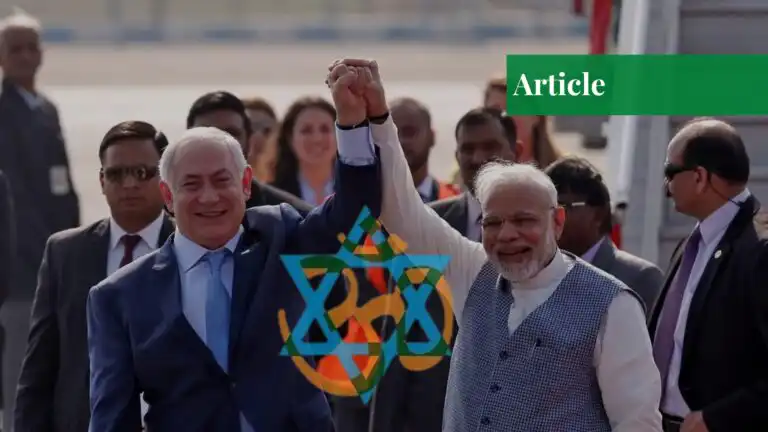
In the converging theaters of Palestine and Kashmir, two ethno-nationalist ideologies, Zionism and Hindutva, have developed remarkably similar practices of territorial consolidation, demographic engineering, and political legitimation. Zionism developed in the late 19th century as a colonial settler movement culminating in the state of Israel, while Hindutva emerged in early 20th-century India as a majoritarian cultural project to develop a Hindu Rashtra. While their histories and trajectories are completely distinct, Zionism and Hindutva are converging as a matter of practice, specifically with respect to gaining land, enforced legal control, militarized rule, and settler expansion.
This article examines the ways in which Hindu nationalists have employed the Zionist model, not merely in a symbolic sense of solidarity but in an integrationist sense of policy replication, especially in Kashmir, with the removal of constitutional provisions and the introduction of settlement laws, which follow the Israeli model used in the West Bank. By way of comparative analysis, we illustrate not only how both movements seek to fix the realities on the ground to limit the impact of a political compromise, but also to re-articulate the principles of democracy to realign it with the agenda of ethno-religious supremacy.
The Settler-Colonial Genesis of Zionism
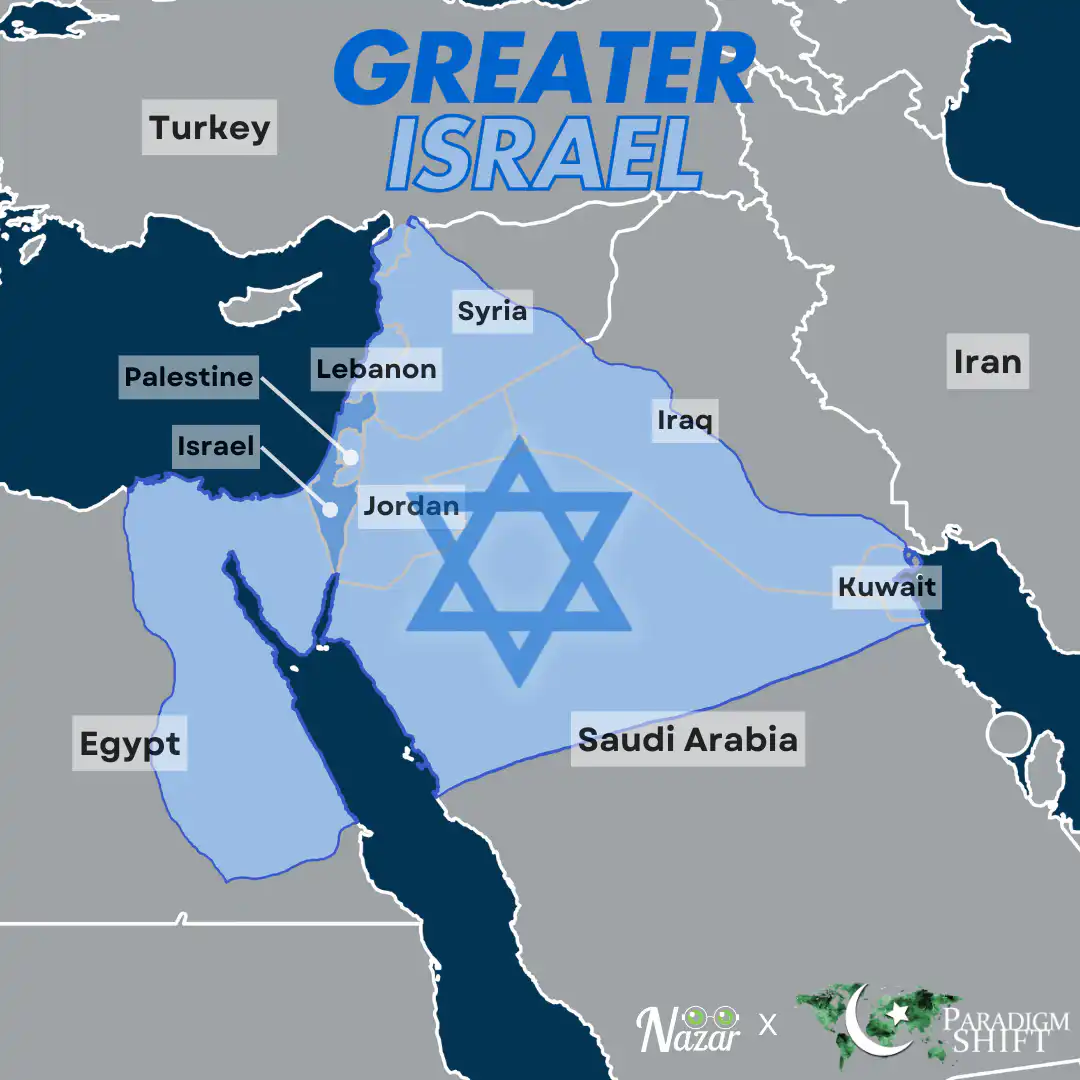
Zionism was a function of European antisemitism and was positioned as a Jewish nationalist project, however, it was largely a consequence of the territorial logic of British imperialism. The 1917 Balfour Declaration and the British Mandate for Palestine provided Zionist leaders with the legal and diplomatic way to achieve settler-colonial objectives. By 1948, the Zionists had expelled more than 700,000 Palestinians, which Palestinians call Nakba, and built a Jewish State of Israel in Palestine.
After 1948, Israel consolidated power through legal dispossession, military occupation, and settlements. The state made it legal civic dispossession, and took the land and property of displaced Palestinians through the Absentee Property Law in 1950. The state, with the stroke of a pen, retrievably categorized all persons who fled, or were violently displaced from, their homes as “absentees”, and then transferred their property and land to Jewish organizations. Since 1967, the West Bank, like Gaza, has been designated in military orders as one of three categories: either “state land”, “closed military zones”, or “nature reserves.” Almost all Palestinians cannot obtain permits to build any structure on their land, while thousands of illegal Jewish settlements have been built on their land.
The Israeli claim to democracy is diminished by an adjacent pattern of ethnic preference. In 2018, the Jewish Nation-state Law designated that only Jews have the right to self-determination in Israel. The legal framework and the conditions creating checkpoints, curfews, and administrative detentions form a de facto apartheid regime that further divides Palestinian society and permanently institutionalizes their indefinite occupation of their homeland.
The Rise of Hindutva and Its Zionist Aspirations
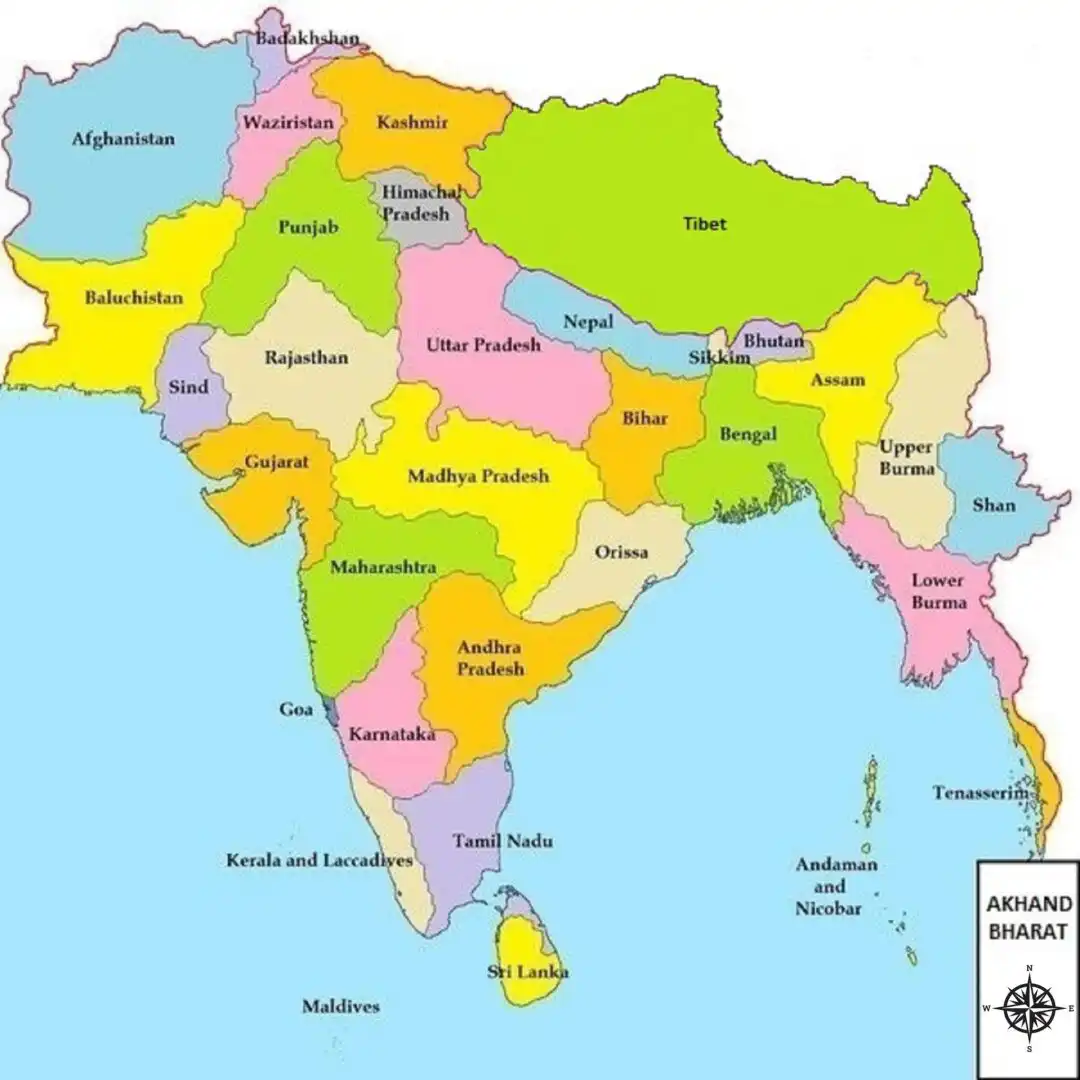
The ideology of Hindutva, developed by Vinayak Damodar Savarkar in the 1920s and very much shaped by ethno-nationalist movements in Europe, including Zionism, prompted an excitement in Savarkar for the Jewish claim of a homeland. Hindus must now learn to stake a similar claim to India as a Hindu nation, in a similar spirit, style, and mode, as the movement led by the Jews. Hindutva is still the ideological centerpiece of the Bharatiya Janata Party (BJP) and the parent body of the BJP, the Rashtriya Swayamsevak Sangh (RSS); moreover, it now shapes the remainder of the Indian state.
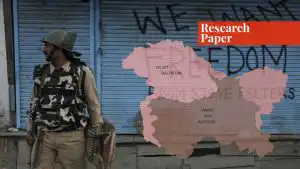
The implementation of Hindutva ideology started to take form in August of 2019 when India unilaterally revoked Articles 370 and 35A, and symbolically removed Jammu and Kashmir’s semi-autonomous status as a matter of law. Article 35A was an important constitutional prohibition on outside individuals from purchasing or settling land in Jammu and Kashmir. The constitutional termination of both articles, along with the fact that the State maintains a military presence in Jammu and Kashmir, parallels Israel’s legal centralization that allows for territorial and demographic alteration.
Indian security forces have also been training more as of late with the Israel Defense Forces (IDF), mimicking unsurprisingly similar counterinsurgency practices (for example, pick-ups, use of facial recognition and surveillance, policing and militarization of space, and population control as practiced primarily in Gaza and the West Bank). The engagement with the IDF has informed India’s policy in Kashmir, where drones and facial recognition, as well as spyware, which is overwhelmingly Israeli-made, are used as methods of psychological and political control.
Settlements and the Reshaping of Demographics
The state-sponsored settlement schemes of Zionism that are apparent in Hindutva are some of the most glaring indicators of Zionist influence on Hindutva.
Israeli Settlements in the West Bank
As of the end of 2024, about 700,000 Israeli settlers (excluding East Jerusalem) lived within the occupied West Bank, among 2.7 million Palestinians. The settlers are living in nearly 164 approved settlements, as well as 200 unauthorized outposts, some with military provides with government-provided subsidies, plus other independent infrastructure (e.g., segregated roads, checkpoints), to further fragment the Palestinian space and deny any hope for a continuous Palestinian governing authority.
Kashmir’s Domicile Resettlements
In August 2019, the Indian government repealed part of Articles 370 and 35A of the Constitution that offered some constitutional protections for residents of Jammu & Kashmir by prohibiting outsiders from owning land there. Thereafter, the Jammu and Kashmir Reorganization Act (2019) and domicile law from October 2020 eliminated any restrictions on owning land in Jammu & Kashmir and granted citizenship rights to anyone fulfilling either one or both of the following criteria:
- Has resided in J&K for 15 years, or
- Studied in J&K for 7 years and sat for the 10th/12th grade examinations.
It has been reported that more than 83,000 people from outside have received domicile certificates. The demographic flooding of outsiders into the valley is a concern for many who have long held that the lands belong only to those with Kashmiri lineage. Primarily, retired military personnel, civil service employees, and Hindu refugees from West Pakistan have benefited from the privileges, whereas proposed “smart cities” or “composite townships” have similarities to the fortified settlements, which have created a nightmare for Palestinians.
Electoral Engineering by Delimiting Regions
In addition to individual sales of land, New Delhi has also changed the boundaries for electoral representation to benefit the Hindu-majority Jammu region. The delimitation commission, 2020-22, added 6 seats to Jammu but only 1 to the Muslim-majority Kashmir Valley. The allocation of Jammu in relation to the 90 elected seats increased from 40.5% to 47.8%, even though Jammu is only 43% of the population.
The domicile law and new electoral map together enact a settler-colonial logic: through changing who can inhabit Kashmir and how the votes will count, India is repeating Israel’s efforts to generate irreversible “facts on the ground” and inhibit political compromise.
Self-determination and the Problem of Legitimacy
Both Zionism and Hindutva present themselves as fulfilling the self-determination of a particular ethno-religious group, while simultaneously removing that same right from the residents of that land.
Palestinian Self-determination Restricted
The UN Charter (Art. 1.2) states that “all peoples have the right to self-determination” and is very clear about the UN Security Council Resolution 47 (1948), which called for a “free and impartial plebiscite” in Jammu & Kashmir. In Palestine, the equivalent Oslo Accords established the Palestinian Authority (PA), but in reality, it is limited to Areas A (18% of the West Bank) and B (22%), excluding Area C (61%), with the only area of the Palestinian territories in to mention full Israeli Control (where most of the settlements are located and proper statehood in reality).
As settlements take more territory in historic Palestine, PA’s authority to exist as something beyond almost completely symbolic in non-contiguous areas remains diminished, because it cannot legislate on land use, water resources, or security in the vast majority of historic Palestine, in effect rendering any future plebiscite structurally unattainable.
Kashmir and the Delayed Plebiscite
In Kashmir, something similar is unfolding. While India’s government has never officially endorsed a UN-mandated plebiscite, UNSC Res. 47 plainly called for such a plebiscite “to determine whether the State of Jammu and Kashmir will accede to India or Pakistan.” However, after revoking the special status of Jammu and Kashmir, extending central Indian laws, and redrawing electoral boundaries, the Indian government eliminated the prospect of a plebiscite in Jammu and Kashmir.
Additionally, the domicile law is already skewing the electorate because there are tens of thousands of new non-Kashmiri residents on the rolls, and Jammu’s increased number of seats, the mathematics of a likely vote favorable to India grows daily despite the choices of the indigenous population.
Made to Measure Majorities
Both occupations thus operate through a logic of fait accompli, transforming the people and polity so thoroughly that “self-determination” becomes a rhetorical fig leaf. In either case, whether settler demography, legal centralization, or electoral gerrymandering, Zionism and Hindutva instrumentalize the language of democracy to legitimate exclusion, a perversion that renders genuine self-determination forever elusive.
Implications for International Law and Resistance
The parallel evolution of Zionist and Hindutva strategies represents more than a conflict within a specific regional context; rather, it strikes at the core of the post-World War II international legal order. The normative framework of sovereignty, human rights, and peaceful dispute resolution hangs in the balance.
Undermining Self-determination Using Demographics
The demographic jockeying in both contexts effectively turns self-determination from a political claim to a captive of electoral mathematics; the norms of international law include the right to self-determination within the UN Charter (Article 1(2)) and International Covenant on Civil and Political Rights (Article 1) declaring “the equal right of all peoples to self-determination.” But when settler numbers proliferate beyond significance with the assistance of preferential limits on land, subsidies, and exemptions from legal liability, it becomes meaningless. No amount of political negotiation or a true referendum process can lead to the will of the original peoples owing to pre-ballot disparities in numbers or political ability.
Obstructing Peace through Irreversible Facts on the Ground
Engagement in conflict-resolution or conflict transformation mechanisms, from UN-negotiated agreements to bilateral discussions to achieve peace, assumes that no party will unilaterally change the status quo. In the case of settlement construction and demographic engineering, this assumption is violated at a large scale through the deliberate actions of one party to create “facts on the ground” that are politically and arbitrarily irreversible, except for a radical reversal of policy. Settlement construction continues, citizenship laws remain unchanged, and questions of negotiated resolutions, whether a two-state solution for Palestine or the development of autonomy arrangements for Kashmir, become metaphysical exercises.
Conclusion: Reclaiming Democracy from Settler-Colonial Futures
Zionism and Hindutva, although rooted in distinct histories, have converged to create a pair of mirror-image regimes of occupation, exclusionism, and demographic conquest. The practices of Hindu-nationalist forces in Kashmir, which seek to realize the colonial imaginary of Zionist-style settlement and security architectures, are already reframing political formations, often beyond the reach of diplomacy and electoral politics.
In the process of reclaiming democracy from the dormant logic of settler-colonial futures, it is necessary to assert that self-determination is not a trophy to be acquired by a regime of demographic engineering but a process of collective will-formation. Democracy, not as a census exercise, but grounded in equality, pluralism and the rights of minorities, cannot be claimed through legal mechanisms or security chains, but realized through authentic and inclusive deliberation, involving every affected community (including minority groups) acting as co-equals.
Fighting these overlapping colonial legacies and advancing a future of justice for both Palestinians and Kashmiris requires, on one hand, a contemporary transnational coalition of resistance that transcends borders and is deeply anti-colonial, and on the other hand, a refusal to countenance demographic manipulation as a legitimate form of negotiation, and insistence that inquiry determines accountability to international law, and that human rights must be understood collectively, as a progressive indivisibility of practice.
If you want to submit your articles and/or research papers, please visit the Submissions page.
To stay updated with the latest jobs, CSS news, internships, scholarships, and current affairs articles, join our Community Forum!
The views and opinions expressed in this article/paper are the author’s own and do not necessarily reflect the editorial position of Paradigm Shift.

Momina Areej is currently pursuing an MPhil in Clinical Pharmacy Practice. With a passion for writing, she covers diverse topics including world issues, literature reviews, and poetry, bringing insightful perspectives to each subject. Her writing blends critical analysis with creative expression, reflecting her broad interests and academic background.