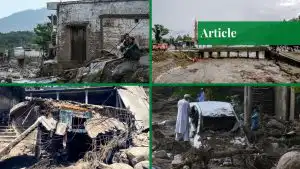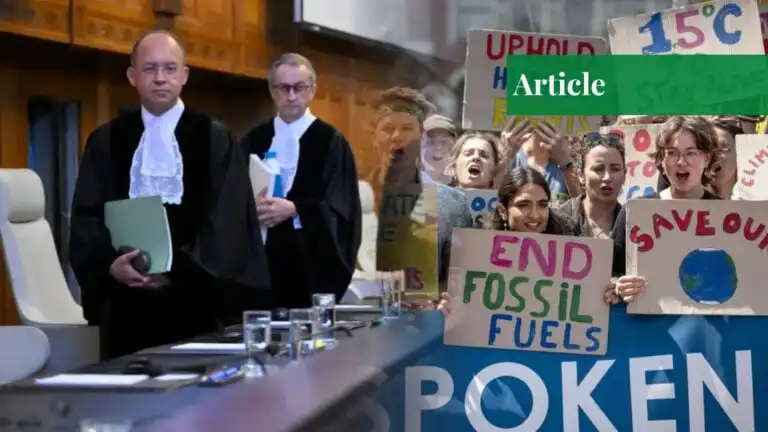
Pakistan is considered one of the world’s climate-vulnerable states. In recent years, from the 2002 floods to recent extreme rainfall events, the country has suffered unbearable human and financial damages, but has witnessed negligible repercussions from the world’s largest emitters, such as the USA, China, and India. The International Court of Justice’s advisory opinion could serve as the voice for vulnerable states and advocate for climate justice.
The advisory opinion on the “ Obligations of States in Respect of Climate Change” delivered by the International Court of Justice following the appeal of the United Nations General Assembly on 23 July 2025 offers significant direction on global climate responsibilities. The main discussion revolves around the state’s legal responsibilities to protect the global climate and the repercussions in case of substantial climate damage. ICJ recognised climate change as an existential threat, not just an environmental issue. This opinion can be a legal foundation for vulnerable states like Pakistan to achieve effective climate justice. Climate-vulnerable states face drastic floods and cyclones while emitting negligible greenhouse gas emissions. In contrast, industrialized states enjoy the advantages of prosperity and higher emissions. The advisory opinion could be leveraged by vulnerable states to hold the largest Global emitters accountable and to seek compensation for climate-related damages.
From Student Activism to the ICJ
The initiative began with a campaign of university students from the South Pacific, who argued that climate change should be considered a human rights violation. They appealed to Pacific Island officials to bring this issue to the ICJ, as the Pacific Islands emit only 1% of global greenhouse gas emissions but are considered among the world’s most climate-vulnerable states. Their campaign gained acknowledgment in 2022 from Vanuatu, an island nation in the South Pacific Ocean. Vanuatu directed the Pacific Islands Forum, emphasizing climate equity as a matter of existential significance. The campaign was later brought before the United Nations and received substantial support. In March 2023, the UNGA adopted Resolution 77/276, supported by 130 states, with 91 written submissions and oral statements submitted by 96 states, including many climate-vulnerable states.
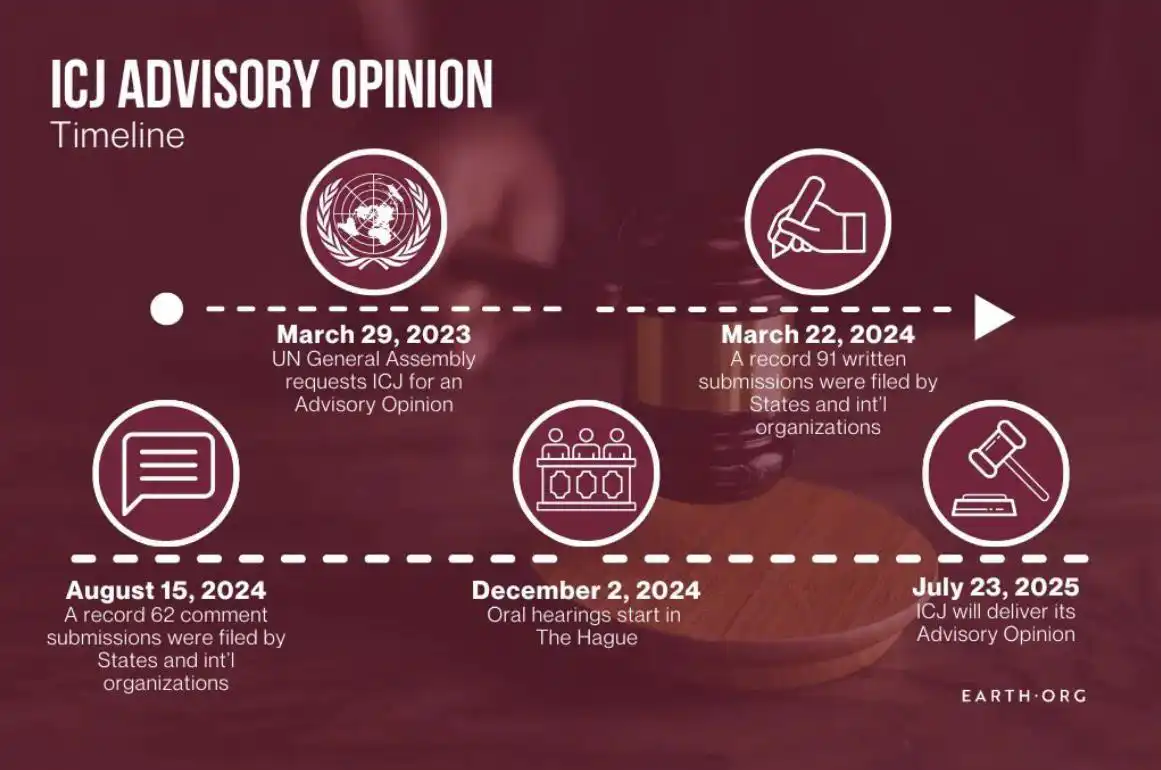
“Timeline of the International Court of Justice (ICJ) Advisory Opinion on Climate Change” by Martina Igini/Earth.Org, licensed under CC BY-ND 4.0.
The Divide Between Emitters and the Vulnerable
This campaign elicited mixed views from global emitters and climate-vulnerable states. The USA, accountable for 20% of historical carbon emissions, dismissed legally binding climate obligations and asserted that voluntary agreements such as the Paris Agreement (which the USA withdrew in 2020 and rejoined recently in 2021 ) are enough.
Besides the USA, other industrialized states such as China, Saudi Arabia, and Australia also adopted a comparable perspective in dismissing legal accountability. This constitutes environmental injustice for vulnerable states like Vanuatu and Pakistan, which emit less and face more climate change.
On the other hand, the major emitters, including the US, China, Russia, Brazil, and the European Union, contribute 70% of greenhouse gas emissions without being legally accountable. The climate-vulnerable states appealed to the ICJ, arguing that states’ climate responsibilities must take precedence over treaties and that the global high emitters must be held accountable and compensated for the climate-related damages
States’ Obligations for Climate Action in International Law.
Key findings from the ICJ’s advisory opinion are :
- The state obligations in respect to climate change encompass not only treaties, including the UNFCCC and the Paris Agreement, but also other sources of International law, such as customary international law, human rights law, and the UN Convention on the Law of the Sea.
- The court concluded that everyone has a fundamental right to a clean, safe, and resilient environment. States are required to take precautions and preventative steps against potential harm.
- The Court underlined the 1.5°C temperature limit as the primary standard, emphasizing that even small temperature increases exacerbate dangers.
- Although greenhouse gas emissions cannot be considered fundamentally illegal themselves but failing to control fossil fuel extraction, subsidies, or emissions from private entities may constitute wrongful conduct for which the state can be held accountable.
- States have to perform mitigation and adaptation in accordance with the best available research. Developed countries have an additional obligation to help developing states.
- Any state can be held responsible for climate-related violations, including negligence in regulation can be seen as globally unlawful conduct, and the repercussions may involve future safeguards, restoration of rights, and financial reparations.
Pakistan Paying for Global Climate Change
It is not wrong to say that Pakistan suffers from the consequences of global greenhouse gas emissions. According to the Global Climate Risk Index, Pakistan is the eighth most susceptible nation in terms of climate change. While the 2022 floods forced 33 million people to flee their homes, the 2025 monsoon has already devastated thousands of homes and claimed almost 800 lives. This harsh reality demonstrates that those least responsible for climate change are paying the highest price, positioning Pakistan as a leading example in the fight for climate justice.
Pakistan: From Climate Victim to Climate Advocate
Pakistan is making a concerted effort to secure funding for climate-related damage, and exerts pressure on prosperous states to increase their assistance to nations experiencing the most severe effects of climate change. In recent years, Pakistan has been advocating for climate justice. The country aims to generate 60% of its energy from renewable sources by 2030 and is implementing the “Ten Billion Tree Tsunami” initiative to grow billions of trees. The 2021 National Climate Change Policy directs these measures, emphasizing adaptation, mitigation, and enduring resilience. Pakistan engaged in the ICJ advisory opinion process, providing detailed written and oral submissions to advocate for climate equity. The Government of Pakistan announced on July 24, 2025, that an advisory opinion.
“underscores the urgent global challenge posed by climate change and reaffirms critical legal obligations under international law.”
Throughout the ICJ advisory opinion proceedings, Pakistan argued that climate change constitutes a human rights violation. This position supports Pakistan’s call for financial and other relief from the world’s largest polluters. Pakistan can no longer be seen as a victim of devastation; it is increasingly recognised as a prominent advocate of effective climate justice.
Shaping the Future of International Climate Accountability
The ICJ’s advisory judgment indicates a potential development in global climate policy by establishing state climate commitments as legally binding international law. This opinion can be seen as a legal win for climate-vulnerable states and small islands because their perspective has been recognised. Climate experts like Danilo Garrido from the Greenpeace environmental organisation asserted that this is a new beginning for International climate obligations. In the future, this advisory opinion can impact international and domestic resolutions and treaties under the United Nations.
Conclusion of the ICJ Advisory Opinion
For vulnerable states like Pakistan, the ICJ advisory opinion could be considered a cornerstone of climate justice. Even though it is not legally enforceable, it possesses moral and legal weight to hold global emitters accountable under broader International law (including other sources of International law) and provides climate-vulnerable states leverage in International climate governance by promoting their perspective. This may mark a transformative moment in the development of international law, encompassing issues of justice, duty, and global accountability.
If you want to submit your articles and/or research papers, please visit the Submissions page.
To stay updated with the latest jobs, CSS news, internships, scholarships, and current affairs articles, join our Community Forum!
The views and opinions expressed in this article/paper are the author’s own and do not necessarily reflect the editorial position of Paradigm Shift.

Maryam Iftikhar completed her degree in International Relations at Kinnaird College for Women University, Lahore and is passionate about global politics, international law, and climate justice.