The International Monetary Fund (IMF) was established in 1944, as the result of the Bretton Woods Conference, to facilitate member countries facing foreign exchange problems by providing them loans to do business with other countries. Several IMF policies have been drafted for the State of Pakistan as well.
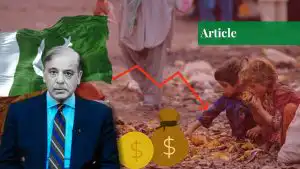
Pakistan has knocked on the IMF’s door 23 times in 75 years. In 1958 Pakistan went to the IMF for the first time for a bailout, of $25 million, which was not withdrawn. Interestingly, the biggest amount, $4.93 billion, was withdrawn in 2008 under the Gilani Government and the second largest sum was withdrawn by the Pakistan Muslim League-N (PMLN) Government between 2013 and 2016, of $4.39 billion. Now, Islamabad is seeking another $6 billion loan program from the IMF despite knowing that the external debt of Pakistan has crossed $130 billion.
We are going to the IMF repeatedly because we are trapped in a vicious cycle of debt that refuses to let the economy grow.
Pakistan is entangled due to the IMF and its situational policies. Structural ones would have been better suited in this circumstance. One needs to comprehend the economic cycle to understand how IMF policies further push us into debt.
The Economic Cycle
Economies go through four phases known as the business cycle: boom, peak, recession, and slum. The governments make decisions according to these phases to regulate the economy using fiscal and monetary policies because both, sudden booms and recessions, are devastating and destabilizing for the economy. The governments take expansionary and contractionary policies to deal with the problems of the balance of pavement, inflation, unemployment, and economic growth which are caused because of the above-mentioned phases.
Expansionary policies are taken when the economies are in recession—to avoid the slum phase in which governments increase their spending, decrease taxes, and decrease interest rates which creates employment and investment that leads to economic growth.
On the other hand, contractionary policies are undertaken when the economies are at a boom to avoid the peak in which governments decrease their spending, increase taxes, and increase interest rates, which in turn creates unemployment and decreases investment; leading to low economic growth.
Economic Stability—Real or Just an Illusion?
The aforementioned policies are used to restabilize the economies, as any sudden disruption, whether positive or negative, can throw them off balance.
If we observe the economic condition of Pakistan, it is quite concerning as private consumption expenditure was reported at $282.737 billion in December of 2023. This statistic shows a decrease from the $323.234 billion of December 2022. Private consumption takes up 79.9 % of GDP which indicates that it plays a crucial role in the economic growth of the country. This means that people are demanding less, and production is decreasing in Pakistan.
The unemployment rate is another indicator to observe the economic condition of the country which reached a worrying 8.5 % in 2023 from 6.3 % in 2021. The number of unemployed people went from 4.1 million in 2021 to 5.6 million in 2023 in the labor market.
All these numbers and indicators disclose that the economy of Pakistan is in recession and moving towards the slum phase. To avoid this very outcome, the Pakistani Government needs expansionary policies such as increasing government spending and decreasing tax and interest rates to increase the aggregate demand, investments, and employment in the market.
In contrast, the IMF is demanding to impose an additional tax of around $1.3 trillion in the upcoming fiscal year and instructing the nation to broaden its tax base by imposing more on salaried and non-salaried individuals. This will decrease the disposable income of the individuals and the consumption expenditure leading to a decrease in the aggregate demand that will further lower the economic growth of Pakistan.
Moreover, the IMF requires curtailing subsidies which will reduce government spending and lower the aggregate demand further squeezing the economic maturation of the country. Despite this, the IMF is also seeking a hike in interest rates from 19.5% to 20% and it is not an insignificant increase. Investments have an inverse relation with interest rates so, a hike in interest rates will halt the investments which will negatively hit the production cycle.
Investments are the second most important key component of GDP and already investment-to-GDP ratio of Pakistan is the lowest amongst the regional countries. A hike in interest rates will further curb the investments which in return will slim down the economic development and create unemployment.
This illustrates that the IMF is demanding contractionary policies when the need of the time is expansionary policies as Pakistan needs immense investments and government spending. These would be necessary to boost its aggregate demand to stimulate production and generate employment and investment in the market, eventually shouldering less economic growth than the previous year.
It is quite concerning that despite all of this we are going for the 24th IMF program and ready to adhere to IMF policies which may as well lead the country into dearth. The government should consider the state’s financial condition before making any decision as this will further push it into the entrapment of debt.
If you want to submit your articles and/or research papers, please check the Submissions page.
The views and opinions expressed in this article/paper are the author’s own and do not necessarily reflect the editorial position of Paradigm Shift.

M. Ahmed is a dedicated article writer currently pursuing his studies at the National Defence University (NDU), Islamabad, Pakistan. With a passion for writing and a keen eye for detail, he has an interest in a variety of topics, including politics, policy, economics, culture, and Islam.