Islamabad, March 28: Pakistan’s power sector needs an integrated energy plan that goes beyond short-term fixes and adopts a categorical approach to independent power producers (IPPs), ensuring that renegotiations are strategic, inclusive, transparent, and tailored. Additionally, the revision of IPP contracts must include a thorough examination of tariff structures. Besides, it must balance affordability, availability, and investor confidence while addressing governance inefficiencies for long-term energy security and competitiveness.
This was discussed during a webinar on “Reforming IPP Contracts: Reducing Tariffs and Circular Debt,” held at the Institute of Policy Studies (IPS), Islamabad. The session, chaired by Mirza Hamid Hassan, former federal secretary of the Ministry of Water and Power, was addressed by Khalid Rahman, chairman of IPS; Imtiaz Hussain Baloch, the DG of licensing at NEPRA; Ahad Nazir, research fellow at SDPI; AbuBakar Ismail, member of FPCCI, SDG Committee; Asad Mahmood, sustainability expert; and Dr. Athar Mansoor, public policy expert.

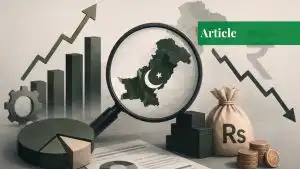
Highlighting the availability-affordability paradox, Ahad Nazir noted that efforts to ensure power availability have driven up tariffs, making exports uncompetitive. Circular debt has ballooned to Rs. 2.7 trillion, primarily due to capacity payments and dollar indexation rather than contract structures alone. He warned that while the termination of some IPP contracts in October 2024 may have a minimal impact on investor confidence, broader contract renegotiations must be transparent and predictable to avoid discouraging investment.
Building on this, Imtiaz Baloch pointed out that Pakistan’s power sector problems stem from governance failures and an imbalanced energy mix. He stressed that tariff patterns must be thoroughly examined, particularly on the distribution side. Distribution companies require significant investment in infrastructure, governance, and technology to enhance efficiency and reduce losses. Indigenous fuel sources should also be prioritized to reduce dependency on costly imports, enhancing energy security and cost-effectiveness, he said.
Endorsing this, AbuBakar Ismail stated that a technical review of tariff structures and profit margins is crucial for fair pricing and industry competitiveness. As electricity is the backbone of industrial growth, unchecked energy costs hurt Pakistan’s export potential. He noted that firefighting measures will not resolve the crisis; instead, a structured distributed resource strategy must be developed to create resilience in the power sector.
Asad Mahmood pointed out that a key issue is the capacity trap, with capacity payments surging from Rs. 3 per unit in 2016 to Rs. 18 per unit in 2025, driven by currency depreciation and poor policy decisions. He cautioned that competitiveness must guide the power model, ensuring that efficiency rather than external pressures drive governance and planning.
Adding to this, Athar Mansoor noted that previous policymaking has suffered from knee-jerk reactions, corruption, and a lack of stakeholder engagement. A transparent, inclusive approach is essential to safeguard past investments while implementing reforms. He called for strategic, time-bound IPP contract revisions to prevent uncertainty and investor distrust, prioritizing relief for consumers and industries.
In this regard, Mirza Hamid emphasized that instead of isolated relief measures, reforms should be holistic, incorporating policy consistency, investment in distribution infrastructure, and a diversified fuel mix with an investment-friendly power model and greater reliance on indigenous energy sources.
In his concluding remarks, Khalid Rahman stressed the need for a categorical approach to IPP renegotiations rather than a blanket strategy. Each contract should be evaluated on its merits, ensuring fairness to both investors and consumers. He added that the process should be time-bound, concluding with a clear roadmap rather than an unending cycle of uncertainty.
If you want to submit your articles and/or research papers, please visit the Submissions page.
To stay updated with the latest jobs, CSS news, internships, scholarships, and current affairs articles, join our Community Forum!
The views and opinions expressed in this article/paper are the author’s own and do not necessarily reflect the editorial position of Paradigm Shift.

The Institute of Policy Studies (IPS) is an autonomous, not-for-profit civil society organization dedicated to promoting policy-oriented research, dialogue, and human & technological development for better governance. IPS provides a forum for informed discussion and dialogue on national and international issues. The contributions spanning over forty-three years and the overall impact signifies the importance of pragmatic research on policy issues. The institute highlights the role of think tanks in modern democratic polities.