
The cleverest businessmen in weak economies rarely bet on markets alone. They bet on permanence. Markets are volatile creatures. Consumers change tastes. Technologies become obsolete. Competitors emerge suddenly. Exchange rates collapse. Credit tightens. Governments fall. Entire sectors disappear with frightening speed. In orthodox capitalism, businessmen survive these storms by innovating faster than rivals, lowering costs more efficiently, or producing superior goods. Their fortunes rise and fall according to the brutal discipline of competition. But in fragile states, another calculation often proves more profitable than market efficiency itself: proximity to power.
In efficient economies, capital tends to flow toward productivity. In fragile economies, it flows toward proximity. That is why the most sophisticated businessmen in weak institutional environments rarely behave like pure market capitalists. They behave more like political cartographers, carefully mapping the permanent arteries of influence through which opportunity, protection, and access circulate. The smart money in such systems does not behave like disciplined Wall Street capital fully exposed to competitive volatility. It behaves more like a politically insulated capital operating inside a protected bullish corridor where procurement access, regulatory flexibility, and state legitimacy quietly substitute for ordinary market risk.
Who is Muhammed Jah?
Muhammed Jah’s commercial ascent from the obscure world of dial-up internet provision to the commanding heights of telecommunications, broadcasting, procurement, and banking demonstrates this with almost mathematical precision. Jah’s transformation from the proprietor of QuantumNet, one of The Gambia’s earliest private internet providers, into the owner of QCell, QTV, QRadio, AGIB Bank, Espace Motors, QCity, QMoney, Samsung Gambia, Naturelle, and a wider commercial network is, therefore, more than a corporate success story. It is an illustration of how weak institutions, discretionary regulation, and political intimacy can accelerate the concentration of private capital in small African states.
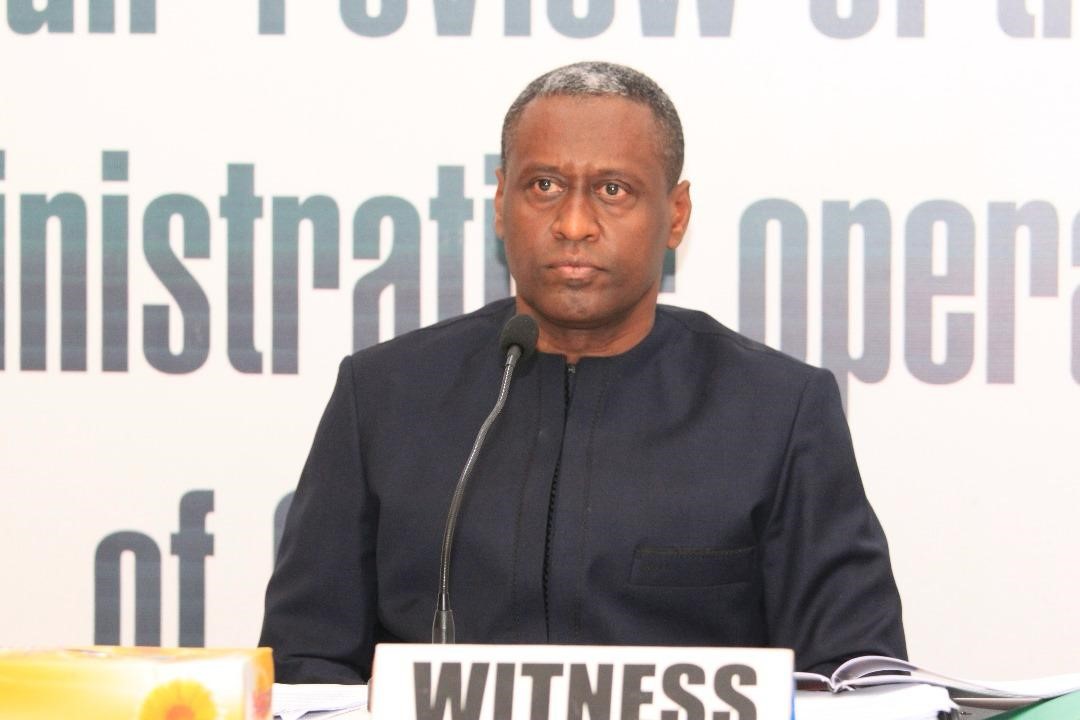
To his admirers, Jah is a patriotic entrepreneur who rose from humble beginnings to become one of the country’s most recognizable investors. To his critics, however, he represents something far more troubling: the emergence of a politically connected oligarchic class that prospers not merely through innovation but through strategic proximity to successive governments. In financial language, critics would argue that Jah mastered not merely the science of investment but the darker art of political arbitrage, where access itself becomes a tradable commodity more valuable than productivity.
The issue, therefore, is not whether Muhammed Jah is intelligent, hardworking, or commercially ambitious. He clearly is. The issue is whether the Gambian economic system has become structured in such a way that one businessman repeatedly enjoys regulatory flexibility, procurement access, symbolic presidential endorsement, and financial accommodation unavailable to ordinary investors. In mature economies, such patterns would trigger antitrust scrutiny, parliamentary hearings, and aggressive media investigation. In weaker economies, however, the market often behaves less like a competitive exchange floor and more like a closed political trading ring where insiders accumulate privileged leverage while outsiders remain trapped outside the corridors of influence.
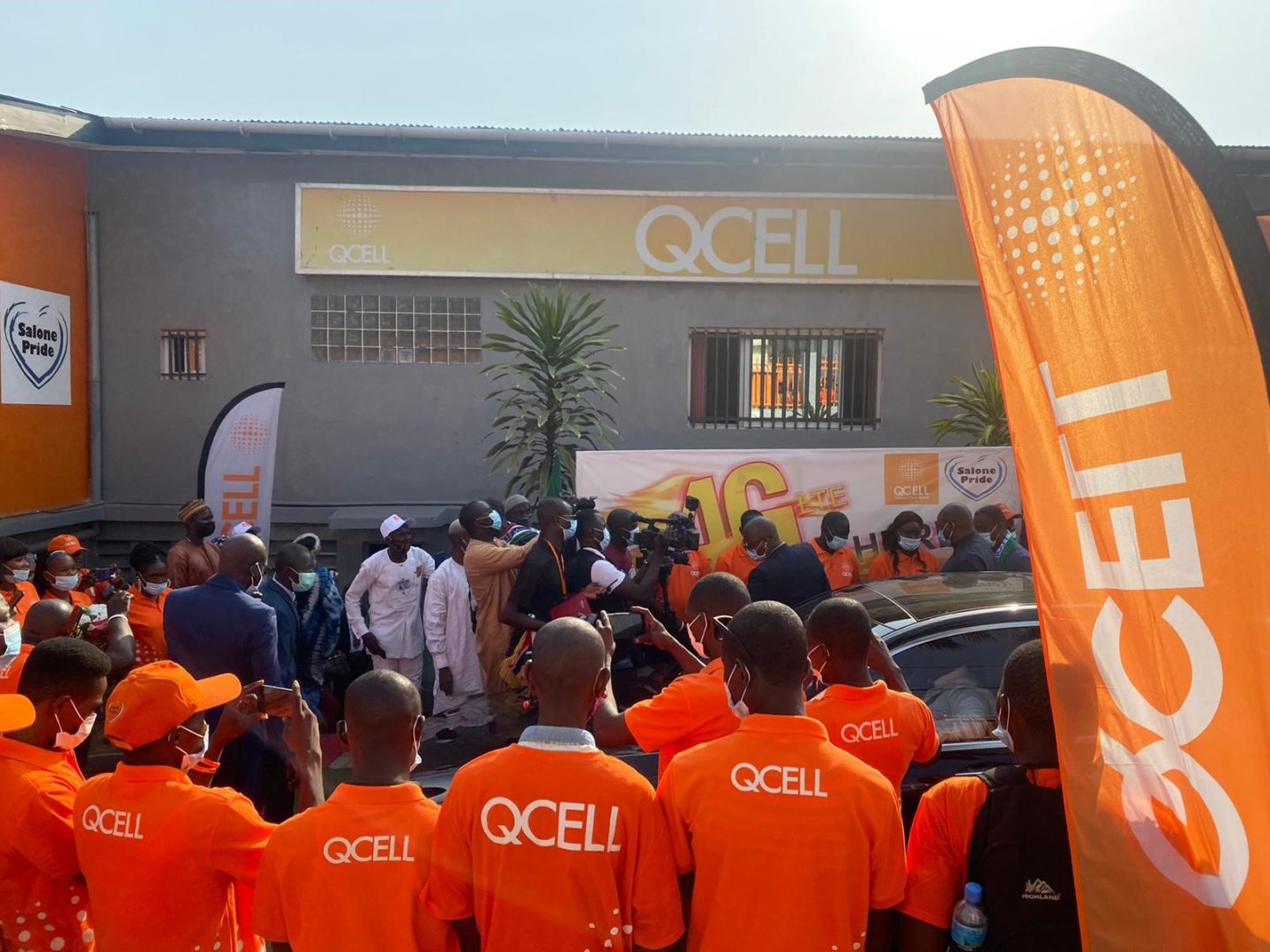
Indeed, the mechanics of Jah’s rise follow a familiar pattern found across many frontier economies. First comes entry into a strategic sector with high barriers to entry and regulatory dependence. Then comes the first-mover advantage. QCell’s acquisition of the country’s first 3G license in 2009 provided precisely that: spectrum priority, network expansion leverage, and long-term customer entrenchment inside a market where infrastructure scale compounds over time. Economists describe this process as cumulative advantage. Once embedded, dominant firms begin benefiting from network externalities that smaller competitors struggle to overcome, regardless of formal liberalization.
QuantumNet placed Jah inside the early infrastructure of The Gambia’s internet economy. QCell inserted him into telecommunications, the tollbooth sector of the modern African economy, where infrastructure scale compounds into long-term leverage. QTV and QRadio extended his influence into the narrative economy, where visibility itself becomes power. AGIB Bank widened liquidity access and financial reach. QMoney expanded the conglomerate into transactional finance and mobile payments. Espace Motors inserted the network directly into procurement and state supply chains. QCity transformed commercial expansion into a public spectacle and symbolic urban prestige. Samsung Gambia widened the conglomerate’s footprint into consumer electronics, while Naturelle added another layer of market penetration into everyday commercial consumption.
Viewed separately, these appear to be ordinary acts of diversification. Viewed together, they resemble something more sophisticated: the construction of a permanence portfolio, almost like a sprawling frontier market corporate index fund embedded deep inside multiple strategic arteries of the state itself.

In mature capitalist systems, political turnover often disrupts entrenched commercial privilege because institutions are stronger than individuals. In weaker systems, commercially agile elites survive because their real investment is not in any one government but in the permanence of the state apparatus itself. They do not merely invest in markets. They invest in continuity, influence, and regulatory shelter. That is why in fragile economies, certain conglomerates remain permanently bullish regardless of who occupies the State House while the wider economy swings violently between stagnation, inflationary anxiety, and fragile recovery.
The consequence is a peculiar form of capitalism in which markets remain formally open while meaningful advantage accumulates around those already embedded near power. Smaller entrepreneurs compete for customers. Larger conglomerates compete for strategic relevance to the state. Over time, the second game becomes infinitely more profitable than the first. The invisible hand of the market gradually gives way to the visible handshake of political intimacy.
Regime Proximity from Jammeh to Barrow
Any serious evaluation of Jah’s business rise must be set against the institutional character of the Jammeh state. The Gambian government’s white paper on the Truth, Reconciliation and Reparations Commission describes Jammeh’s 22-year rule as one marked by extrajudicial killings, torture, disappearances, and a generalized climate of fear, while Human Rights Watch summarized the commission’s hearings as linking Jammeh to numerous grave crimes. Transparency International’s anti-corruption overview, drawing on Janneh Commission and OCCRP material, characterizes Jammeh’s system as one of patronage and grand corruption.
Within that authoritarian setting, Jah’s relationship with Jammeh was not hidden or merely transactional at arm’s length. It was publicly demonstrative. In June 2013, Jah donated two new Mercedes-Benz vehicles to Jammeh at the State House. At the same ceremony, senior ministerial officials publicly stated that Jah frequently introduced new products to the president first and that he openly credited his own rise to the empowerment and support he had received from Jammeh. For political economists, this is classic state-business reciprocity: symbolic loyalty from a business elite member exchanged for reputational access and easier navigation of a discretionary state.
This does not automatically prove illegality. But it demonstrates embeddedness rather than neutrality. In financial terms, it resembles the creation of a premium access position where political trust quietly lowers transaction friction while competitors remain exposed to harsher institutional weather.
Broader investigative work on the Jammeh era helps explain why this matters. OCCRP found that Jammeh’s political and business network enabled favored actors to bypass tender procedures and draw on state resources, while Transparency International’s review cites evidence of massive financial misappropriation through patronage networks and state institutions. I did not identify accessible high-confidence evidence placing Jah among the central figures accused of looting the state. But the institutional ecology in which he operated was unmistakably one where public loyalty to the ruler increased the probability of access to rents, preferential treatment, and reduced administrative friction.
After the democratic transition of 2017, the pattern did not disappear. It adapted.

On November 30, 2017, President Barrow officially inaugurated QCity and publicly congratulated Jah and his group, describing the project as aligned with the government’s development agenda and emphasizing partnership with the private sector. Contemporary reporting from the same event identified the launch of QTV as part of the ceremony. The implication is not merely that Jah survived regime change. It is that he rapidly re-legitimized himself within the new political dispensation.
Like a seasoned hedge fund repositioning its portfolio after a geopolitical shock, the Jah conglomerate demonstrated remarkable resilience by recalibrating itself to a new governing coalition without losing strategic momentum.
That state proximity continued in sectoral regulation and public procurement. PURA later announced that it had endorsed the deployment of 5G by QCell following consultations and testing. In isolation, that is a normal regulatory act. But when read together with earlier first-mover advantages, ceremonial patronage, and later procurement wins, it contributes to the image of a conglomerate repeatedly positioned at the frontier of strategic commercial opportunities where state discretion matters enormously.
The clearest Barrow-era procurement example emerged during the 2024 Organization of Islamic Cooperation summit vehicle purchase. The government purchased 89 vehicles from Espace Motors under supplier pre-financing arrangements because conventional financing reportedly proved unavailable under the existing timelines. Such arrangements are not automatically corrupt. Yet from a political-economy perspective, they illustrate how liquidity strength, banking relationships, and political confidence can transform procurement itself into a high-entry-threshold ecosystem accessible mainly to deeply embedded firms.
The 2025 Kanifing Municipal Council truck deal reinforced similar concerns. Jah explained that financing structures involved Musharaka arrangements linking Espace Motors, Quantum Net, and AGIB Bank. In advanced financial systems, regulators closely monitor such vertically integrated ecosystems because they concentrate procurement, financing, and commercial exposure within a single corporate orbit. The concern, therefore, is not necessarily criminality. The concern is systemic concentration and the gradual fusion of political confidence with private capital accumulation.
Market Structure, Concentration, and Embedded Advantage
The strongest critique of Jah is not that he already owns a literal monopoly in telecommunications or media. The available data does not fully support that claim. The more precise diagnosis is cumulative market power through cross-sector concentration combined with privileged state access. That distinction matters enormously.
Muhammed Jah today controls or is publicly associated with business interests spanning telecommunications through QCell, banking through AGIB Bank, broadcasting through QTV and QRadio, mobile finance through QMoney, ICT education through QuantumNET Institute of Technology, hospitality and leisure through QCity, automobile procurement through Espace Motors, bottled water through Naturelle, consumer electronics through Samsung Gambia, and telecommunications expansion into Sierra Leone.

Ordinarily, Wall Street would celebrate such diversification as evidence of sophisticated entrepreneurial intelligence. Diversified conglomerates spread risk, stabilize cash flow, and create durable liquidity ecosystems. In theory, Jah’s rise could therefore be interpreted as the textbook story of a bullish frontier-market investor correctly positioning himself ahead of competitors in sectors tied to the future of the Gambian economy.
But political economy demands looking beyond surface-level success narratives.
Since the early 2000s, several once-prominent Gambian business houses have either declined, stagnated, or lost strategic relevance. Jimpex Trading, associated with Hatib Janneh, once occupied a major commercial position within the country’s trading economy. Gacem, linked to Amadou Samba, similarly carried substantial economic weight. Unique Solutions, associated with Papa Yusupha Njie, also emerged as a recognizable force within Gambian commercial life.
Yet, while many of these firms gradually contracted, stagnated, or disappeared from prominence, the Jah business orbit continued expanding aggressively across sector after sector. That divergence cannot simply be explained through superior managerial competence alone. Markets in fragile states rarely operate according to pure meritocratic logic. Businesses frequently rise or fall not merely to efficiency or innovation, but according to access to financing, procurement visibility, licensing structures, political legitimacy, regulatory patience, and institutional confidence.
In frontier economies, the real commodity is often not capital itself but embedded access.
A businessman operating within the trusted orbit of the state enjoys invisible advantages rarely visible on formal balance sheets: softer regulatory treatment, stronger financing confidence, procurement familiarity, faster approvals, and reduced exposure to bureaucratic hostility. Over time, those advantages compound exactly like long-term financial interest. Small preferential advantages today become massive structural asymmetries tomorrow.
This is how embedded capitalism reproduces itself.
The concern, therefore, is not merely that one businessman became wealthy. Every capitalist system produces winners. The deeper concern is whether the Gambian economy gradually evolved into a politically mediated marketplace where the same recurring corporate actors remain permanently bullish because they operate within the gravitational center of state confidence itself.
A conglomerate spanning telecommunications, banking, procurement, media, and mobile finance can wield influence extending far beyond ordinary market share because it creates opportunities for cross-subsidization, political brokerage, reputational leverage, and strategic bargaining power across multiple state-linked sectors simultaneously.
The broader institutional backdrop reinforces these concerns. World Bank assessments repeatedly describe The Gambia as suffering from weak procurement transparency, limited competition, financial constraints, and regulatory vulnerability to political influence. Under such conditions, markets cease operating as neutral competitive arenas and instead drift toward allocative distortion, where capital flows increasingly toward politically legible firms rather than purely productive ones.
Policy Implications and Open Questions
The right reform agenda is not anti-Jah. It is anti-exclusive embeddedness. The Gambian government should welcome domestic investors, but it should stop structuring the market so that one politically legible conglomerate repeatedly appears at the center of frontier licenses, public-facing development ceremonies, and bespoke financing arrangements.
The solution is to create many investable domestic firms, not one recurring insider. That requires multiple reforms.
First, publish full beneficial ownership records, license terms, and historical share transfers for telecom, media, finance, and major public suppliers. Without ownership transparency, the state cannot properly police concentration or related-party influence. In modern financial systems, opacity itself becomes a hidden asset class because concealed ownership structures often shield the true architecture of leverage and influence.
Second, procurement must move toward genuine e-procurement systems with published tender documents, evaluation scores, financing terms, and justifications for emergency awards. Transparent procurement lowers information asymmetry and reduces the corruption premium built into politically embedded contracting systems.
Third, PURA’s de facto independence must be strengthened. Regulatory agencies should function less like political extensions of the executive branch and more like independent institutions protecting market credibility. Once regulators are perceived as politically penetrable, investors begin pricing political risk into every transaction.
Fourth, stronger prudential safeguards are required where supplier financing, public contracts, and affiliated banking intersect. In advanced financial systems, regulators aggressively monitor such interconnected structures because they can create hidden contagion effects and concentrated systemic exposure.
Fifth, media cross-ownership rules deserve serious attention. Telecommunications conglomerates with expanding influence across television, radio, and finance can accumulate enormous soft power without formally controlling entire markets. Narrative influence itself has become a strategic economic asset.
The critical opinion, therefore, is not that Muhammed Jah should be criminalized absent judicial findings. The evidence reviewed does not justify prosecutorial conclusions. The stronger case is institutional rather than criminal. It is a critique of a political economy that repeatedly lowers transaction costs for politically embedded firms while leaving ordinary entrepreneurs exposed to a harsher and more uncertain commercial climate.
Conclusion
The solution is not to destroy Muhammed Jah’s businesses. Nor is it to demonize domestic investors. Developing economies desperately need indigenous capital formation, local investors, technological expansion, and commercially ambitious entrepreneurs willing to deploy capital in risky frontier markets.
The real solution is to create conditions where hundreds of Gambian entrepreneurs can rise under transparent and competitive rules rather than selective political confidence. The country does not need one permanently bullish conglomerate dominating multiple strategic sectors while smaller firms remain trapped in structurally bearish conditions with limited access to finance, licenses, or state visibility.
Healthy capitalism requires the circulation of opportunity.
It requires independent regulators, transparent procurement systems, predictable taxation, open tendering, and financial institutions willing to support new entrants rather than merely reinforcing already entrenched conglomerates. In functioning market economies, capital should flow primarily toward productivity, innovation, and efficiency, not toward political intimacy and embedded access.
Otherwise, The Gambia risks evolving into a narrow oligarchic marketplace where economic concentration hardens around a small class of politically adaptive insiders whose dominance becomes self-reinforcing across generations.
At that point, markets cease functioning as engines of broad national prosperity and instead become mechanisms for preserving embedded privilege.
And that is why the Muhammed Jah story matters far beyond one businessman. It is ultimately a mirror reflecting the unresolved struggle between open-market capitalism and politically mediated accumulation inside the Gambian republic itself.
In a nutshell, the central question is no longer merely about Muhammed Jah himself. The larger question is what kind of capitalist order The Gambia intends to build in the coming decades. Will the country construct a genuinely open market economy where opportunity, licensing, procurement, financing, and commercial expansion are broadly distributed through transparent and competitive rules?
Or will it continue drifting toward a politically embedded economic order where proximity to power quietly determines who rises, who receives strategic licenses, who wins state contracts, who accesses liquidity, and who controls large sections of the national narrative economy?
That is the real question confronting the republic today.
If you want to submit your articles and/or research papers, please visit the Submissions page.
To stay updated with the latest jobs, CSS news, internships, scholarships, and current affairs articles, join our Community Forum!
The views and opinions expressed in this article/paper are the author’s own and do not necessarily reflect the editorial position of Paradigm Shift.

Kebeli Demba Nyima is a Gambian scholar and political commentator based in Atlanta, Georgia, USA. He is a legal and national security analyst whose work focuses on governance, rule of law, and democratic accountability in The Gambia. He holds several advanced academic degrees, including a Master’s in Intelligence and National Security Studies. His research and writing focus on governance, and his writings have been published in several media outlets, where he engages critically with public policy, security issues, and political developments.