


The nuclear strategy of Pakistan has been deeply shaped by its history with India, marked by decades of rivalry, wars and enduring mistrust. Since 1947, both nations have remained entangled in territorial disputes, particularly over Kashmir. These persistent tensions and repeated confrontations have kept the region in a constant state of alert. In this volatile environment, Pakistan’s pursuit of nuclear capability has not been an ambition, but a necessity to ensure sovereignty and deter aggression from a conventionally superior adversary.
The 1971 war, which resulted in the creation of Bangladesh, served as a painful lesson in the limitations of conventional military power. The loss was more than territorial. It was psychological, strategic and deeply consequential. It made clear to Pakistan’s leadership that parity with India through conventional means alone was unsustainable. From that moment on, pursuing a nuclear capability was no longer aspirational; it became essential.
India and Pakistan – The Race to Become Nuclear Powers
India’s 1974 nuclear test further cemented Pakistan’s resolve. Although India framed the test as peaceful, Pakistan viewed it as a direct threat to regional security. Prime Minister Zulfiqar Ali Bhutto famously vowed that Pakistan would acquire nuclear weapons “even if we have to eat grass,” capturing the national sentiment that survival required nuclear parity. That determination culminated in Pakistan’s nuclear tests in May 1998, shortly after India’s, marking a new era of deterrence in South Asia.
At the heart of Pakistan’s nuclear strategy lies the doctrine of Credible Minimum Deterrence, which maintains a sufficient nuclear capability to prevent aggression but avoids an arms race. However, this doctrine has evolved.
Facing new strategic developments like India’s Cold Start Doctrine, which envisions swift and limited strikes, Pakistan adapted by introducing Full-Spectrum Deterrence. This includes tactical nuclear weapons aimed at deterring even small-scale incursions. Such adaptation is evident in Pakistan’s development of systems like the Nasr missile, which are designed for quick deployment in the event of conflict. Alongside this, efforts to establish second-strike capability through mobile platforms, underground silos, and developing sea-based options signal Pakistan’s commitment to maintaining a survivable deterrent.
Unlike India, which espouses a no-first-use policy, Pakistan reserves the right to use nuclear weapons first if its sovereignty or survival is threatened. This policy is controversial, yet from Pakistan’s perspective, it is essential. Strategic ambiguity over its thresholds keeps adversaries guessing, and thus, cautious.
However, the reliance on nuclear weapons brings significant risks. Tactical nuclear weapons, while designed for battlefield use, lower the threshold for nuclear engagement. A misjudgment, miscommunication, or unauthorised use could lead to catastrophic escalation. This is where the concept of mutually assured destruction (MAD) becomes crucial. MAD, in the South Asian context, has operated as a grim but effective stabiliser. The knowledge that any full-scale war could end in mutual annihilation has kept both countries from crossing the nuclear threshold. This logic played a vital role during crises such as the Balakot airstrikes in 2019. While both nations exchanged limited military responses, the fear of escalation ensured that diplomacy, not missiles, would carry the day. This strategic restraint has, ironically, become a source of fragile peace.
The Pahalgam Attack
The ongoing Pahalgam crisis—a deadly attack in Indian administered Kashmir has kept both nations on high alert. India’s political rhetoric and moves like suspending parts of the Indus Waters Treaty have only intensified regional anxiety. Tensions culminated on the night between 9th and 10th May, when Indian forces launched missile strikes on Pakistani airbases at Noor Khan, Murid and Shorkot. In a swift and proportionate response, Pakistan conducted precision strikes under Operation Bunyan Ul Marsoos (Wall of Lead), targeting and damaging Indian airbases in Jammu, Ambala and Hindon( sites known for their strategic and operational significance). This confrontation has reinforced the relevance of nuclear deterrence in preventing all-out war in a highly volatile environment.
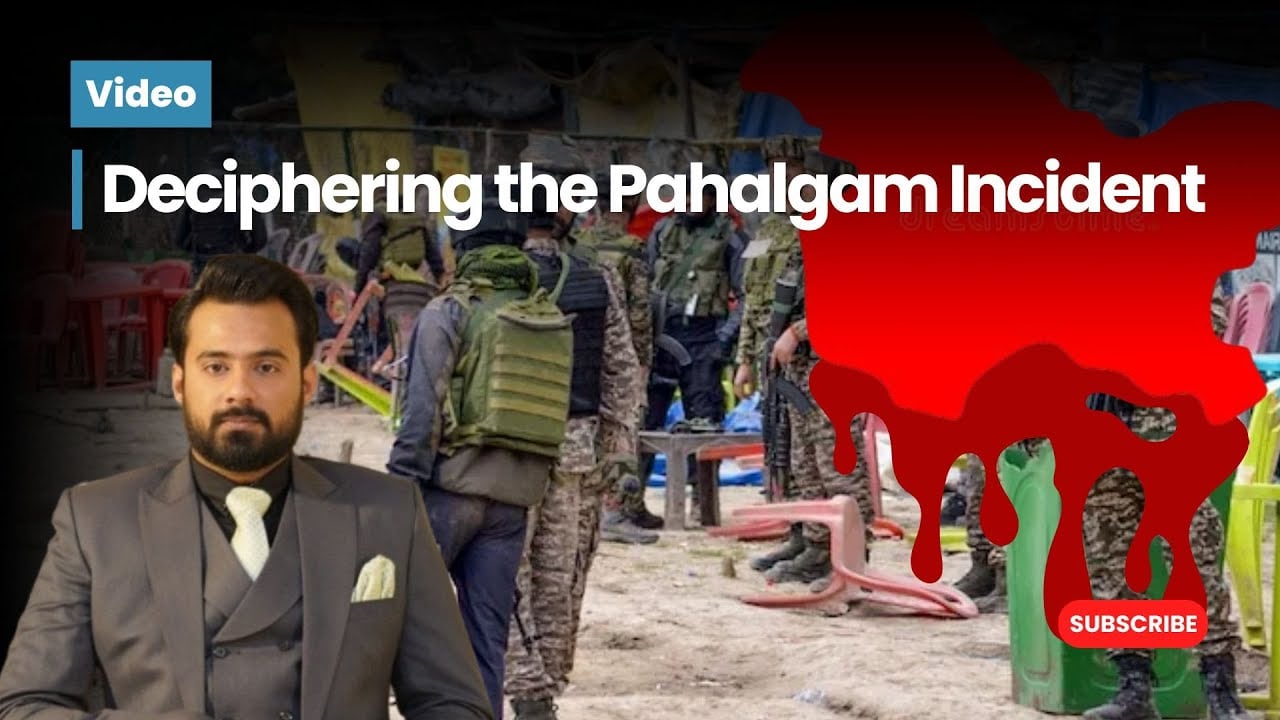
But the risks are real. The integration of tactical nuclear weapons can blur the line between conventional and nuclear conflict. A small spark, especially in a crisis like Pahalgam, could lead to misjudgments with catastrophic consequences. That’s why Pakistan has invested in robust command and control structures, ensuring tight oversight over its arsenal.
International concerns, particularly in the past over nuclear security and unauthorised proliferation, have pushed Pakistan to upgrade its protocols. Stringent safety measures, personnel vetting, and strategic planning have helped build a more reliable system. Yet, global confidence remains a balancing act, requiring transparency without compromising national security.
Economically, sustaining a modern nuclear deterrent isn’t without costs. Amid inflation and budget constraints, prioritising national defence while addressing public welfare is an ongoing challenge. But for Pakistan’s leadership, nuclear capability is viewed not as an option, but as a necessity for sovereignty.
The current security climate, shaped by Pahalgam and broader regional rivalries, illustrates why nuclear deterrence remains central to Pakistan’s strategy. India’s growing defence ties with the U.S. and Pakistan’s deepening coordination with China only add to the strategic chessboard. These alliances raise the stakes and increase the need for clear communication and responsible policymaking.
To manage these tensions, regional powers must invest in crisis management frameworks. Confidence-building measures, nuclear risk reduction centres, and back-channel diplomacy are essential tools. Without them, every confrontation carries the risk of slipping out of control.
In conclusion, Pakistan’s nuclear weapons program, strategy, and nuclear arsenal are grounded in the realities of its historical experience and regional environment. Pakistan has managed to deter conventional and nuclear threats through credible minimum deterrence, tactical deterrence, and second-strike capabilities. Yet, this equilibrium is delicate. Avoiding conflict in a nuclearised South Asia depends not only on military strength but on political will, responsible leadership, and continuous diplomatic engagement.
If you want to submit your articles and/or research papers, please visit the Submissions page.
To stay updated with the latest jobs, CSS news, internships, scholarships, and current affairs articles, join our Community Forum!
The views and opinions expressed in this article/paper are the author’s own and do not necessarily reflect the editorial position of Paradigm Shift.

Mehvish Hussain is a student at Quaid-e-Azam University Islamabad, hailing from Gilgit-Baltistan. Passionate about regional development and education reform she writes on social and educational issues affecting the mountainous region of Pakistan.