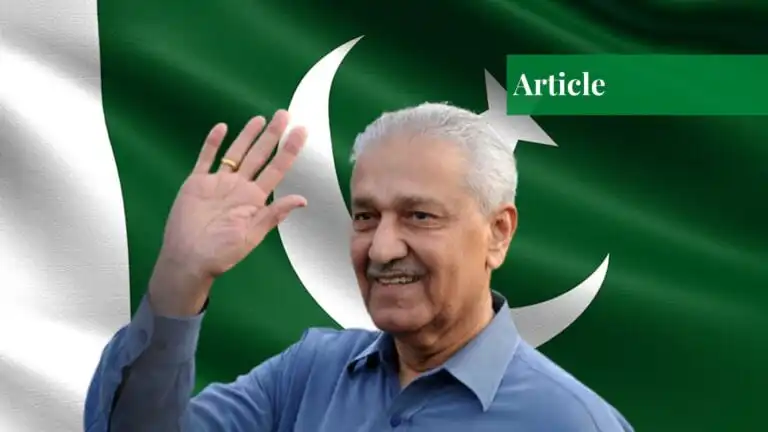
One thing is very clear in the ongoing tensions between Pakistan and India: An extraordinary sense of security is found within the Pakistani people, no matter how strained the situation is. Despite India’s potential threats, such as banning the water supply or threats of military action, the Pakistani people look amazingly comfortable. All thanks to Dr Abdul Qadeer Khan’s groundbreaking hard work, which not only strengthened Pakistan’s military power but also had a profound impact on public thinking. Today, the Pakistani people face external pressure, especially from their great neighbors, with confidence rather than fear, and it is all because of Dr Abdul Qadeer Khan.
From Vulnerability to Strength: The Rise of Pakistan’s Nuclear Confidence
South Asia, which is often destabilized, is the focus of the ongoing enmity between India and Pakistan. Over time, many issues, such as territorial disputes and resource distribution challenges, have further increased tensions between the two countries. Particularly, water rights have become a serious issue, where India has often threatened to stop or reduce water supply to Pakistan, especially after the ongoing tension around the Indus Water Treaty.
In addition, India’s military threats have increased the feeling of insecurity among the Pakistani people. In 1998, when Pakistan successfully conducted its nuclear tests, it was a decisive moment in the country’s history. These experiments were not just a demonstration of military power, but also a testament to Pakistan’s mental strength and determination. Knowing that Pakistan has nuclear weapons is not just a deterrent, but also provides confidence that the country is capable of dealing with any external threat effectively.
Pakistan’s Nuclear Arsenal: A Force to Be Reckoned With
Pakistan’s nuclear weapons are not just a defensive strategy, but an important force that have strengthened the country’s status globally. Pakistan has a modern nuclear arsenal, which includes weapons capable of hitting different distances, and aims to prevent any potential aggression from enemies, especially India.
Pakistan’s main missile systems include Shaheen, Ghauri, and Ababeel, each of which each one has a range of ranges and payload. For example, Shaheen II is capable of hitting the missile up to 2000 km, which gives Pakistan the potential to target India deeply inside. Ababeel missiles have MIRV Technology (multiple independently targetable reentry vehicles), and many warheads. This increased capacity of Pakistan makes strategies more complicated and effective. The thing that makes Pakistan’s nuclear power more effective is its strategic ambiguity.
While many nuclear powers adopt the policy of “no first use,” Pakistan has adopted an unclear policy. This uncertain attitude gives Pakistan’s nuclear power a more deterrent effect, because no one can predict when and how Pakistan will use its nuclear weapons. Pakistan has also made a lot of investment in improving its Command and Control Systems, so that any decision on the use of nuclear weapons can be made completely safe and thoughtfully. This cautious behavior makes Pakistan’s nuclear strategy very strong and stable.
The best example is that on May 7, 2025, India launched airstrikes on urban areas of Pakistan and Azad Kashmir without any provocation, in which 26 innocent civilians were martyred and several mosques were damaged. Pakistan targeted Indian military bases around the Line of Control (LOC) through Babur Cruise missiles in the morning, taking immediate and effective retaliation.
In the next 48 hours, Pakistan shot down five Indian warplanes, including the famous French-manufactured Rafael jets.
Prime Minister Shahbaz Sharif strongly condemned the Indian attack as a war action.
The powerful but responsible response by Pakistan reflects its commitment to peace and sovereignty, which is a strategic power given by Dr Abdul Qadir Khan.
Nuclear Pride and Humor: How Pakistan Embraces its Strength with Wit
Today, Pakistanis proudly see their nuclear power as a symbol of national strength and resilience, and this trust has become deeply ingrained in the country’s culture. An interesting and lightweight expression of protection comes through humor, especially in the form of memes. These memes are not only shared for entertainment, but it is also proof that the people of Pakistan have full confidence in their country’s security.
Using humor as a coping mechanism, especially in the younger generation, reflects that the Pakistani nation has not only accepted its nuclear capabilities but has also made them part of national self-esteem. In many of the memes posted on Instagram or X, Pakistanis mock the rhetoric or military threats coming from India, often exaggerating the situation playfully and sarcastically. For example, India’s aggressive behavior can be exaggerated in a meme, and then, in response to Pakistan’s calm and confident preparations, all this is in the context of the presence of Pakistan’s nuclear weapons. They are often shared with hashtags like #PakistanZindabad #LongLivePakistan or #NuclearPowerState, reinforcing a sense of unity and pride among Pakistanis, particularly the youth.
Humor has become a psychological support in Pakistani society that keeps the people confident, united, and determined despite geographical and political pressure. Dr Abdul Qadeer Khan’s nuclear program not only gave Pakistanis a defensive force but also gave them a deep mental and emotional confidence. It is this confidence that not only enables the country to deal with external threats but also keeps it steadfast in the toughest situations.
Dr Abdul Qadeer Khan: The Unsung Hero
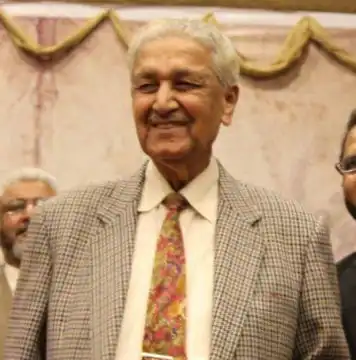
When many people in the world believed that Pakistan could not become a nuclear power, Dr Abdul Qadeer Khan proved them wrong. With limited resources, he worked hard, leading Pakistan’s nuclear programme from the shadows, which was not an easy task. There were many obstacles, but they did not give up. After several years of hard work, Pakistan conducted a nuclear test in 1998. These tests were not just to show power, but to tell the world that Pakistan was no longer a weak country.
Dr Abdul Qadeer Khan’s identity is not just showcased by our nuclear prowess, but rather in the confidence he gave to every Pakistani. Today, when there is tension and uncertainty everywhere in the world, Pakistanis are at peace that their country is safe. Dr Abdul Qadeer Khan is not just the hero of the past, he is a sign of our bright future. His hard work gave us protection, pride, and we will always be grateful to him.
He is not just a scientist, but a true national hero – a person whose services have changed Pakistan’s identity. His work turned Pakistan into a strong defense force. The nuclear power that Dr Abdul Qadeer Khan made, not only strengthened the defense of the country but also changed the thinking of Pakistanis. Now people consider their country more confident and dignified.
This success was not just a military achievement, but it became an important moment of our national dignity. Thanks to Dr Khan’s efforts, Pakistan came to light as a nuclear power and gave a clear message to the world, especially India, that any aggressive action would be met with a vigorous response. His nuclear defense is still an important part of Pakistan’s strategy today, and gives every Pakistani a sense of trust and protection.
If you want to submit your articles and/or research papers, please visit the Submissions page.
To stay updated with the latest jobs, CSS news, internships, scholarships, and current affairs articles, join our Community Forum!
The views and opinions expressed in this article/paper are the author’s own and do not necessarily reflect the editorial position of Paradigm Shift.

Linta Rasool is a passionate scholar committed to continuous learning and academic writing with a focus on , International Relations, Current Affairs, geopolitics, Pakistan Studies and English Literature. Actively engaging in workshops, conferences, and social initiatives, she embraces diverse cultural perspectives while staying attuned to the dynamic global and political landscape.