A very long time ago, an unputdownable post on Facebook caught my eye with a sentiment shared by many: “If you think you’re of no use, think about the U.S. who stayed in Afghanistan for 20 years, spent billions of dollars, and replaced Taliban with Taliban.” This exasperating statement invites us to reassess and reconsider the colossal complexities and outcomes of America’s prolonged involvement in Afghanistan for 20-odd years.
In the initial draft as a response to the 9/11 attacks, the United States, under President George W. Bush, was to undertake a mission to dismantle Al-Qaeda and topple the Taliban regime that sheltered and protected them. This expedition expanded into a long-drawn conflict that spanned two decades, engaging not only American forces but also NATO allies and billions of dollars in resources.
The story of this involvement was evident about controverting terrorism and bringing stability to Afghanistan. Yet, over the years, the reality on the ground developed into a morass of revolt, evolving alliances, connections, and undone promises of post-conflict reconstruction and peacebuilding. 30th August 2021, the withdrawal of US forces marked a day full of chaos and crisis, raising hyper-critical questions about the potency and patrimony of America’s invasion of Afghanistan.
One of the primary criticisms is the significant military and financial support left behind by the Taliban. Reports signal that billions of dollars of military equipment, including aircraft, vehicles, and weapons, were abandoned as American troops left for good. This was nothing but a blessing for the Taliban, who were once considered America’s primary and only enemies of that time, and sparked a fear of increased regional instability and emboldened extremist groups. As the world reflects on America’s longest war, the fundamental question remains: What was it all for?
The monetary assistance provided by the US was substantial, covering an outspread arrangement of obligations from basic operational expenses to acquiring advanced military equipment. Training programs conducted by US and NATO forces aimed to impart essential military skills and leadership development to Afghan National Army (ANA) and Afghan National Police (ANP) personnel. Infrastructure development efforts focused on building and upgrading military bases and command centres, which are necessary for supporting operational capabilities and enhancing overall effectiveness. All these measures were to combat terrorism and foster security and stability in the country and maybe the region, but whatever is happening on the ground is one hundred and eighty degrees opposite.
Another fundamental question arises: What was that all about?
Beyond the financial and material losses, the withdrawal has resurrected concerns about Afghanistan’s future and its impact on global security. The reinvigoration of Al-Qaeda and the Islamic State of Khorasan Province (ISIS-K), integrated with attacks on neighbouring countries like Pakistan, accentuate the unwavering threats that persevere in the region.
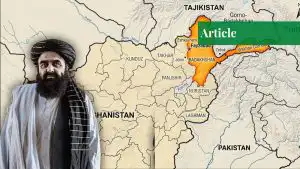
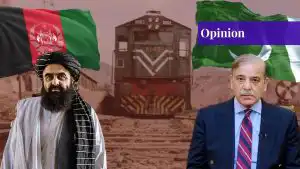
Recent clashes between Afghan and Pakistani security forces have accentuated the fickleness of the situation and the potential for intensification. In December 2024, clashes flared up along the Durand Line, resulting in casualties on both sides and persuading accusations of cross-border violations. In recent months, Afghanistan and Pakistan have witnessed a startling escalation marked by cross-border skirmishes, diplomatic clashes, and mutual allegations of supporting insurgent groups. These developments the debility of regional stability in South Asia and raise profound concerns about the probability of broader destabilization as a repercussion of US withdrawal from Afghanistan.
Pakistan has blamed Afghanistan for providing sanctuary to Taliban factions responsible for attacks on Pakistan territory, including the resurgence of violence in border regions. Pakistan’s allegations of Afghanistan and Pakistan’s recent attack on Afghanistan as retaliation fueled patriotic feelings on both sides of the border. Regardless of assertions from US leaders, they paint a straightforwardly contrasting picture of peace and stability.
Additionally, geopolitical implications emerge substantially. Pakistan, a key ally in America’s War on Terror, now finds itself targeted from Afghan soil—aggravating tensions in an already strained region. The strategic implications of Afghanistan’s instability are deeply felt, especially considering Pakistan’s nuclear capabilities and its vital role in regional stability.
In conclusion, America’s withdrawal from Afghanistan has left deep scars, both locally and globally. It challenges us to reappraise the efficacy of military intrusions and highlights capacity-building complications in conflict zones. As Afghanistan navigates an undetermined future, the global community observes minutely, mindful of the lessons learned and the challenges yet to come.
If you want to submit your articles and/or research papers, please check the Submissions page.
The views and opinions expressed in this article/paper are the author’s own and do not necessarily reflect the editorial position of Paradigm Shift.

Sheraz Mehmood Khan is a Research Scholar and a candidate for a PhD in International Relations at Western Caspian University, Baku, Azerbaijan.