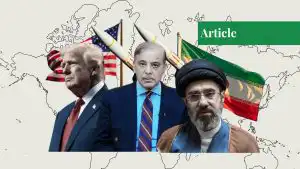

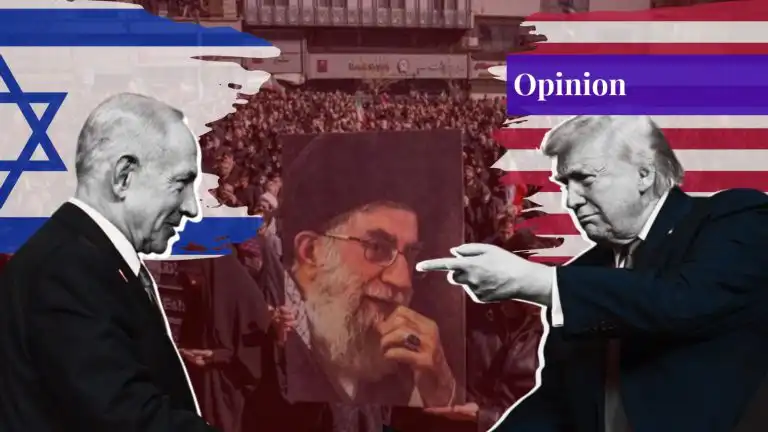
The mistake of 1980 was simple: Saddam Hussein believed that a nation’s hatred for its rulers is greater than its love for its soil. He was wrong. 45 years later, Washington and Tel Aviv appear to be making the exact same miscalculation with Iran.
The Leaflet Delusion
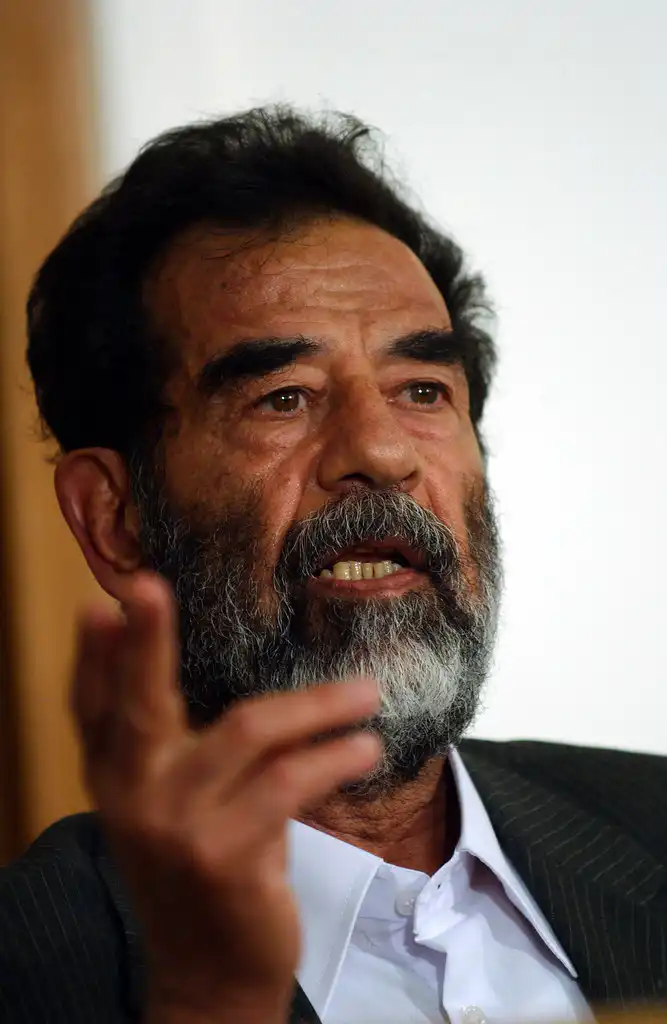
In the early days of the 1980 invasion, Iraqi bombers did not just drop bombs. They also dropped leaflets. Written in Persian, these papers urged the Iranian people to rise against their own government, promising that Iran would be safe if the regime changed. Saddam Hussein believed that a regime only one year old, struggling from the post-revolution dismantling of its military, would crumble under the first sign of external pressure.
He was wrong. Instead of fracturing, the Iranian people, including Arabs, Baloch, and Kurds, who had deep grievances against the new government, instantly united for the integrity and sovereignty of Iran. The external threat acted as a catalyst for unity, transforming a chaotic political transition into the “Sacred Defense.”
Today, the leaflets have been replaced by cyber operations and satellite broadcasts amplifying the “Woman, Life, Freedom” movement. The technology is different. The psychology used is identical. The moment foreign missiles touch Iranian soil, the grievance against the state is overtaken by the defense of the homeland. This ceases to be a struggle of civil liberties in Tehran or Isfahan. It becomes a fight against a century of foreign interference.
This is not accidental. States don’t simply react to threats, but they also interpret them. Tehran’s political elite has spent four decades constructing a national identity built around resisting foreign interference or attacks. Every strike validates that narrative more effectively than any internal propaganda ever could.
The Decapitation Myth
The second pillar of the current strategy appears to be regime decapitation. The belief that removing the supreme leader triggers immediate collapse and opens a path to a pro-Western transition. The Iranian regime is not dependent on the supreme leader alone. Although the supreme leader holds immeasurable authority over the three pillars of the government, the judiciary, the Parliament, and the military, each operates with its own chains of command under the velayat-e-faqih system, deliberately designed so that no single point of failure can bring it down. It is a lesson Iran learned from watching the Shah’s centralized rule collapse overnight.
A “Weakened” Iran Is Still Not 1980
Yes, Iran’s economy is brittle. Yes, domestic anger is real. Critics who call Iran “weak” are not entirely wrong, but they are drawing the wrong conclusion from a correct observation. Economic harsh conditions and national integrity are not the same thing. The Iranian people draw a clear line between grievances against their own government or regime and threats from outside. History provides them with a reason.
In 1953, the CIA overthrew the Iranian elected government to protect Western oil interests. That wound never fully healed. It is reopened by every foreign strike. Unlike 1980, when Iran fought an 8-year war completely alone, today it sits at the center of a regional network stretching from Iraq to Lebanon to Yemen. Weakening the economy has not weakened the strategic posture.
Why This Matters Beyond the Middle East
For most Western analysts, Iran is an abstract problem. For Pakistan, it is a neighbor. Pakistan shares a 909-kilometer border. A destabilized Iran or a refugee crisis coming through Sistan-Balochistan lands directly in Pakistan’s lap, hitting a security situation and an economic recovery that can absorb very little additional pressure. When Washington miscalculates the Iranian pulse, Islamabad feels the tremors first.
The Lesson Still Unlearned
The current campaign risks the same outcome. Strike Iran’s sovereignty, and you don’t weaken the regime. You save it.
Policymakers in Washington and Tel Aviv would do well to review their assumptions. Iran is not a weak state waiting to be liberated; it is a civilization with a long history of defending its soil. From Cyrus to the Sacred Defense, Iranians have repeatedly demonstrated that external aggression does not fracture national will; it forges it. A strategy that ignores this history is not just miscalculated. History has already answered, and it cost eight years of war.
One can only hope that before the next escalation, someone pauses long enough to ask why the last person who tried this spent eight years drowning in the consequences.
If you want to submit your articles and/or research papers, please visit the Submissions page.
To stay updated with the latest jobs, CSS news, internships, scholarships, and current affairs articles, join our Community Forum!
The views and opinions expressed in this article/paper are the author’s own and do not necessarily reflect the editorial position of Paradigm Shift.