
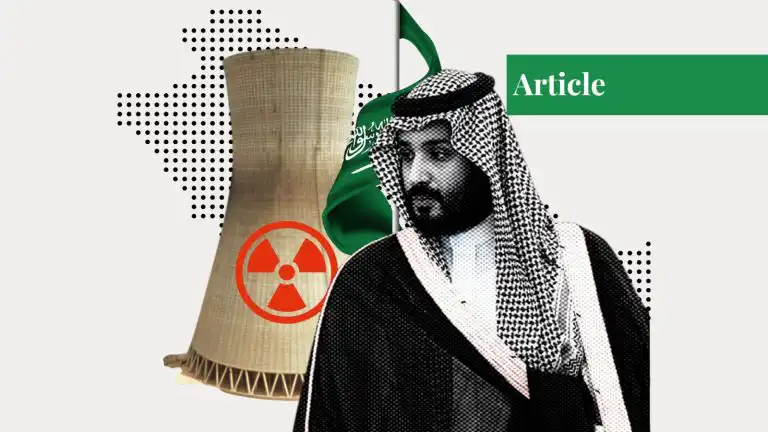
Saudi Arabia is running two nuclear tracks simultaneously—one civilian arrangement with the United States and one strategic partnership with Pakistan—and that dual approach says a lot about where Gulf security is heading. Rather than betting everything on one outside protector, Riyadh is spreading its bets across multiple partners, and it’s not the only Gulf capital thinking this way.
A US Deal With Strings Attached
At a signing event held at the U.S. Department of Energy, American and Saudi officials finalized a nuclear cooperation agreement that would let the Kingdom enrich fuel domestically, on the condition that its reactors and fuel purchases come from U.S. suppliers. It was a long-sought prize for Riyadh—the kind of arrangement it had been pursuing for well over ten years. But the celebration didn’t last. Within roughly a day, President Trump added a condition that hadn’t appeared anywhere in the signed text: Saudi Arabia would need to join the Abraham Accords and normalize ties with Israel before the deal could actually go forward. That single move threw the entire agreement into limbo almost as soon as the ink dried.
Pakistan as the Fallback Guarantee
None of this leaves Saudi Arabia exposed, though, because it already has a nuclear-adjacent security arrangement that doesn’t run through Washington at all—its relationship with Pakistan. The Strategic Mutual Defense Agreement the two countries signed in September 2025 commits each to treat an attack on the other as an attack on itself. Pakistani Defense Minister Khawaja Asif reinforced that commitment publicly, stating that Pakistan’s nuclear capability would be extended to Saudi Arabia if circumstances demanded it—a comment most observers read as a pointed signal toward Israel. The takeaway is straightforward: Riyadh isn’t leaning entirely on an unpredictable partner in Washington for either its security umbrella or its nuclear ambitions.
That’s really the heart of the matter. By pursuing a civilian nuclear track with the U.S. while quietly building out a strategic one with Pakistan, Saudi Arabia is signaling that it no longer trusts any single security guarantor to be dependable. Gulf states more broadly seem to be reaching the same conclusion, having watched recent regional events call into question just how solid American security commitments actually are.
The American offer itself is genuinely attractive on paper—it would allow Saudi Arabia to enrich uranium free of the so-called “gold standard” limits that typically restrict enrichment or fuel sourced elsewhere, and it wouldn’t require the kind of expanded IAEA monitoring that stricter deals demand. Yet Trump’s eleventh-hour insertion of a normalization requirement exposed something important: this cooperation is conditional and can be pulled back at will. That’s not the kind of foundation a country wants to build its long-term security calculus on.
Context matters here too. The Strategic Mutual Defense Agreement with Pakistan didn’t emerge from nowhere—it followed an Israeli strike on Hamas figures inside Qatar, an event that rattled governments across the Gulf and pushed them toward firmer collective-security arrangements. As for Pakistan’s suggestion that its nuclear umbrella could extend to Saudi Arabia, that was almost certainly more of a deterrent gesture than an actual shift in doctrine. But gestures like that still matter in deterrence terms—they give Riyadh a sense of backup precisely while Washington keeps haggling over enrichment restrictions and the terms of normalization.
A Pattern Spreading Across the Gulf
Saudi Arabia isn’t alone in exploring this path. Kuwait is reportedly looking to upgrade its 2023 defense cooperation agreement with Pakistan into something closer to what Riyadh has secured. That interest didn’t come out of thin air—Kuwait absorbed some of the worst missile and drone strikes from Iran during the recent U.S.-Israel-Iran conflict, a stark reminder of how vulnerable Gulf states are in conflicts they had no hand in starting.
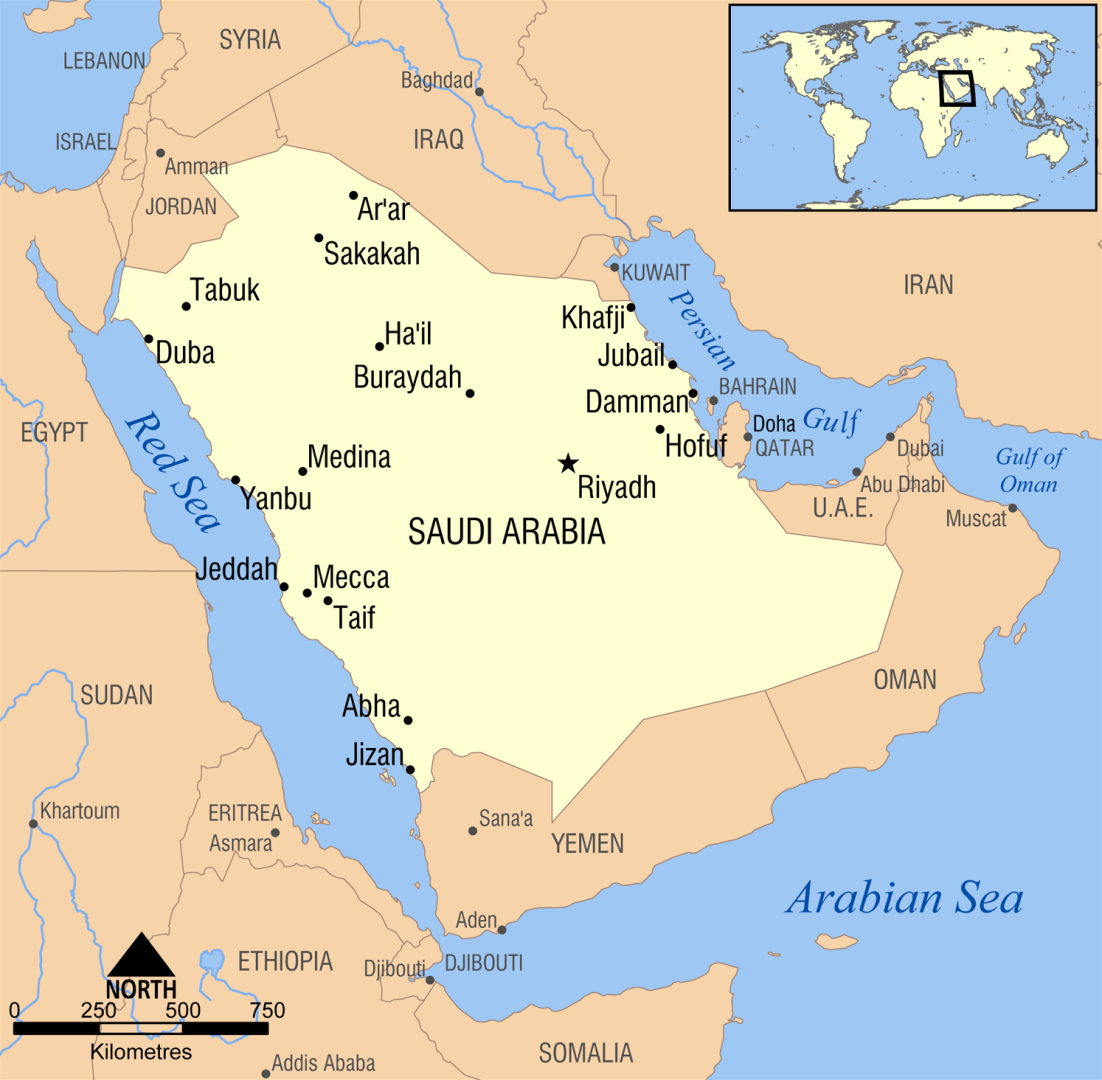
Elsewhere, Pakistan, Turkey, and Saudi Arabia are reportedly working on a separate trilateral defense arrangement, and both Jordan and Bahrain have expressed interest in similar training and weapons cooperation with Pakistan. What began as a single Saudi initiative is starting to take shape as the outline of a wider regional security network, with Pakistan positioned as a central player.
Consequences for Washington and Tel Aviv
All of this chips away at America’s ability to use nuclear cooperation as leverage over a client state that now has other options. The more solid Pakistan’s backing proves to be, the faster Saudi hedging is likely to accelerate. Israel, meanwhile, has reason to be uneasy on two fronts: a U.S.-Saudi deal that skips some of the usual safeguards and Pakistan’s expanding security presence across the Gulf.
Former Israeli Defense Minister Avigdor Lieberman warned that the American deal risks triggering a regional arms race—and that warning arguably applies just as much to the Pakistan-Saudi defense pact. None of this spells an abrupt collapse of American influence in the region. But it does suggest that Gulf states have quietly decided that relying on a single guarantor is no longer a sound strategy—and that shift alone has already measurably weakened Washington’s hand in the Gulf.
If you want to submit your articles and/or research papers, please visit the Submissions page.
To stay updated with the latest jobs, CSS news, internships, scholarships, and current affairs articles, join our Community Forum!
The views and opinions expressed in this article/paper are the author’s own and do not necessarily reflect the editorial position of Paradigm Shift.

Muhammad Hamza Tanveer is a political analyst specialising in South Asian and Middle Eastern affairs. His work focuses on religious nationalism, regional security, and minority rights. He has been featured in Stratheia, Pakistan Today, Pakistan Observer, and the Asian Mirror. He is also working as a research analyst and political commentator for Paradigm Shift and contributes to the monthly magazine of Nearpeer.