A New Multinational Maritime Defence Coalition in the Red Sea Led by Saudi Arabia
For decades, maritime security in the Middle East has rested largely on external powers, with the United States acting as the principal guarantor of safe navigation through the region’s strategic waterways. Whenever tensions escalated, international naval coalitions were assembled to protect commercial shipping and reassure global markets. Saudi Arabia’s newly announced maritime coalition suggests that this long-standing model may be beginning to change. Rather than relying solely on outside security providers, Riyadh is attempting to build a regional framework capable of protecting the Middle East’s own maritime interests.
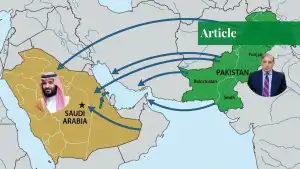
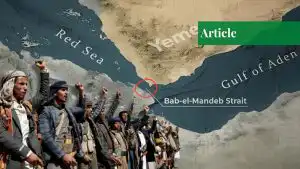
The newly formed 14-country alliance brings together Saudi Arabia with Türkiye, Bahrain, Kuwait, Jordan, Qatar, Egypt, Pakistan, Djibouti, Bangladesh, Yemen, Sudan, Somalia, and the Comoros. Its stated mission is to safeguard freedom of navigation in the Red Sea, the Gulf of Aden, and the Bab el-Mandeb Strait—one of the world’s most strategically important maritime corridors. On the surface, the initiative is designed to secure commercial shipping. In reality, however, it reflects a broader strategic ambition. Saudi Arabia is positioning itself not simply as a participant in regional security but as one of its principal architects.
The announcement comes at a moment of unprecedented pressure on the Gulf’s maritime trade routes. The Houthis’ partial blockade of the Bab el-Mandeb Strait has disrupted traffic through the Red Sea, while Iran’s blockade of the Strait of Hormuz has placed additional strain on Gulf exports and global energy markets. With both chokepoints under pressure simultaneously, the vulnerabilities of the existing security architecture have become increasingly difficult to ignore. For Riyadh, protecting maritime trade is no longer only a military necessity; it has become central to safeguarding the Kingdom’s economic future and regional ambitions.
The Limits of the US-Led Maritime Security Order
Since the 1991 Gulf War, the United States has maintained an unrivalled naval presence across the Gulf, presenting itself as the primary guarantor of maritime stability. Its fleets have patrolled critical waterways, protected commercial shipping, and sought to deter regional adversaries, particularly around the Strait of Hormuz. For decades, this arrangement formed the backbone of the Gulf’s security architecture.
Yet recent developments have exposed the limitations of that model. Washington’s military confrontation with Iran, rather than reinforcing regional stability, intensified existing tensions and increased the risks facing commercial shipping. The conflict demonstrated that even an extensive American military presence cannot prevent regional disputes from spilling over into the maritime domain. Instead, the crisis highlighted how quickly geopolitical rivalries can threaten global trade and energy supplies.
The economic consequences have been significant. Roughly one-fifth of the world’s oil and liquefied natural gas exports normally pass through the Strait of Hormuz, while Gulf states import between 80 and 90 per cent of their food through maritime routes. As Hormuz became increasingly vulnerable, shipping was redirected toward the Bab el-Mandeb Strait, another vital artery that carries approximately 14 per cent of global maritime trade. However, Houthi attacks on vessels operating in the Red Sea demonstrated that rerouting traffic offers only temporary relief when multiple strategic chokepoints are under simultaneous threat.
These developments point to a broader structural problem. The existing maritime security framework has largely been reactive, responding to crises after they emerge instead of preventing them. Built around American military guarantees and multinational naval deployments, the system has struggled to address persistent and evolving maritime threats. That reality has encouraged regional powers to reconsider whether long-term maritime security can continue to depend primarily on external actors.
Saudi Arabia’s latest initiative should therefore be understood within this broader strategic context. Rather than abandoning cooperation with the United States altogether, Riyadh appears to be laying the foundations for a complementary security arrangement—one in which regional states assume greater responsibility for protecting their own waters. The coalition reflects an important shift in thinking: maritime security is increasingly viewed not as a service provided by outside powers but as a collective regional responsibility.
From Hormuz to Bab el-Mandeb: One Strategic Maritime Theatre
For Saudi Arabia, the Strait of Hormuz and the Bab el-Mandeb can no longer be viewed as separate security concerns. Together, they form a single maritime network that underpins the Kingdom’s economic stability, energy exports, and long-term development strategy. Any disruption in either waterway has immediate consequences for Saudi Arabia’s trade and, by extension, the broader Gulf economy.
This interdependence has become even more pronounced under Vision 2030. As Riyadh seeks to diversify its economy beyond oil, the Red Sea has evolved from a peripheral coastline into one of the Kingdom’s most valuable strategic assets. Flagship projects such as NEOM, Oxagon, and the expansion of Red Sea ports are intended to transform Saudi Arabia into a global logistics, tourism, and investment hub. Their success, however, depends on uninterrupted maritime connectivity.
That makes secure sea lanes more than a defence requirement—they are an economic imperative. Investors, shipping companies, and multinational businesses depend on predictable maritime routes. Prolonged instability in the Red Sea or the Gulf would not only disrupt supply chains but could also undermine investor confidence, slow trade, and weaken the momentum behind Saudi Arabia’s ambitious economic transformation.
Recent events have reinforced this reality. While the Strait of Hormuz remains indispensable for the export of Gulf energy, the Bab el-Mandeb has become equally important as an alternative commercial corridor. Threats to either chokepoint inevitably place greater pressure on the other, exposing the vulnerability of a region whose prosperity depends on open and secure maritime trade. This growing interconnection explains why Riyadh increasingly approaches the two waterways as parts of a single strategic theatre rather than as isolated security challenges.
Building a Regionally Led Maritime Coalition to Secure the Red Sea
Saudi Arabia’s proposed maritime coalition reflects a broader shift in how regional security is being conceived. For decades, Gulf states relied heavily on outside powers to safeguard their waters, an arrangement that often drew the region into wider geopolitical rivalries while leaving local governments with limited influence over the security agenda.
The new coalition signals an effort to reverse that dynamic. By bringing together regional and Muslim-majority states under a common maritime framework, Riyadh is seeking to institutionalise cooperation through joint patrols, intelligence sharing, and coordinated responses to emerging threats. Instead of depending exclusively on external naval forces, participating countries would assume greater collective responsibility for protecting the waterways on which they all depend.
Beyond its operational objectives, the initiative also carries considerable political significance. It reflects Saudi Arabia’s aspiration to shape the regional security architecture rather than simply operate within one designed by outside powers. In doing so, the Kingdom is presenting itself not merely as the Gulf’s largest economy but as a diplomatic convener capable of forging consensus on shared security challenges.
The coalition also illustrates a broader trend across the Middle East. Regional powers are increasingly seeking indigenous solutions to common security problems instead of relying solely on external guarantors. Whether this marks the beginning of a lasting transformation remains uncertain, but it clearly points towards a gradual redistribution of strategic responsibility within the region.
At the same time, translating this vision into an effective security mechanism will not be straightforward. The coalition brings together countries with differing strategic priorities, military capabilities, and political relationships. Maintaining cohesion among such a diverse group will require sustained diplomatic engagement and a shared understanding of the threats they face. The initiative’s long-term credibility will ultimately depend not only on its ability to deter maritime threats but also on its capacity to foster lasting cooperation among its members.
Security Diplomacy and the Future of Regional Leadership
Saudi Arabia’s maritime initiative is about more than securing sea lanes. It also reflects the Kingdom’s growing use of diplomacy as a tool for shaping the regional balance of power. Rather than projecting influence through military intervention alone, Riyadh is increasingly relying on coalition-building, strategic partnerships, and multilateral cooperation to advance its interests.
If the alliance develops into a functioning security mechanism, it could encourage a more balanced distribution of responsibilities among its members. Intelligence sharing, coordinated naval patrols, and joint responses to maritime threats would reduce the burden on any single state while fostering greater trust among regional partners. Such cooperation would also help participating countries respond more effectively to challenges that no nation can manage alone, including piracy, attacks on commercial shipping, and disruptions to critical trade routes.
For Saudi Arabia, leading such an initiative strengthens its diplomatic credentials as much as its security profile. The Kingdom is no longer presenting itself solely as a major oil producer or an economic heavyweight; it is increasingly positioning itself as a country capable of convening regional actors around shared strategic interests. In that sense, the coalition is as much a diplomatic project as it is a military one.
That said, success is far from guaranteed. The participating states differ in their threat perceptions, foreign policy priorities, and strategic relationships. Some maintain close ties with competing regional powers, while others face domestic political and economic constraints that could limit their long-term commitment. Turning a diverse coalition into an effective security institution will therefore require sustained political will, regular coordination, and a shared understanding of its objectives.
Even so, the initiative has already achieved something significant. It has shifted the conversation about who should be responsible for protecting the Middle East’s maritime commons. Regardless of its operational outcome, the coalition signals that regional states are becoming more willing to take ownership of their collective security rather than relying exclusively on external powers.
A Shift Towards Regional Ownership in the Red Sea
Saudi Arabia’s maritime coalition should be understood as more than a response to immediate threats in the Red Sea and the Gulf of Aden. It represents an attempt to rethink how security is organised in the Middle East at a time when traditional arrangements are under increasing strain. By bringing together regional partners under a common framework, Riyadh is signalling that the future of maritime security cannot depend indefinitely on outside military guarantees.
Whether the coalition ultimately succeeds will depend on its ability to overcome political divisions, maintain institutional cohesion, and deliver tangible improvements in maritime security. Those challenges are substantial, and the initiative’s long-term effectiveness remains uncertain.
Yet its strategic importance lies not only in what it may achieve operationally, but also in what it represents politically. The coalition reflects a broader transition in which regional powers are seeking a greater role in shaping their own security environment. As confidence in externally led security arrangements continues to erode, Middle Eastern states appear increasingly prepared to develop institutions that reflect their own priorities and interests.
The maritime corridor stretching from the Strait of Hormuz to the Bab el-Mandeb is likely to remain one of the world’s most strategically contested regions for decades to come. By launching this initiative, Saudi Arabia has made clear that it intends not simply to respond to that reality but to help define it. Whether the coalition evolves into a durable institution or remains an ambitious experiment, it marks an important step in the Kingdom’s broader effort to establish itself as a leading architect of the Middle East’s emerging security order.
If you want to submit your articles and/or research papers, please visit the Submissions page.
To stay updated with the latest jobs, CSS news, internships, scholarships, and current affairs articles, join our Community Forum!
The views and opinions expressed in this article/paper are the author’s own and do not necessarily reflect the editorial position of Paradigm Shift.

Muhammad Hamza Tanveer is a political analyst specialising in South Asian and Middle Eastern affairs. His work focuses on religious nationalism, regional security, and minority rights. He has been featured in Stratheia, Pakistan Today, Pakistan Observer, and the Asian Mirror. He is also working as a research analyst and political commentator for Paradigm Shift and contributes to the monthly magazine of Nearpeer.