“The US-led Middle East order is over. The Makkah Agreement proves it.”
Council on Foreign Relations
Let me begin this piece by acknowledging that the appropriate time for public critique of a government decision is normally before that decision is made, while the matter remains under contemplation and consideration. At that stage, public discussion can usefully contribute towards strengthening the government’s intent, identifying weaknesses and offering alternatives.
Once a decision has been made, however, the responsibility changes. It becomes incumbent upon citizens to support the national decision and, more importantly, to contribute towards ensuring its success.
The Makkah Joint Defence Agreement between Pakistan, Saudi Arabia and Türkiye was signed in Makkah on 7 August 2026. Its central principle is that an armed attack against any one of the three signatories will be regarded as an attack against all three. The agreement is described by the signatories as defensive and not directed against any particular country.
The difficulty is that, at present, the public has not been provided with the complete text of the Agreement. Consequently, much of what we know concerns its political intent rather than its detailed legal, operational and military architecture. Türkiye has subsequently indicated that mechanisms for strategic political and military coordination, joint exercises, defence-industry cooperation, technology transfer and other areas of cooperation are envisaged. A ministerial committee and secretariat are also to be established.
This leaves an important space for public discussion. The agreement has been signed; it must therefore succeed. But its success will depend not upon the declaration itself but upon how its institutions, procedures, command relationships, operational parameters and strategic objectives are subsequently developed.
Why Was This Agreement Necessary Now?
Pakistan, Saudi Arabia and Türkiye have enjoyed close relations for decades. Their military relationships are not new. Pakistan and Türkiye, for example, already possess an extensive institutionalised defence relationship, including the High Level Military Dialogue Group, which held its 20th round in April 2026 and discussed defence cooperation, training, defence industry, capacity-building and strategic partnership.
Pakistan and Saudi Arabia likewise formalised a Strategic Mutual Defence Agreement in 2025, which Pakistan’s Foreign Office described as defensive in nature and not directed against any third country.
So the obvious question is: what suddenly necessitated a trilateral commitment on paper, particularly now? There was no obvious trust deficit between these countries. Their expectations of mutual support have existed for decades. Why, therefore, was it considered necessary to formalise a commitment that an attack on one would be regarded as an attack on all?
The answer may lie less in the bilateral relationships between the three countries and more in the transformation of the regional security environment.
The Strategic Environment
The Middle East and its surrounding strategic geography are passing through a period of extraordinary fluidity.
First, the traditional American security architecture in the Gulf has been seriously tested. This does not mean that the United States has withdrawn from the region, nor that an American withdrawal is inevitable – though some feel that the situation is heading in that direction. Washington continues to reaffirm its commitment to Gulf security. But the events of 2026 have demonstrated the vulnerability of Gulf states even under the existing US security umbrella and have encouraged regional states to reconsider the extent to which their security can depend upon an external power.
Secondly, the regional order increasingly displays characteristics of a more plural and multipolar system. The United States remains the dominant external military power, but China, Russia, Iran, Türkiye, India and the major Gulf states are acquiring greater strategic room for manoeuvre.
China’s expanding diplomatic role is particularly significant. Beijing has sought to position itself as a participant in Gulf diplomacy rather than merely an economic actor, while its relationships with Iran, Saudi Arabia and Pakistan give it a strategic presence across the region.
Thirdly, Iran has emerged as one of the region’s most consequential strategic powers. I would hesitate to describe Iran simply as the dominant regional power, for the moment, because it has considerable military and economic vulnerabilities to resolve. Nevertheless, its geographical position, missile capability, asymmetric capacity and ability to influence the Strait of Hormuz give it extraordinary strategic leverage.
The present disruption of Hormuz demonstrates the point. Shipping through the strait has fallen dramatically, with the waterway historically carrying roughly one-fifth of global oil and LNG shipments. The Strait of Hormuz and Bab el-Mandeb are therefore not merely regional waterways. They constitute strategic chokepoints whose disruption can affect global energy supplies, shipping, insurance, inflation and supply chains.
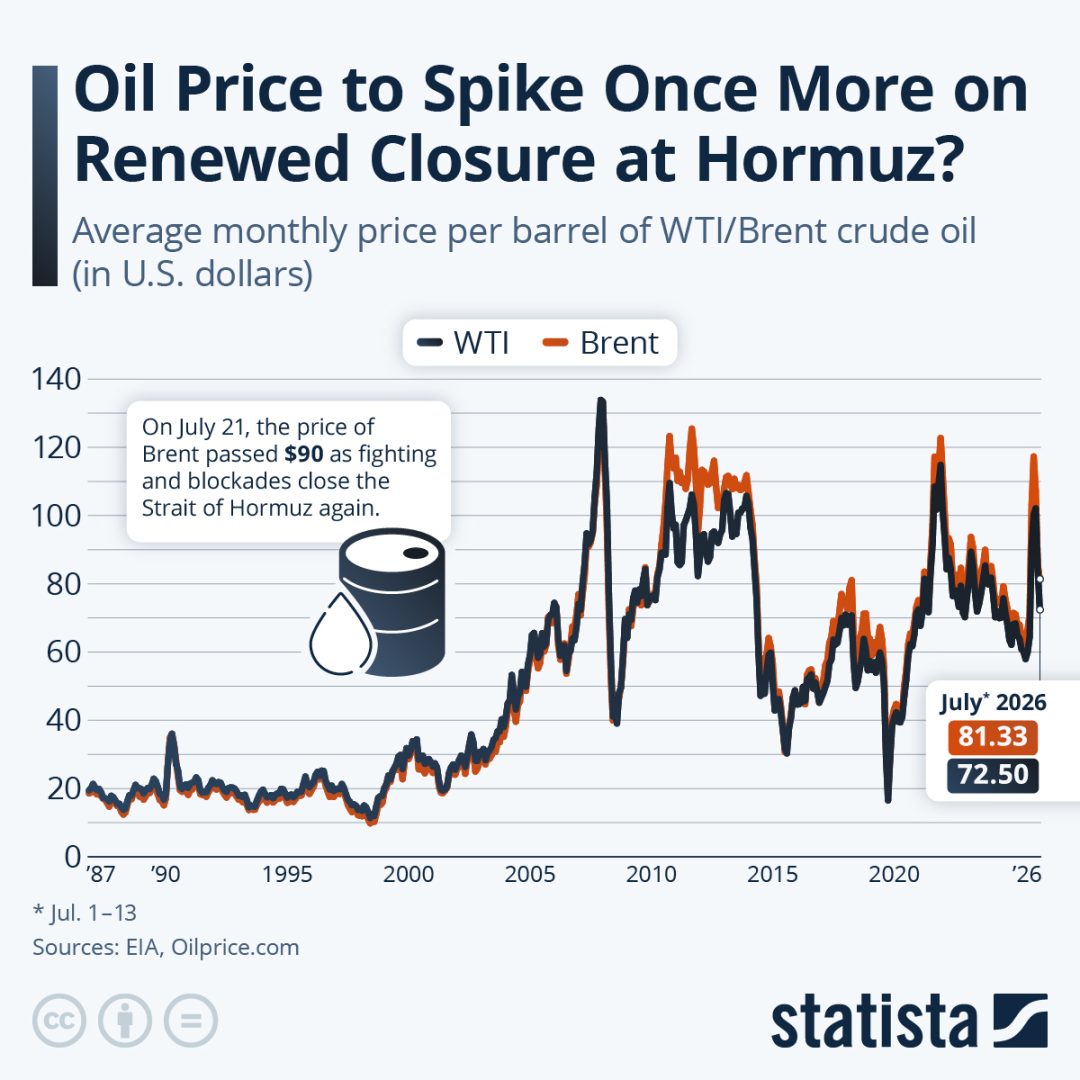
Hydrocarbons remain a critical component of the global economy. If disruption of Gulf energy exports and maritime traffic becomes prolonged, the consequences will extend well beyond the region and could affect global economic growth.
The United States and the Search for Burden-sharing
The United States now faces a difficult strategic dilemma. It cannot easily abandon the Gulf without significant political and strategic consequences. Equally, an indefinite commitment to defend every element of the regional order carries increasing military and financial costs, which for now, more and more, appear to be beyond American capacity.
The likely American objective, therefore, may not be a simple withdrawal. It may instead be a transition from direct security provision towards burden-sharing, in which regional powers assume greater responsibility while the United States retains influence, access and strategic relationships. This distinction is important.
Thus, the agreement is compatible with an American preference for greater regional burden-sharing while simultaneously being compatible with the desire of the three signatories to develop greater strategic autonomy. However, the efficacy of how the US will still be able to exercise control or influence in the region becomes highly questionable and appears more to be a product of assumptions than strategic logic.
The agreement may therefore represent something more complicated than either an American project or an anti-American project. It could be a form of strategic hedging. The three countries can reduce their dependence upon any single external security provider while retaining their existing relationships with the United States, China and NATO. Indeed, Türkiye has explicitly stated that the Makkah Agreement does not replace existing alliances. Something of hunting with the hounds and running with the hares.
What Is the Threat?
This brings us to the central question surrounding any defence agreement: What is the threat? The Makkah Joint Defence Agreement does not name an adversary. Pakistan and Türkiye have described it as defensive and not directed against any particular country.
Is Iran the threat? The agreement’s signatories say it is not directed against Iran. Would Pakistan and Türkiye be expected to fight in support of Saudi Arabia against the Houthis? Would Saudi Arabia and Pakistan support Türkiye if Turkish forces or interests were attacked in Syria or Libya? Would Saudi Arabia and Türkiye be expected to support Pakistan if Pakistan were attacked by Afghanistan or India? Would the agreement extend to the Red Sea and Bab el-Mandeb? Would an attack upon a member’s commercial shipping constitute an armed attack for purposes of collective defence? And what would happen if Israel undertook military action against one of the members?
These are not hypothetical questions designed to create a doomsday scenario. They are the fundamental questions that must be answered if the Agreement is to evolve from a political declaration into a functioning defence mechanism. Pakistan’s Foreign Office has itself acknowledged that questions concerning deployment, the definition of an attack and the operational red lines are matters requiring technical determination.
The Geography of Collective Defence
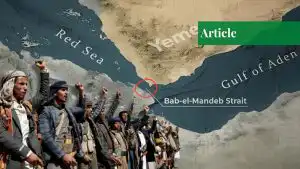
The problem becomes even more complicated when one examines the geography. Hormuz and Bab el-Mandeb are connected through the broader maritime architecture of the region, but they are not the same strategic theatre. Hormuz principally involves Iran, Oman and the Gulf states. Bab el-Mandeb connects the Red Sea to the Gulf of Aden and involves Yemen, Saudi Arabia, Egypt, Djibouti, Eritrea and international shipping. This is why the Red Sea becomes important to any future Makkah architecture. Saudi Arabia is already pursuing a multinational maritime coalition for the protection of Red Sea shipping, while Türkiye and Pakistan have expressed support for regional maritime-security efforts.
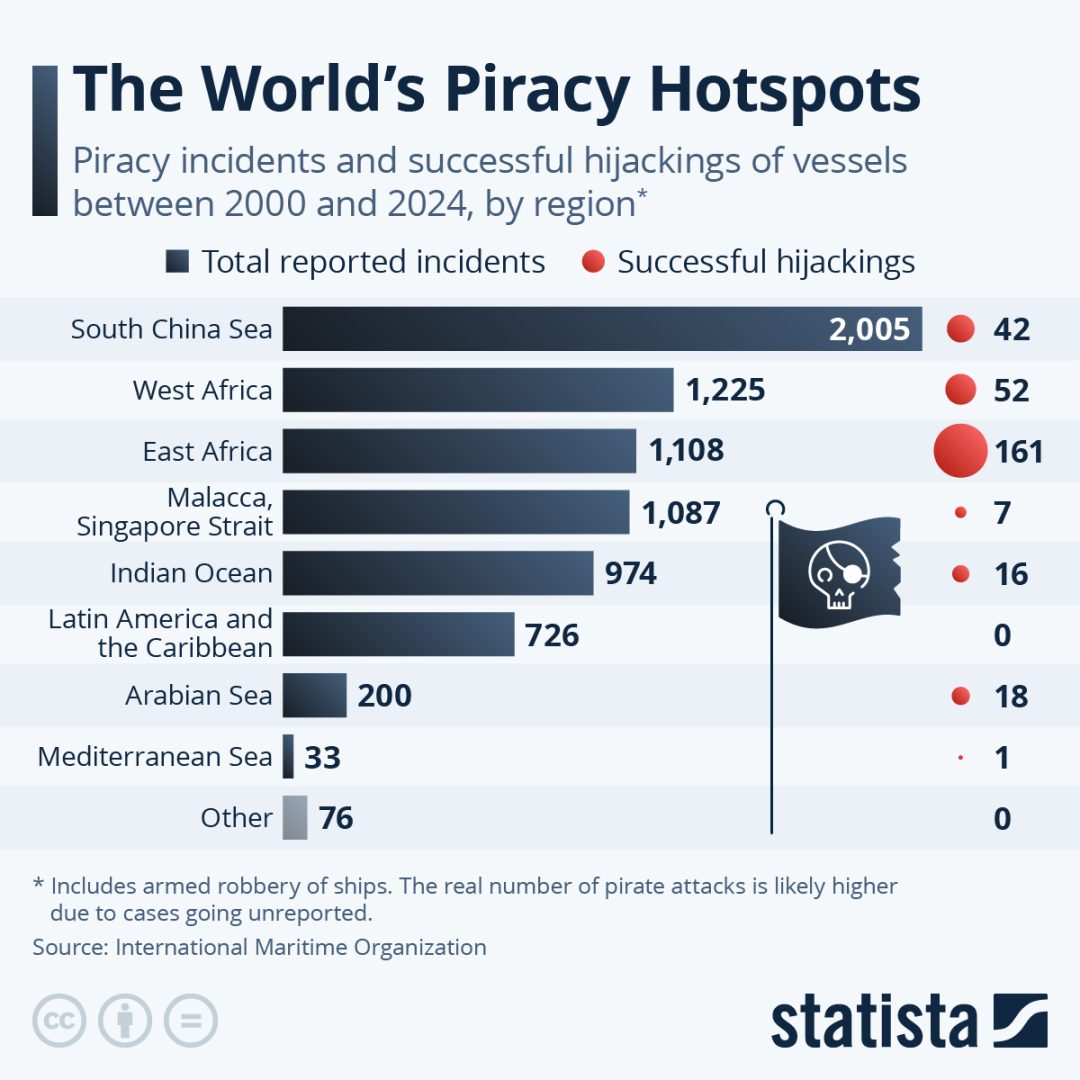
The obvious question, therefore, is: How will the Makkah Defence Agreement relate to these existing and emerging maritime-security mechanisms? And if a Pakistani, Saudi or Turkish commercial vessel is attacked in the Red Sea, who has responsibility? These are precisely the issues that need to be defined. The regional architecture is already becoming crowded. The Makkah Agreement does not emerge into an empty strategic space.
The region is increasingly characterised by overlapping bilateral and multilateral security relationships. India, for example, has developed a Strategic Defence Partnership Framework with the UAE, while India and Israel maintain a deep and expanding defence-industrial relationship. However, an accurate description is that the region contains multiple overlapping bilateral security relationships and not one of UAE-Israeli-sponsored animosity.
The emerging regional order is not necessarily going to consist of two opposing military blocs. It is more likely to resemble a network of overlapping partnerships, in which countries cooperate in some areas while competing or disagreeing in others. The UAE is particularly important in this respect. Its relationships with Saudi Arabia, India, Israel, the United States and other powers make it impossible to construct a durable Gulf security architecture while simply ignoring Abu Dhabi.
Likewise, the serious strategic differences that have emerged between Saudi Arabia and the UAE over Yemen, regional influence and energy policy demonstrate that even ostensibly friendly states do not necessarily possess identical strategic interests.
The Interoperability Question
The Agreement’s most important challenge may ultimately be military rather than political. The three countries operate within different defence ecosystems. Türkiye is a NATO member and operates extensively with NATO-standard systems. Pakistan operates a mixed ecosystem, including substantial Chinese-origin equipment and technology alongside Western systems. Saudi Arabia remains heavily dependent upon American-origin defence systems and associated support architecture. This does not necessarily make interoperability impossible. In fact, Türkiye has now explicitly identified joint exercises, advanced military technologies, unmanned systems, electronic warfare, artificial intelligence, joint production and technology transfer as areas of future cooperation. But it does mean that interoperability cannot be assumed. It must be built. The issues include:
- Secure communications
- Data links
- Command-and-control systems
- Intelligence sharing
- Friend-or-foe identification (IFF) systems
- Air-defence integration
- Electronic warfare
- Satellite communications
- Logistics
- Ammunition standards and storage
- Maintenance of cybersecurity
- Rules of engagement
- Common operating procedures
The greatest challenge is not whether Turkish, Pakistani and Saudi forces can fight well. They undoubtedly can. The question is whether they can fight together as an integrated force. That requires years of training, exercises, common doctrine, operational cohesion and institutional development.
The Satellite Problem
The same issue applies to space-based systems. All three countries use multiple navigation and satellite capabilities, and their militaries possess varying degrees of indigenous and foreign-supported capacity but still remain dependent, to some extent, on the US, NATO or China respectively. The underlying concern, however, is that where critical military functions depend upon externally controlled satellite, communications, navigation or intelligence infrastructure, strategic autonomy remains incomplete. A genuinely autonomous regional security architecture must therefore progressively develop:
- Indigenous satellite communications
- Regional earth observation
- Secure military communications
- Independent positioning and timing capabilities
- Integrated intelligence systems
This is a long-term project, but it is precisely the sort of project that could transform the Makkah Agreement from a political arrangement into a genuine regional capability.
Iran Cannot Simply be Excluded
This brings me to what may be the most important recommendation. If the objective is genuinely to create a regional security architecture, Iran cannot permanently remain outside it. Iran possesses the geography of Hormuz. It is a major military power. It is an essential actor in the Gulf. It has influence in Iraq, Yemen and elsewhere. And it has already stated publicly that it does not regard the Makkah Agreement as necessarily threatening, while also saying that a regional security mechanism could be useful if it is inclusive and reflects the realities of the region.
The long-term objective should therefore not be to create a new military bloc against Iran. It should be to create a regional security architecture in which Iran eventually has a place. This is not appeasement. It is strategic realism. A Gulf security architecture that excludes the country controlling one side of the Strait of Hormuz will always have a fundamental structural weakness.
Egypt and the Expansion of the Architecture
Egypt should be the next obvious candidate. Egypt possesses the Suez Canal, has a major military establishment and occupies the geographical junction between the Mediterranean, the Red Sea and the wider Arab security environment. Türkiye has already identified Egypt as a potential future participant in the Makkah arrangement. An architecture comprising Pakistan, Saudi Arabia, Türkiye and Egypt would therefore have a substantially different geographical character. It would connect South Asia, the Gulf, the Red Sea, Suez, and the Eastern Mediterranean.
Later, other regional countries could be incorporated progressively. The founding members should remain the core, while other states could participate at different levels according to their geographical interests, military capacities and political commitments. The objective should be concentric rather than exclusive.
What Does Each Country Actually Bring?
It would be a mistake to regard Pakistan merely as the recipient of Saudi financial assistance. Pakistan brings considerable strategic capital to the arrangement. It brings one of the region’s largest and most experienced armed forces, extensive operational experience, a substantial defence-industrial base and nuclear deterrence. Though at this time the nuclear capacity is not relevant to any defence agreement and nor can be even in the future without risking serious controversy. It also brings a long-established defence relationship with Türkiye, including institutional mechanisms for defence-industry cooperation, training and capacity building.
Saudi Arabia brings financial weight, energy resources, regional centrality and considerable defence expenditure. Türkiye brings a rapidly expanding defence industry, military technology and strategic reach across the Middle East and Mediterranean. There is therefore genuine strategic complementarity between the three countries. The challenge is to convert these complementary assets into integrated capability.
What Does Pakistan Receive?
Pakistan’s economic circumstances cannot be ignored. Pakistan is struggling to achieve a degree of macroeconomic stabilisation and remains constrained by high public and external debt, heavy debt servicing, weak revenue mobilisation, structural energy liabilities and continuing dependence upon external financing. Saudi Arabia remains an important financial and economic partner. The strategic relationship should instead be understood more broadly. Pakistan potentially gains the following:
- Enhanced regional diplomatic weight
- Deeper defence-industrial cooperation
- Access to Turkish technology
- Saudi investment and energy cooperation
- Greater strategic relevance
- Opportunities for joint defence production
- The possibility of becoming a central participant in a new regional security architecture
These are substantial gains. But they will materialise only if Pakistan itself possesses the economic and institutional capacity to exploit them. The Pakistani dilemma remains: a country cannot exercise sustained strategic influence abroad while remaining institutionally weak at home. Pakistan has made some progress in stabilising its macroeconomic position – even though some feel it is playing with statistics. It would therefore be inaccurate to outright describe the economy as having collapsed. But still, stabilisation is not transformation.
The country still carries substantial debt, large financing requirements, energy-sector liabilities and a narrow fiscal base. The challenge is therefore to convert macroeconomic stabilisation into sustained economic growth, institutional strength and national resilience. The Makkah Agreement cannot substitute for this. Indeed, it makes it even more important for Pakistan to become an effective regional power. For this, Pakistan needs the following:
- Economic growth
- Fiscal capacity
- Energy security
- Institutional stability
- Internal security
- Social development
- Technological capability
- Defence-industrial autonomy
Without these, Pakistan risks becoming a participant in somebody else’s regional architecture rather than a country helping to design it. Pakistan now must focus on ensuring that the agreement becomes politically and militarily functional and it itself remains relevant to the process. The agreement has been signed; it should therefore be made to work. The following are strongly recommended for consideration:
- Make the Text Public
The complete agreement should be placed before Parliament and the public so that its objectives, obligations and limitations can be understood.
- Define the Threat
The Agreement should specify what constitutes an armed attack and what constitutes an act of war against the coalition.
- Define Geography
Does collective defence apply only to sovereign territory or also to armed forces, diplomatic missions and commercial shipping outside national territory?
- Establish Permanent Institutions
A permanent political-military council, secretariat, planning staff and appropriate joint headquarters should be developed.
- Build Interoperability
Joint exercises should progress from symbolic exercises towards integrated command-and-control, intelligence, air defence, maritime security, cyber and electronic-warfare exercises.
- Create an Independent Communications and Intelligence Ecosystem
The long-term objective should be secure regional communications, satellite observation and intelligence-sharing mechanisms that reduce excessive dependence upon external powers.
- Integrate Maritime Security
The Makkah mechanism should be coordinated with the emerging Red Sea maritime-security architecture and clearly define responsibilities in the Red Sea, Bab el-Mandeb, Arabian Sea and Gulf.
- Bring Egypt Into the Core
Egypt would provide a geographical bridge between the Gulf, the Red Sea and the Mediterranean.
- Engage Iran
Iran should not be treated as a permanent enemy of the architecture. The ultimate objective should be an inclusive regional security mechanism in which Iran has a place.
- Eventually Accommodate the UAE and Other Regional States
The architecture should be sufficiently flexible to accommodate states that have different relationships with the United States, China, India, Israel and other powers.
- Reduce External Interference Gradually
The objective should not be immediate strategic separation from global powers such as the US and EU. Rather, the region should progressively develop the autonomous capacity to determine its own security priorities independently.
Conclusion
The Makkah Defence Agreement is neither inconsequential nor yet a fully functioning military alliance. It is a beginning. Its significance lies less in the declaration that an attack upon one will be regarded as an attack upon all than in what the three countries now do with that declaration. The Agreement can become a political symbol, or it can become the nucleus of something much more consequential. It can become another regional arrangement dependent upon external powers for intelligence, communications, logistics and strategic direction, or it can gradually develop into an autonomous regional security architecture. The choice will depend upon what happens next.
For the United States, the Agreement may provide an opportunity to transfer greater responsibility to regional partners while retaining influence without bearing the entire military and financial burden of regional security. For Saudi Arabia, it offers additional strategic depth. For Türkiye, it offers greater regional reach and an opportunity to extend its defence-industrial and military influence. For Pakistan, it offers perhaps the greatest opportunity—and potentially the greatest danger.
Pakistan can use the agreement to expand its regional influence, deepen its bilateral relationships and establish itself as a central participant in a new security architecture. But this will require Pakistan to bring economic strength, institutional credibility and strategic autonomy to the table. We cannot expect a defence agreement to create the national power and stability that the agreement itself requires to exist.
A country cannot plan a banquet while dying of hunger itself. But neither should a country that has survived crisis, stabilised itself and been given a new opportunity spend all its energy describing its own illness, wailing over its own misery.
The Makkah Defence Agreement has given Pakistan an opportunity. The responsibility now is to make it work—not for Saudi Arabia, not for Türkiye, not for the United States, and not against Iran or any other country, but as the beginning of a regional security architecture owned and shaped by the countries of the region themselves.
“After we finish defeating Iran…pretty soon I’ll be declaring the Hormuz Strait a territory of the United States.”
Donald Trump, 14th August, 2026.
If you want to submit your articles and/or research papers, please visit the Submissions page.
To stay updated with the latest jobs, CSS news, internships, scholarships, and current affairs articles, join our Community Forum!
The views and opinions expressed in this article/paper are the author’s own and do not necessarily reflect the editorial position of Paradigm Shift.